Our Journal
Insights, updates, and guidance on your journey to a blessed union.
I Just Took My Shahada — Everything New Muslims Need to Know About Getting Married in Islam
The moment you take your shahada, a new chapter begins — and if marriage is on your heart, the questions arrive fast. Do I need a wali? What is mahr and how much should it be? What happens to my current relationship? Can I perform a nikah without a Muslim family? What about civil marriage? This complete guide is written specifically for new Muslims navigating marriage for the first time in Islam — with clear answers, genuine warmth, and practical guidance for converts in the USA, UK, Canada, Europe, and Australia.
Is a Nikah by WhatsApp or Text Message Valid in Islam — The Complete Scholarly Ruling
Nikah by WhatsApp, text message, or voice note is one of the most searched Islamic marriage questions globally — and one of the most misunderstood. Some couples assume that typing "I accept" in a chat window constitutes a marriage. Others have been told their informal messaging nikah was valid. This article examines what the scholars actually say, the crucial distinction between a text-based proposal and a properly conducted ceremony, the conditions under which written communication can play a role in a valid nikah, and why the answer differs significantly between a typed message and a live audio or video call.
Can a Muslim Woman Travel for Her Nikah Without a Mahram — Islamic Ruling and Practical Guidance
Many Muslim women in Western countries face a specific and rarely addressed question: can they travel — to another city or another country — to attend their own nikah ceremony without a mahram accompanying them? The mahram requirement for women's travel is well-known in Islam, but its application to travel for the purpose of nikah itself is a nuanced question the scholars have addressed with surprising depth. This article examines the primary hadith evidence, the madhab differences on travel distance and safety conditions, the necessity principle and when it applies, and — critically — why online nikah eliminates this challenge entirely without any scholarly compromise.

Online Nikah in Japan: A Complete Shariah-Compliant Guide for Muslims Marrying in a Civil-Only Country
Japan recognises only civil marriage registered at a municipal office, leaving Muslims without a religious route to a valid nikah. This guide explains how a Shariah-compliant online nikah works in Japan, how it fits alongside the ward-office registration, what documents foreign residents need, and how couples — students, expats, and converts — can marry correctly under both Islamic and Japanese law.
Online Nikah in South Korea: How Muslims Marry Under Shariah When the Law Only Sees a Marriage Report
South Korea recognises marriage only through a civil "marriage report" (honin singo) filed at a district office, with no religious ceremony carrying legal weight. This guide explains how a Shariah-compliant online nikah works for Muslims in Korea, what scholars say about remote contracts, the documents foreign residents need for the Family Relations Register, and which situations — migrant workers, students, and Korean converts — it serves best.
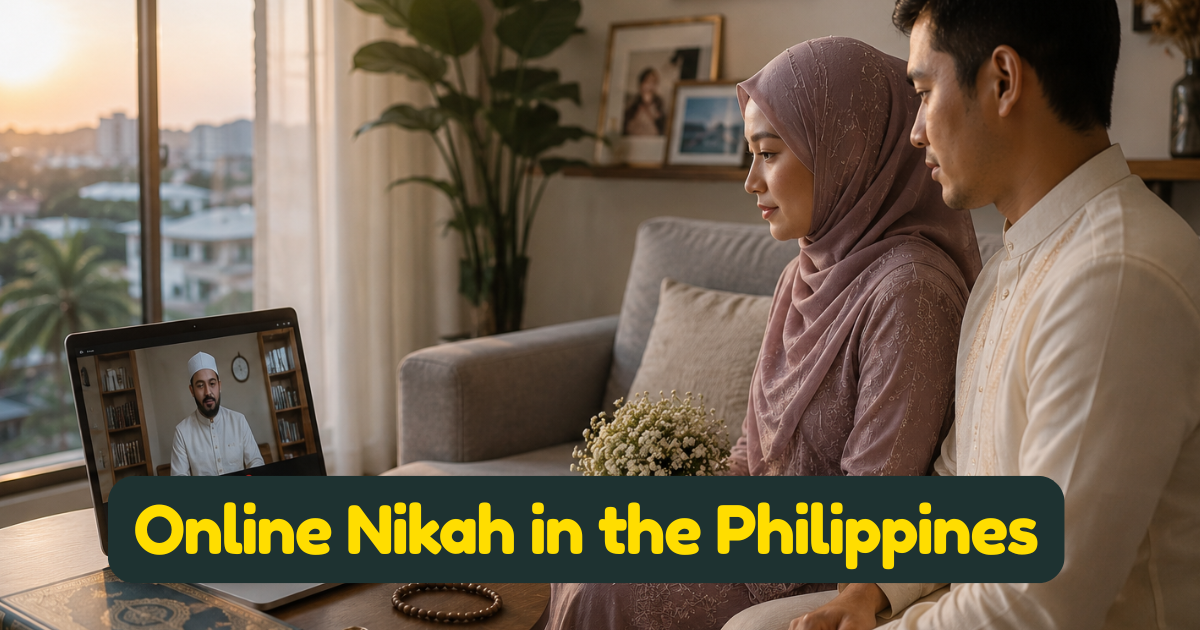
Online Nikah in the Philippines: A Complete Guide for Filipino Muslims, OFWs, and Couples in Mindanao and Beyond
The Philippines is the only predominantly non-Muslim country in the world with a codified Shariah legal framework for Muslim marriage under Presidential Decree 1083. Yet millions of Filipino Muslim OFWs abroad, students, and long-distance couples still struggle to contract a valid nikah. This guide explains how a Shariah-compliant online nikah works within and outside the Philippines, how it aligns with PD 1083, what civil registration steps follow, and why it is the most practical solution for Muslims separated by distance.