Our Journal
Insights, updates, and guidance on your journey to a blessed union.
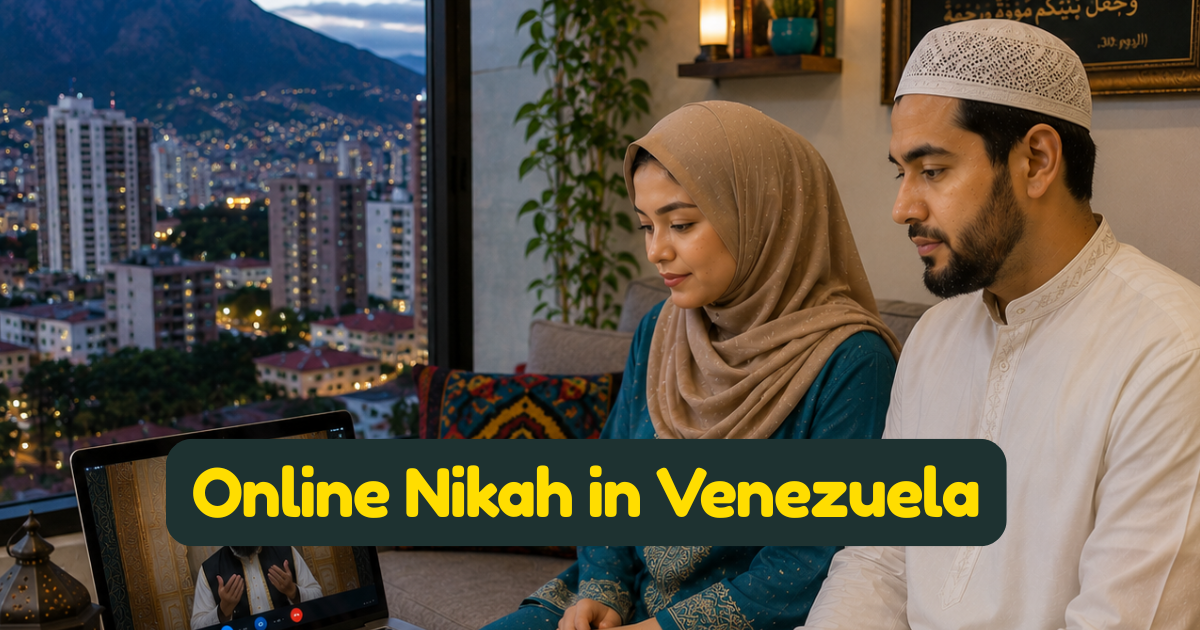
Online Nikah Service in Venezuela
Venezuela is home to approximately 100,000 Muslims — the majority of Lebanese, Palestinian, and Syrian descent — and hosts the Sheikh Ibrahim Al-Ibrahim Mosque in Caracas, whose 113-metre minaret is the tallest in Latin America. Yet Venezuela operates a strictly secular civil marriage system under the Registro Civil, where religious ceremonies including a nikah carry no legal standing without separate civil registration. With over 7 million Venezuelans having left the country since 2014, the Muslim community is increasingly dispersed across Colombia, Peru, Chile, and beyond — creating real long-distance marriage challenges. This guide explains Venezuela's civil marriage framework, how a Shariah-compliant online nikah works, and what couples need for full civil recognition.
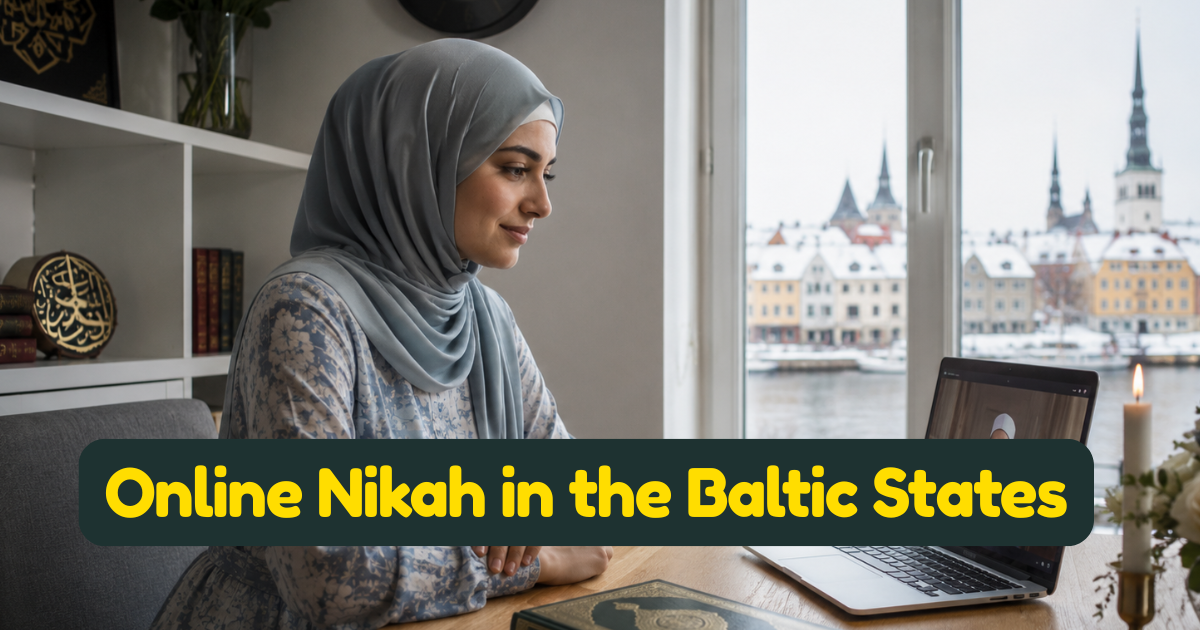
Online Nikah in the Baltic States: Six Hundred Years of Islam in Lithuania, Estonia, and Latvia — and How Modern Muslim Expats Marry Across Civil Registries
The Baltic States — Estonia, Latvia, and Lithuania — carry one of Europe's most overlooked Islamic histories. Lithuanian Tatar Muslim soldiers were settled here by Grand Duke Vytautas in the fourteenth century, and their descendants have maintained mosques and Muslim identity for over 600 years, making this arguably the oldest continuously practising Muslim community in northern Europe. Today, small but growing Muslim communities of Tatar heritage, Middle Eastern students, and South Asian workers coexist in Tallinn, Riga, and Vilnius. Each Baltic state operates a secular civil marriage registry with a one-month notice period and strict document apostille requirements, giving no legal standing to religious ceremonies. This guide explains the civil frameworks across all three countries, what they mean for Muslim couples, and how an online nikah provides the Islamic contract their civil registries cannot.

Online Nikah Service in Iceland
Iceland has one of the smallest Muslim communities in Europe — approximately 3,000 people, or 0.33 percent of the population — yet it is a genuinely diverse community of Palestinian founders, Arab immigrants, Bosnian refugees, and recently arrived asylum seekers from Syria and Iraq. Iceland's marriage system is administered through the National Registry (Þjóðskrá) and requires documents to be submitted at least three weeks before the ceremony, with a certificate of marital status issued within four to eight weeks of the wedding date. Both civil and registered religious ceremonies are legally recognised. This guide explains Iceland's unique marriage framework, where it leaves a gap for Muslim couples, and how a Shariah-compliant online nikah fills that gap.

Online Nikah in Scotland: How Scots Law Lets a Muslim Imam Legally Marry You — and Why Thousands of Scottish Muslims Still Need an Online Ceremony
Scotland's marriage law — governed by the Marriage (Scotland) Act 1977 and devolved entirely from England — contains a feature unique in the United Kingdom: authorised Muslim imams are registered celebrants who can legally solemnise a marriage in a single ceremony that is simultaneously a valid nikah and a legally recognised Scottish marriage. Glasgow Central Mosque's imams hold exactly this authorisation. Yet for the 119,872 Muslims in Scotland — 2.2 percent of the population — whose partner is abroad, whose wali cannot attend, or who live far from an authorised imam, an online nikah remains the most practical and Islamically reliable route. This guide explains Scotland's distinct marriage framework, how it differs from England, and when an online nikah is the right solution.
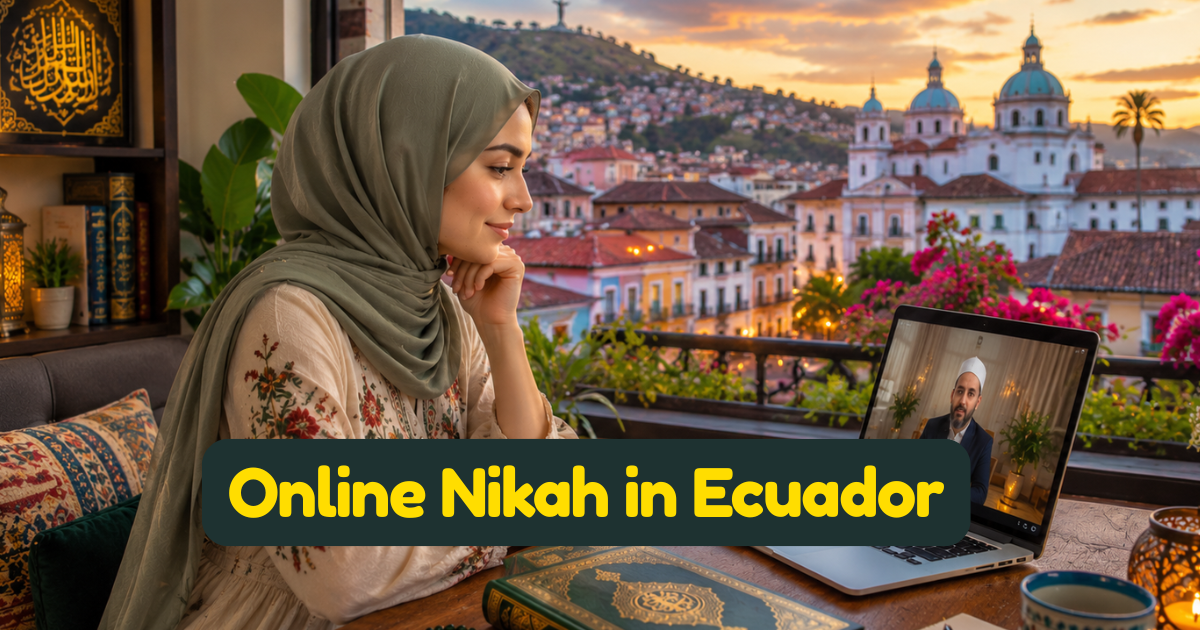
Online Nikah in Ecuador: The Smallest Muslim Community in South America, the Most Influential Spanish-Speaking Muslim Scholar, and a Civil Registry That Even Foreigners Must Use
Ecuador has one of the smallest Muslim communities in South America — approximately 2,000 people — yet it punches far above its demographic weight through Dr. Yahya Suquillo, an Ecuadorian-born convert and University of Madinah graduate who is widely regarded as the most prominent Spanish-speaking Muslim scholar in Latin America. Ecuador's civil marriage framework is managed by the Registro Civil with no legal recognition for religious ceremonies, and — unlike most countries in this series — foreigners who become residents of Ecuador are legally required to register any marriage contracted abroad at the Ecuadorian Civil Registry, or it has no legal standing for property, inheritance, or notarial transactions in Ecuador. This guide explains what this means for Muslim couples, how an online nikah works alongside the Registro Civil, and why both steps are needed.
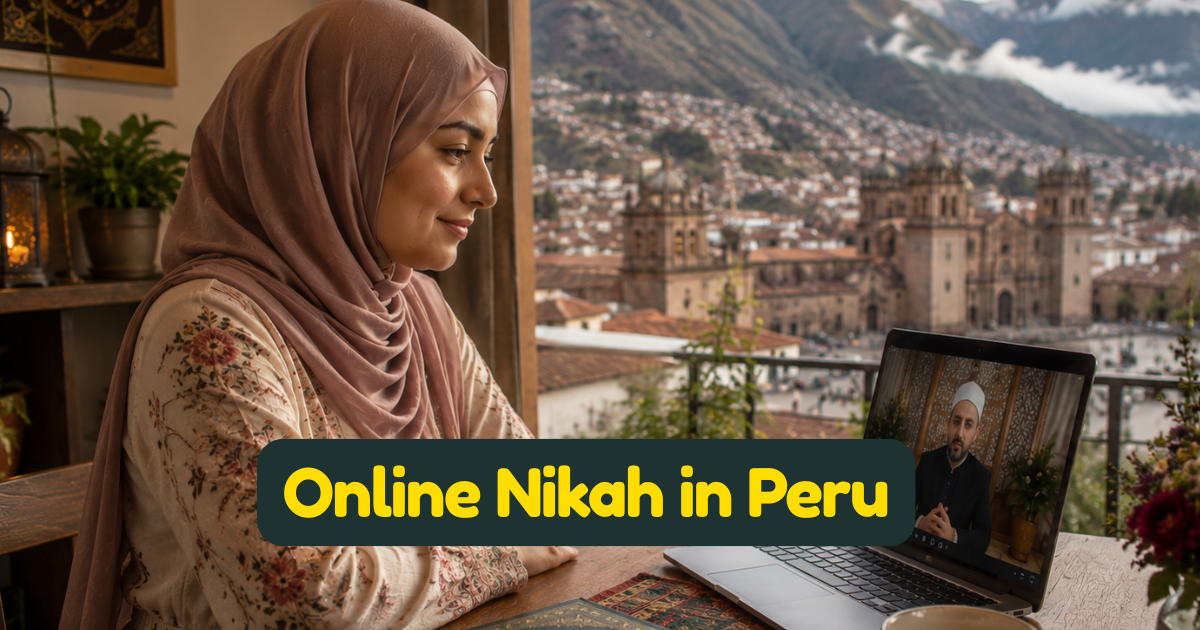
Online Nikah in Peru-How Muslim Couples Marry Islamically in a Secular South American State
Peru carries one of the oldest recorded Islamic histories in the Americas — a Muslim man converted to Islam in Lima in 1560, within decades of the Spanish conquest. Today Peru's Muslim community of approximately 2,600 is concentrated in Lima, with two mosques and a small but dedicated convert and Arab diaspora presence. Peru's civil marriage system operates through municipal civil registries and — since December 2022 — public notaries, with an 8-business-day public notice period and RENIEC registration required for all marriages including foreign ones. Religious ceremonies carry no legal standing. This guide explains how a Shariah-compliant online nikah works in Peru, what the civil process requires, and which situations it is best suited to serve.