Our Journal
Insights, updates, and guidance on your journey to a blessed union.
Online Nikah in Chile
Chile is home to the largest Palestinian diaspora community outside the Arab world — an estimated 450,000 to 500,000 people of Palestinian descent, representing approximately 2.7 percent of the population. Yet the Muslim minority within this enormous Arab community numbers only around 10,000, because the majority of Chile's Arab immigrants came as Eastern Orthodox and Catholic Christians. Chile's growing Muslim community includes Santiago's As-Salam Mosque, a rising convert population, and a small but dedicated Arab Muslim minority. Chile's civil marriage system through the SRCeI Registro Civil recognises only civil ceremonies. This guide explains how a Shariah-compliant online nikah works alongside Chile's civil registration, and who it serves best.
Online Nikah in Ukraine: Eight Hundred Years of Crimean Tatar Islamic Heritage, Wartime Displacement, and How Muslim Couples Marry When the Registry Office Is Unreachable
Ukraine is home to approximately one million Muslims — predominantly Crimean Tatars, Europe's largest indigenous Muslim community, with 800 years of unbroken Islamic presence in Crimea. The 2022 Russian invasion has displaced an estimated 700,000 Ukrainian Muslims from occupied Crimea and eastern Ukraine, scattering families across Europe and creating unprecedented challenges for Islamic marriage: walis in occupied territory, grooms at the front, brides in Germany or Poland, and civil registry offices in war zones. Ukraine's DRACS civil marriage system recognises only state-registered marriages with a one-month waiting period. This guide explains how a Shariah-compliant online nikah serves Ukraine's displaced Muslim community, and what the civil registration process requires in both Ukraine and the countries where refugees now live.
Online Nikah in Quebec: How the Islamic Centre of Montreal Has Legally Married Muslims Since 1964, What Makes Quebec Different From the Rest of Canada, and When You Still Need a Remote Ceremony
Quebec is the only Canadian province governed by the Civil Code — a French civil law tradition entirely distinct from the common law system used in Ontario and the rest of English Canada. Quebec has 421,710 Muslims (5.1% of the provincial population), with Montreal hosting approximately 420,000 to 450,000 Muslims in the greater metropolitan area. Uniquely in Canada, the Islamic Centre of Quebec in Montreal has been authorised to perform marriages combining the Islamic nikah and the legally registered civil ceremony in one sitting since 1964. Yet for the tens of thousands of Quebec Muslim couples whose partner or wali is abroad, an online nikah remains the most practical Islamic route. This guide explains Quebec's distinctive Civil Code marriage framework, how it differs from Ontario, where the gap opens for couples with family overseas, and how an online nikah fills it.
Online Nikah in Slovakia: The Only EU Country Without a Mosque, a Law Designed to Exclude Islam, and How 6,000 Muslims Marry in a State That Does Not Recognise Their Faith
Slovakia is the only European Union member state without a single officially recognised mosque — not because Muslims do not live there, but because Slovakia's parliament deliberately raised the legal threshold for religious recognition to 50,000 adherents in 2016, a law explicitly targeting Islam and its estimated 6,000 adherents. Islam is not a legally recognised religion in Slovakia. Muslim marriages have no pathway through a registered religious officiant. Every Muslim couple in Slovakia must use the civil Matrika registry — and must arrange the nikah independently. This guide explains Slovakia's unique legal hostility to Islam, how the civil Matrika process works, and how a Shariah-compliant online nikah provides the Islamic contract the Slovak state will never supply.
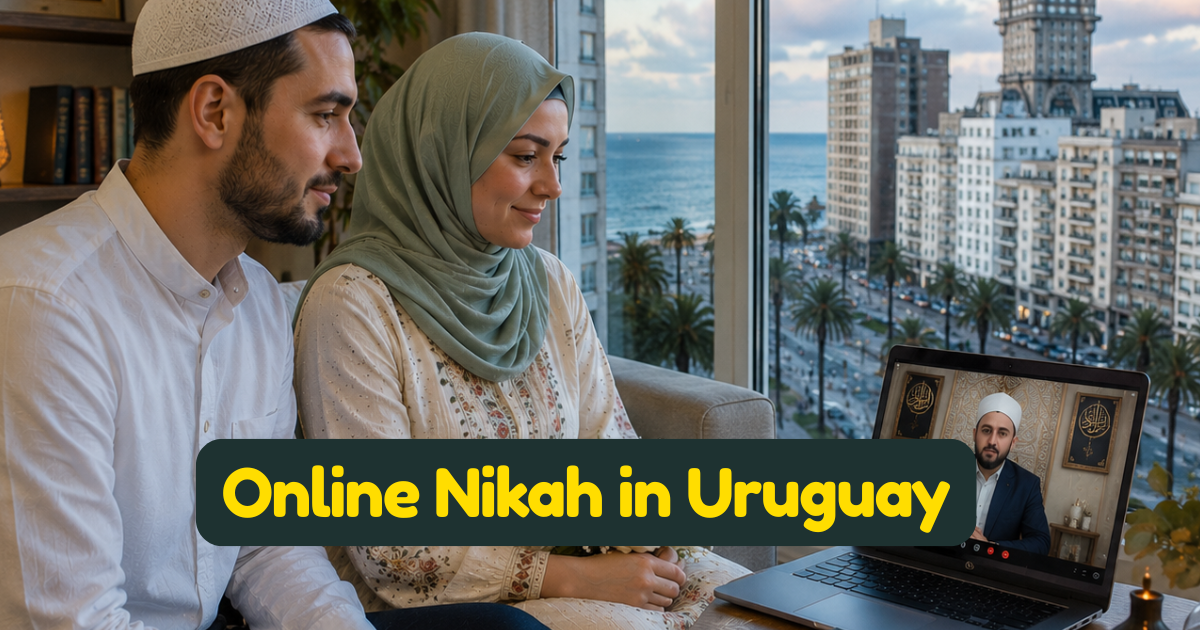
Online Nikah in Uruguay: The Most Secular Country in Latin America, the Palestinian Community on the Brazilian Border, and a Civil Registry That Keeps Faith Entirely Private
Uruguay is consistently ranked among the most secular countries in the world — a nation whose 1919 constitution separated church and state so completely that even Christmas was renamed "Family Day" for much of the 20th century. With an estimated 700 to 1,500 Muslims in a population of 3.4 million, Uruguay has the smallest Muslim community of any country in this series. Yet it carries a striking and little-known Islamic angle: approximately 5,000 Palestinians live in the border city of Chuy, most of them Muslim, who cross into the Brazilian side of the city to use the mosque there. Uruguay's Dirección General del Registro de Estado Civil offers fully digital marriage certificates, recognises only civil ceremonies, and requires at least one party to have a domicile in the registry's judicial district. This guide explains how an online nikah works alongside Uruguay's lean, secular civil registry.
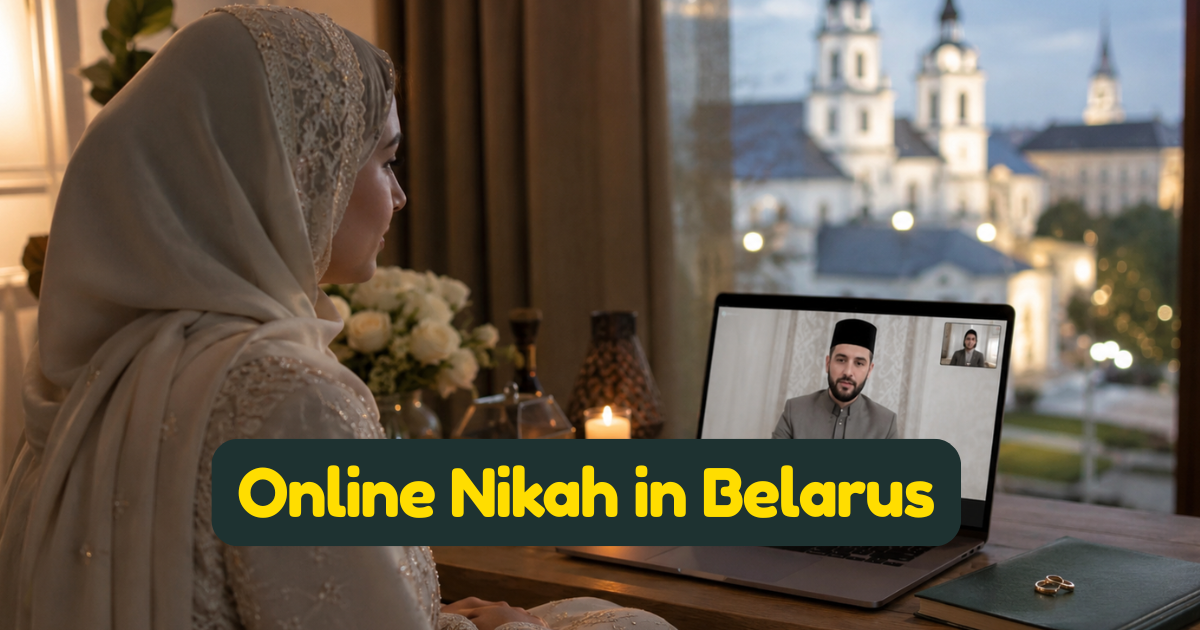
Online Nikah in Belarus: Seven Centuries of Lipka Tatar Islam, Belarusian Written in Arabic Script, and a ZAGS Civil Registry That Gives Religious Ceremonies No Legal Force
Belarus carries one of the oldest Islamic presences in Eastern Europe — the Lipka Tatars settled in what is now Belarus in the 14th century, spoke Belarusian and wrote it in Arabic script, and maintained mosques in villages that still exist today. Belarus recognises Islam officially with 24 registered Muslim communities and 6 mosques including the Minsk mosque reopened jointly by Lukashenko and Erdoğan in 2016. Yet religious ceremonies — including a nikah — have no legal force under Belarusian law, and the ZAGS civil registry requires a 15-day minimum waiting period plus full consular legalisation of foreign documents, as Belarus is not a Hague Apostille Convention member. This guide explains how an online nikah works alongside Belarus's distinctive civil registry, and why the non-Apostille status matters for Muslim couples from most Muslim-majority countries.