Our Journal
Insights, updates, and guidance on your journey to a blessed union.
What Happens to a Nikah If One Spouse Dies Without a Will? Islamic Inheritance Rights Explained
When a Muslim spouse dies without a will, the consequences for the surviving partner depend entirely on two things: whether the nikah was valid and properly documented, and whether the marriage was civilly registered in the relevant jurisdiction. Islamic inheritance law provides a defined share for the surviving spouse — but claiming it requires proving the marriage existed. Civil law provides legal protections for a surviving spouse — but only where the marriage was legally recognised. This article examines exactly what Islamic inheritance law provides, how civil legal systems across the UK, USA, Europe, and beyond interact with an Islamic nikah, what the consequences of an undocumented or unregistered marriage are, and what every Muslim couple should do now to protect the surviving spouse before either of them dies.
What Is the Islamic Ruling on Attraction and Feelings Before Marriage? A Honest Guide for Muslims
Attraction and feelings before marriage are among the most privately experienced and least openly discussed dimensions of Muslim life — particularly for young Muslims navigating genuine emotions within an Islamic framework that does not always explain what to do with them. Islam does not prohibit attraction. It does not require emotional numbness before the nikah. What it does establish is a framework for how those feelings are understood, expressed, and acted upon — one that protects both the person experiencing them and the person they are directed toward. This article examines what Islam actually says about attraction before marriage, what scholars have consistently confirmed, how feelings can be honourably acted upon within the Islamic framework, and what to do when attraction arises for someone one cannot or should not pursue.
How to Write an Islamic Will: A Complete Guide for Muslims in the UK, USA, Europe, and Beyond
Every Muslim who has assets and dependants has an Islamic obligation to write a will — yet the majority of Muslims in the West die without one, leaving their estates subject to civil intestacy rules that distribute assets in ways incompatible with Islamic faraidh and deeply harmful to surviving spouses and children. This complete guide examines the Islamic obligation of the wasiyya, what Islamic inheritance law requires, how to write a will that is both Islamically valid and legally enforceable in the UK, USA, Germany, France, and other Western jurisdictions, what to include and what to avoid, and the specific provisions every Muslim should make to protect their spouse, their mahr, and their children before death arrives without announcement.
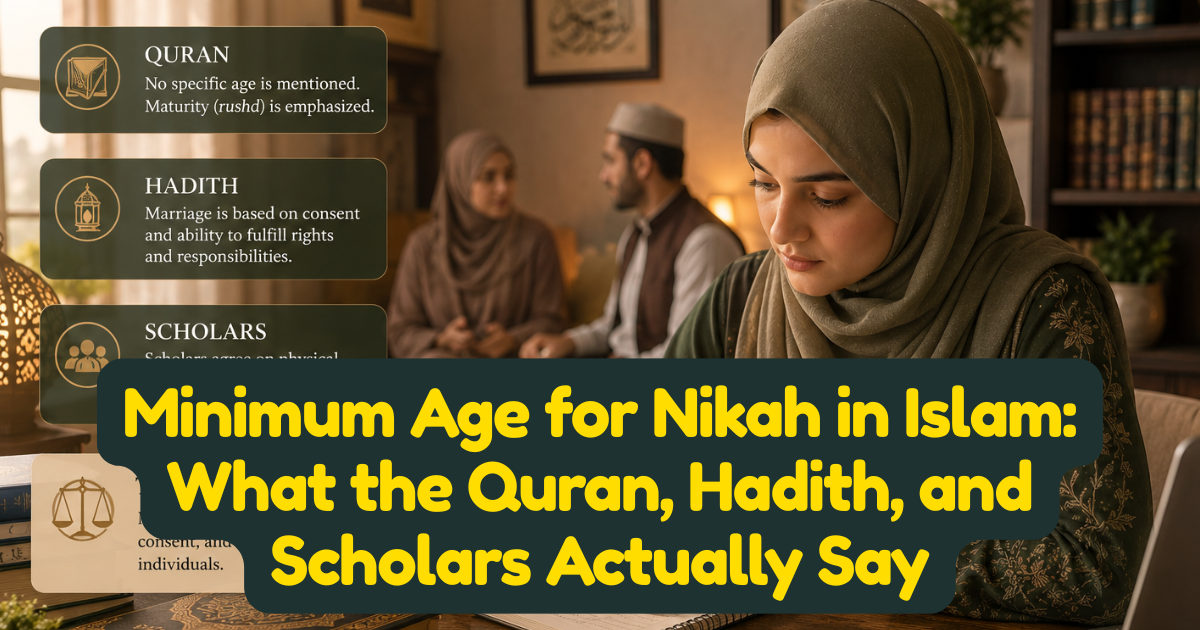
Minimum Age for Nikah in Islam: What the Quran, Hadith, and Scholars Actually Say
What does Islam actually say about the minimum age for Nikah? This guide covers Quranic principles, scholarly interpretations, classical fiqh positions, contemporary fatwa positions, and how Muslim-majority countries have approached this question legally — helping Muslims understand where Islamic guidance and modern child protection align.
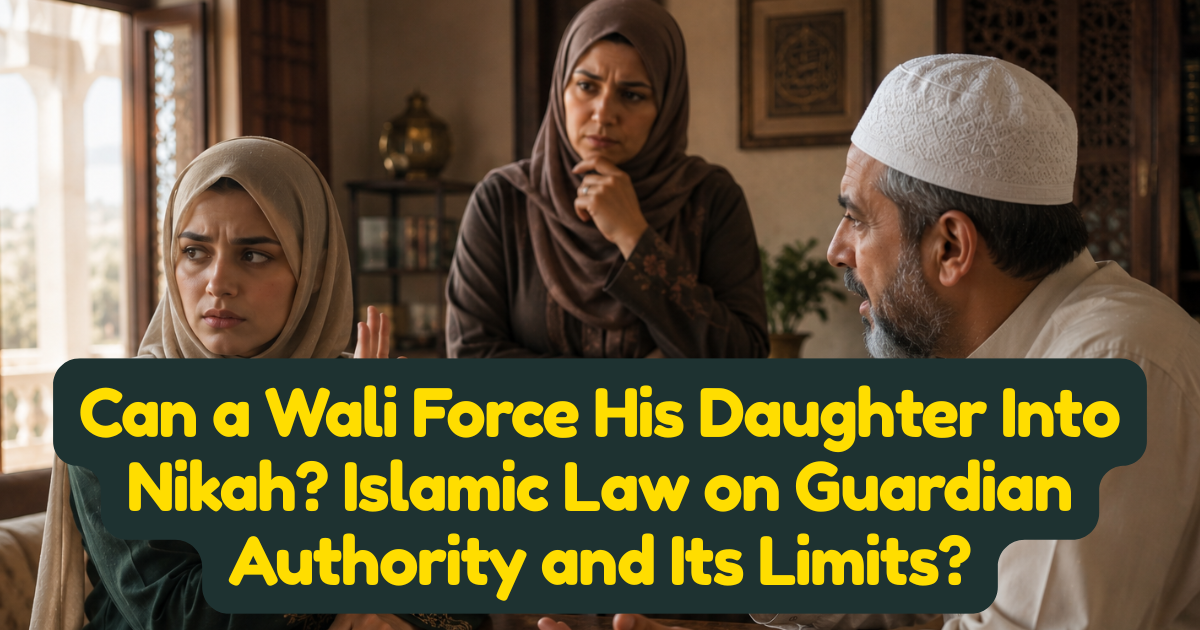
Can a Wali Force His Daughter Into Nikah? Islamic Law on Guardian Authority and Its Limits
Can a father or wali legally force his daughter into Nikah under Islamic law? This guide examines what the Quran, authentic Hadith, and all four madhabs say about guardian authority, its boundaries, the doctrine of consent, and what Islamic law actually provides when a wali oversteps — including the right of the court to act as wali when a guardian abuses his role.
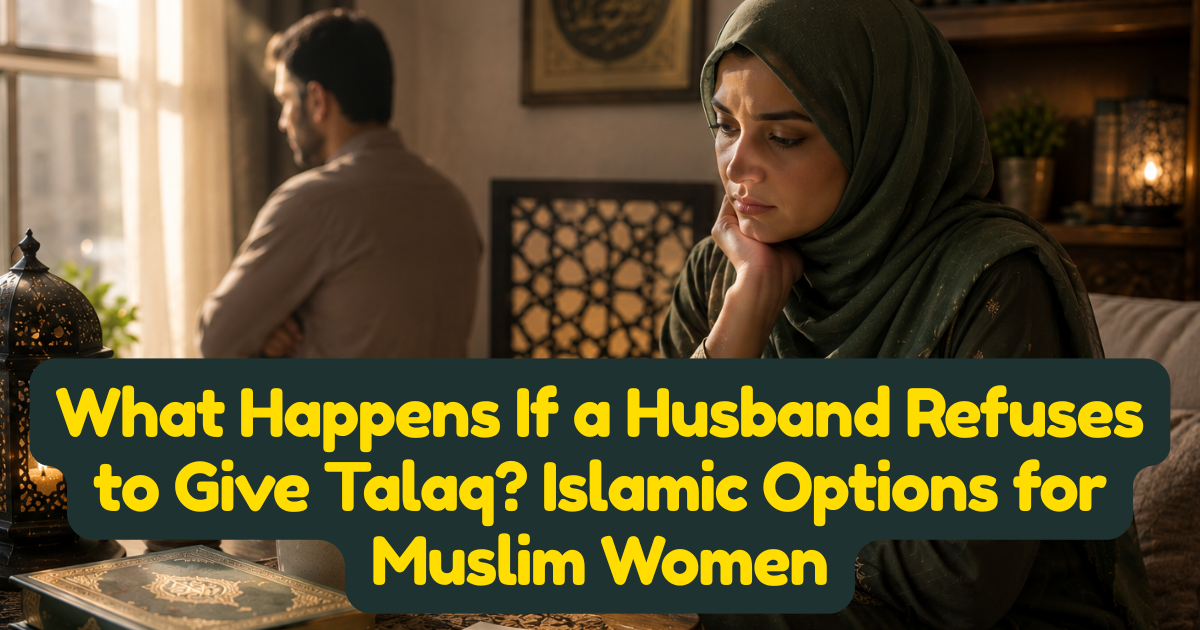
What Happens If a Husband Refuses to Give Talaq? Islamic Options for Muslim Women
What can a Muslim woman do if her husband refuses to give talaq? This guide covers every Islamic legal option available — from khul and faskh to Shariah council intervention and the role of the qadi — backed by Quranic evidence, authentic Hadith, and the positions of all four madhabs. A practical, scholar-backed guide for Muslim women in the UK, USA, Europe, and beyond.