What Is the Role of the Imam in a Nikah Ceremony? A Complete Islamic Guide
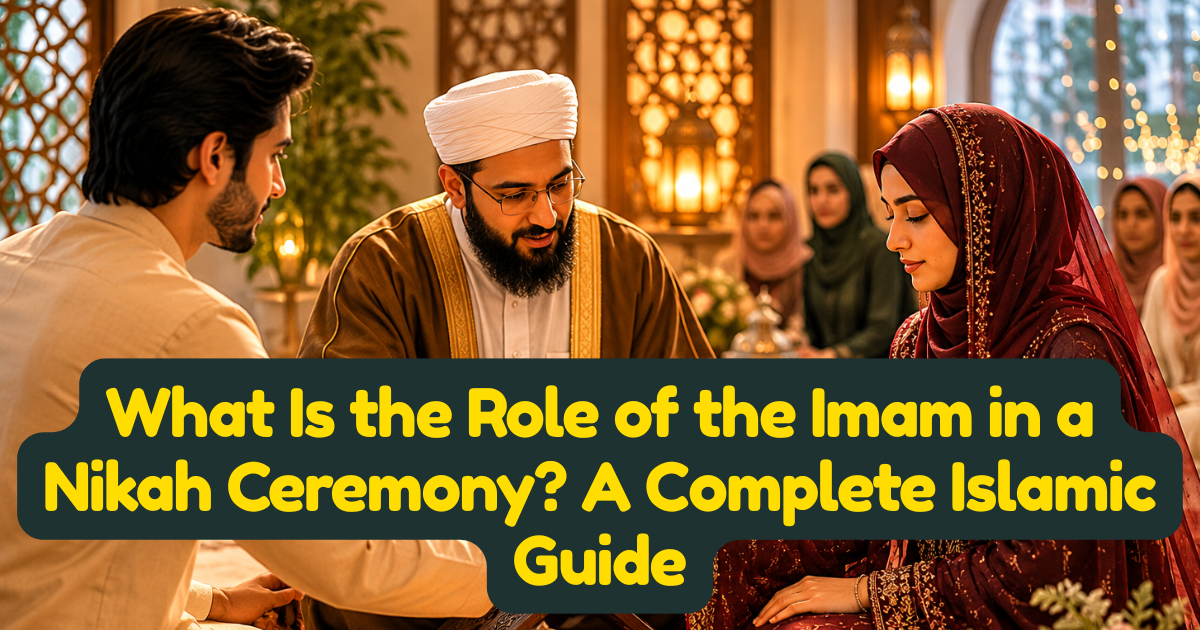
Ask most Muslims who the most important person at a Nikah is, and the answer will almost certainly be the imam. He is the one who stands at the front, who recites the khutbah, who asks the formal questions, who pronounces the couple married. In the popular Muslim imagination — shaped by generations of mosque-based Nikah ceremonies — the imam is the centrepiece of the entire occasion.
Islamic law, however, tells a more precise and considerably more interesting story. The imam — or qazi, as the officiating religious authority is called in many traditions — plays a role that is important, beneficial, and in many contexts practically essential. But the nature of that role, what it actually requires, what qualifies someone to fulfil it, and whether it is a condition of the Nikah's validity or a highly recommended facilitation of it — these are questions whose answers surprise many Muslims when they encounter them for the first time.
This guide addresses all of them — fully, accurately, and with the scholarly grounding the subject demands.
First: What Is the Difference Between an Imam and a Qazi?
The terms imam and qazi (also spelled qadi) are sometimes used interchangeably in the context of Nikah ceremonies, but they carry distinct meanings in classical Islamic jurisprudence.
An imam in the general sense is a religious leader — someone who leads prayers, delivers Friday sermons, and provides religious guidance to a Muslim community. The imam of a mosque is a community religious authority, but his role is pastoral and educational rather than judicial in the formal sense.
A qazi is an Islamic judge — a scholar appointed with judicial authority to adjudicate matters of Islamic law, including marriage, divorce, inheritance disputes, and other family law matters. In classical Islamic governance, the qazi was a state-appointed official whose rulings carried binding legal force within the Islamic legal system.
In Muslim-minority countries today — such as the United Kingdom, the United States, Canada, and across Europe — there are no state-appointed qazis with civil judicial authority. The scholars who officiate Nikah ceremonies in these contexts are typically imams or qualified Islamic scholars who serve the functional role of the qazi without the state judicial apparatus around them. For the purposes of this guide, the terms are used interchangeably to refer to the qualified Islamic scholar who facilitates the Nikah ceremony.
Is an Imam or Qazi Required for a Valid Nikah?
This is the question that matters most — and the answer, which surprises many Muslims, is: no, the presence of an imam or qazi is not a condition of Nikah validity under the majority scholarly position.
The conditions for a valid Nikah in Islamic law, as established across the four major Sunni schools, are:
- The offer (ijab) — a clear statement of marriage from one party.
- The acceptance (qubool) — a clear statement of acceptance from the other party.
- The wali — the guardian of the bride, whose presence and participation is required under the majority position (Maliki, Shafi'i, Hanbali) or whose presence is recommended under the Hanafi position for a mature woman contracting her own marriage.
- Two Muslim witnesses — who are present, of sound mind, adult, and witness the offer and acceptance directly.
- The mahr — the obligatory gift from the husband to the wife, specified either at the time of the Nikah or agreed to be determined.
An imam or qazi does not appear on this list. The Nikah contract in Islamic law is, at its foundation, a contract between two parties — witnessed, guardianship-supported, and mahr-accompanied — but not requiring a religious official to perform or validate it in the way that a civil marriage requires a licensed registrar.
This is a point classical scholars across all four schools consistently affirm. Ibn Qudama in Al-Mughni, Imam al-Nawawi in Al-Majmu, and Ibn Abidin in his Hanafi commentary all confirm that the presence of a religious official is not among the pillars or conditions of the Nikah contract.
So Why Is the Imam's Role So Important in Practice?
If the imam is not a legal requirement, why is his role so practically significant — and why should couples strongly seek a qualified scholar to facilitate their Nikah rather than simply proceeding without one?
The answer lies in what the imam or qualified scholar actually brings to the Nikah — a set of functions that are not conditions of validity but are profoundly important for the integrity, correctness, and completeness of the ceremony:
1. Ensuring All Conditions of Validity Are Actually Met
The most practically important function of a qualified scholar at a Nikah is verification. He confirms that the wali is present and eligible. He confirms that the witnesses are Muslim, adult, and of sound mind. He confirms that consent has been genuinely given by both parties. He confirms that the mahr has been specified. He confirms that there are no existing impediments — prior marriage, prohibited degrees of relationship, iddah — that would invalidate the contract.
A Nikah conducted without a qualified scholar present is a Nikah where all of these verification functions fall to the parties themselves — who may not have the knowledge to identify an error, an omission, or a condition that has not been properly met. The scholar's presence is not a rubber stamp on a contract the parties have already correctly formed. It is an expert check on a legal act with serious and permanent consequences.
2. Conducting the Khutbah al-Nikah
The khutbah al-nikah — the sermon delivered at the beginning of the Nikah ceremony — is a confirmed Sunnah of the Prophet ﷺ. In authentic narrations collected in Sunan Abu Dawud and Sunan al-Tirmidhi, the Prophet ﷺ is recorded as delivering or approving a specific sermon before Nikah proceedings, beginning with the praise of Allah, followed by specific Quranic verses, and concluding with a reminder of the gravity of the covenant being entered.
The khutbah al-nikah is not a condition of validity — scholars are unanimous that a Nikah without it is still valid. But it is a Sunnah act of significant weight that places the marriage in its proper spiritual context from its very first moment. The imam's recitation of the khutbah serves this function — transforming the Nikah from a legal transaction into a spiritually grounded covenant entered with the remembrance of Allah.
3. Facilitating the Offer and Acceptance
In practice, the imam facilitates the formal exchange of offer and acceptance — the ijab and qubool — that constitutes the Nikah contract. He directs the wali's offer on behalf of the bride and the groom's acceptance, or facilitates whatever form the ijab and qubool takes in the specific ceremony, ensuring that the verbal formulation is clear, unambiguous, and Islamically correct.
The precise wording of the ijab and qubool matters more than many couples realise. Ambiguous, conditional, or improperly formed statements of offer and acceptance can create questions about the contract's validity. A qualified scholar ensures the exchange is conducted in language that is unambiguously a Nikah contract — not a promise of future marriage, not a conditional agreement, but a clear and completed contract.
4. Documenting the Nikah
A qualified imam or scholar facilitating a Nikah will typically produce documentation — a Nikah certificate or Nikah nama — that records the essential details of the marriage: the names of both parties, the wali, the witnesses, the mahr amount, the date, and the officiating scholar's signature and credentials. This documentation serves the couple's practical needs — for visa applications, civil recognition where applicable, and as a record of the Islamic marriage — and it serves as evidence of the Nikah's proper conduct should any question arise later.
A Nikah conducted informally between parties without a qualified scholar present often leaves no documentation — which can create serious practical problems for the couple in a wide range of civil and legal contexts.
5. Serving as a Witness of Knowledge and Authority
While the imam does not legally need to be one of the two required witnesses, his presence adds a layer of credibility and community recognition to the Nikah that informal ceremonies lack. The couple's community — family, friends, and broader social circle — recognises the Nikah as properly conducted when a known and trusted scholar has facilitated it. This social and community recognition is part of what the Prophet ﷺ encouraged through the instruction to announce marriages and conduct walimah celebrations.
What Qualifies Someone to Officiate a Nikah?
Since the imam or officiating scholar is not technically a legal requirement but is practically essential for the reasons above, an important question follows: what actually qualifies someone to perform this function? Is any Muslim scholar sufficient? Does he need a specific credential or appointment?
Classical Islamic jurisprudence does not establish a formal licensing system for Nikah officiants in the way that civil law licenses marriage registrars. What scholars consistently require is:
- Knowledge of the conditions of a valid Nikah — the officiating scholar must know what makes a Nikah valid and what invalidates it. He must be able to identify potential problems — impediments, missing conditions, consent issues — and address them before proceeding.
- Knowledge of the relevant fiqh for the madhab being followed — the officiating scholar should be familiar with the school of jurisprudence applicable to the parties, since different schools have different requirements around the wali's role, the form of the ijab and qubool, and related matters.
- Sound Islamic character and trustworthiness — the scholar facilitating a Nikah is handling one of the most significant legal and spiritual acts in two people's lives. His personal integrity and religious standing are relevant to the trust that both parties and the community place in the ceremony.
- Absence of conflicts of interest or disqualifying factors — a scholar who is himself in a state of ritual impurity that would disqualify him from certain religious functions, or who has a personal conflict with one of the parties, should not officiate.
Beyond these general requirements, many Muslim-majority countries have formalised the qualification of qazis through state religious departments — requiring official registration, examination, and appointment before a scholar is authorised to conduct legally recognised Nikah ceremonies. In Muslim-minority countries, this formalisation typically does not exist at the state level, which is precisely why reputable Islamic organisations and online Nikah services that work with verified, qualified scholars fill an important gap.
Step by Step: What the Imam Actually Does at a Nikah Ceremony
For couples approaching their Nikah — whether in a mosque, at home, or through an online service — understanding what the imam actually does during the ceremony removes uncertainty and helps both parties prepare properly:
Before the Ceremony Begins
A thorough imam will, before the ceremony itself begins, conduct a brief pre-ceremony verification — confirming the identities of all parties, the wali's eligibility and relationship to the bride, the witnesses' qualifications, the agreed mahr amount, and the absence of any impediments. This verification may happen in a separate conversation before the formal ceremony commences, or as the opening of the ceremony itself.
The Khutbah al-Nikah
The imam opens with the khutbah al-nikah — beginning with Alhamdulillah and the praise of Allah, followed by the Quranic verses most commonly associated with the Nikah sermon. The three verses most frequently recited are Surah An-Nisa (4:1), Surah Al-Imran (3:102), and Surah Al-Ahzab (33:70-71) — the same combination recorded in the authentic narration from Sunan Abu Dawud as the prophetically approved Nikah sermon.
Confirmation of Consent
The imam will typically confirm directly with the bride — either in person or, in an online ceremony, via video call — that she is entering the Nikah freely, without coercion, and with full understanding of who she is marrying and on what terms. This confirmation of consent is not merely procedural courtesy. It is a Shariah requirement, and a qualified imam takes it seriously as such.
The Ijab and Qubool
The imam then facilitates the formal offer and acceptance. Typically, the wali — or the imam acting as the bride's wakeel (representative) if the wali has delegated this function — makes the offer: offering the bride in marriage to the groom on specified terms including the mahr. The groom then accepts, clearly and unambiguously, in the presence of the witnesses.
The imam confirms that the ijab and qubool have been properly exchanged and that the witnesses have clearly heard and witnessed the exchange. He may ask the witnesses to confirm their witnessing aloud.
Announcement and Du'a
Once the ijab and qubool are complete, the Nikah is contracted. The imam typically announces this — confirming that the Nikah has been concluded — and then leads the gathering in du'a (supplication) for the couple, asking Allah to bless their marriage, grant them righteous children, and keep them upon the path of taqwa throughout their life together.
The du'a most commonly associated with the Nikah — authenticated in Sunan Abu Dawud — is: Barakallahu lakuma wa baraka 'alaykuma wa jama'a baynakuma fi khayr — "May Allah bless you both, and may He pour His blessings upon you, and may He join you together in goodness."
Documentation
After the ceremony, the imam completes the Nikah documentation — the Nikah certificate or Nikah nama — recording all essential details and signing as the officiating scholar. The witnesses also sign. Both parties receive copies.
Online Imams and Online Nikah: Is It Valid?
One of the most practically important questions for Muslims today — particularly those managing international distances, family situations, or the need for a discreet ceremony — is whether a Nikah conducted with an imam participating via video call is valid under Islamic law.
The majority of contemporary scholars who have addressed this question — including through the European Council for Fatwa and Research and various national Islamic scholarly bodies — have confirmed that a Nikah conducted via video call, with a qualified scholar officiating remotely, is valid provided all the conditions of a valid Nikah are properly met: genuine consent, eligible wali, two witnesses physically present to witness the ijab and qubool, and a specified mahr.
The key Shariah requirement for witnesses is that they witness the ijab and qubool — the exchange of offer and acceptance. In an online Nikah conducted via live video, the witnesses are physically present with the relevant parties and directly witness this exchange. The imam's role — facilitating, verifying, and officiating — can be fulfilled remotely via live video connection without affecting the validity of the contract.
InstantNikah.com has a dedicated guide on this topic: Can Nikah Be Done Over Zoom or Video Call? Islamic Ruling.
Choosing a Qualified Scholar for Your Nikah
For Muslims arranging their own Nikah — particularly those outside Muslim-majority countries where qualified scholars may not be immediately accessible — the question of how to find a genuinely qualified imam for the ceremony is a real and practical one.
Key considerations when choosing an officiating scholar include:
- Verified Islamic credentials — the scholar should have formal Islamic education, ideally from a recognised institution, and should be able to demonstrate knowledge of Nikah law specifically.
- Experience with Nikah ceremonies — familiarity with the practical conduct of Nikah ceremonies, including how to handle complications, how to verify conditions, and how to produce appropriate documentation.
- Recognition by a reputable Islamic organisation — scholars affiliated with established mosques, Islamic centres, or reputable online Nikah services offer a level of institutional accountability that individual scholars operating independently may not.
- Willingness to verify all conditions before proceeding — a scholar who is willing to proceed without verifying consent, wali eligibility, witnesses, and mahr is not serving the parties' interests or the requirements of Islamic law.
How InstantNikah.com Fulfils the Imam's Role Online
At InstantNikah.com, every Nikah we facilitate is conducted by qualified Islamic scholars with formal credentials and extensive experience in Islamic marriage law. Our scholars fulfil every function of the imam's role described in this guide — including pre-ceremony verification, the khutbah al-nikah, consent confirmation, facilitation of the ijab and qubool, witnessing verification, the closing du'a, and full documentary completion.
The only difference from a traditional mosque ceremony is the medium — our scholars officiate via secure video call, bringing the full weight of qualified Islamic scholarship to couples wherever they are in the world. The Shariah requirements are identical. The scholarly oversight is identical. The documentation is identical. The result — a valid, properly conducted, fully Shariah-compliant Nikah — is identical.
Explore our Nikah process, review our available packages, or reach us through our contact page. You may also find these related guides helpful:
- Is Online Nikah Valid in Islam?
- Can Nikah Be Done Over Zoom or Video Call?
- Is Nikah Valid Without a Qazi?
- What Makes a Nikah Certificate Islamically and Legally Valid?
- Is Phone Nikah Valid in Islam?
Conclusion: The Imam Is Not the Nikah — But He Makes It Better
The imam or qazi is not a legal requirement for a valid Nikah under Islamic law. The Nikah is a contract between two parties, properly witnessed and guardianship-supported, that is valid by virtue of its own correctly performed elements — not by virtue of who officiated it.
But this jurisprudential clarity should not be mistaken for a suggestion that seeking a qualified scholar is optional. The imam's role — verifying conditions, delivering the khutbah, facilitating the ijab and qubool, confirming consent, witnessing the exchange, making du'a, and documenting the marriage — is practically indispensable for any couple who wants their Nikah to be conducted correctly, completely, and with the protection that expert Islamic knowledge provides.
The imam does not make the Nikah. He makes sure the Nikah is made correctly — and that, for any Muslim entering one of the most significant covenants of their life, is worth seeking out with care.
Admin User
Author