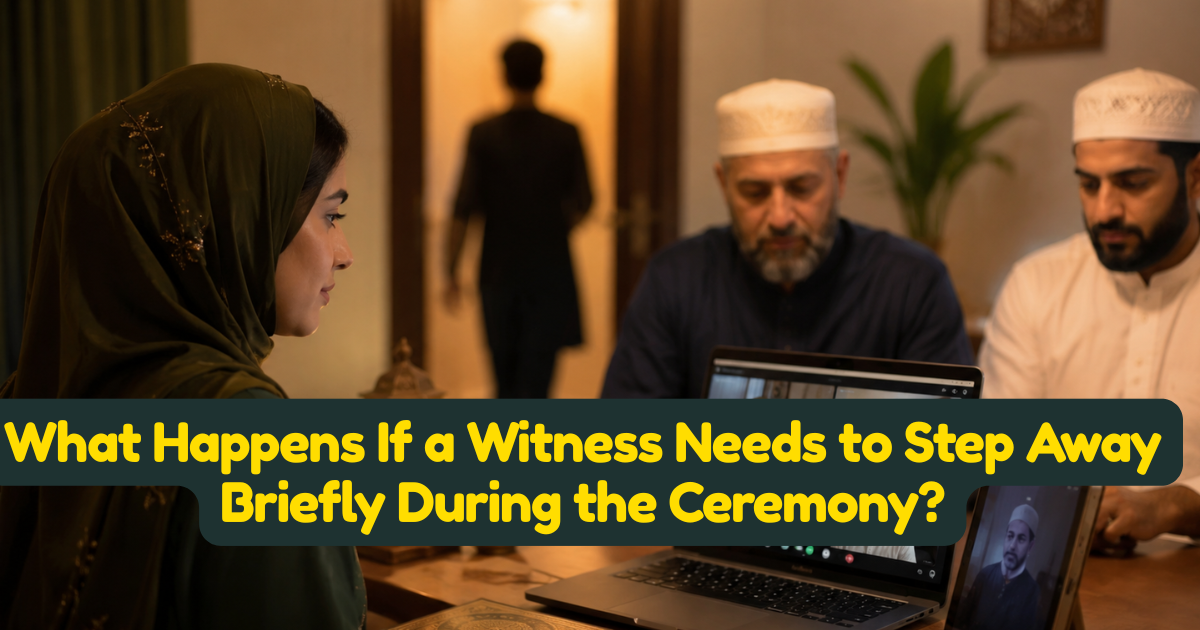
What Happens If a Witness Needs to Step Away Briefly During the Ceremony?
Real life doesn't pause for a ceremony's most significant moments — a witness's toddler starts crying just as the officiant begins the offer, someone's phone rings with an unavoidable call, or a sudden need to step away briefly arises at exactly the wrong time. This is a genuinely common occurrence in both in-person and online ceremonies, and understanding how it's properly handled removes unnecessary worry about whether a brief interruption threatens the marriage's standing.
Why Witness Attentiveness Matters at the Specific Moment of Exchange
As established elsewhere on our site regarding witness qualifications, what matters is that a witness is genuinely present, attentive, and capable of confirming the specific offer-and-acceptance exchange as it occurs — not that they remain in the room or on the call for the ceremony's entire duration regardless of what else happens. This means the critical question isn't whether a witness ever steps away at any point, but specifically whether they were attentively present during the actual ijab-qabul moment itself.
If the Witness Steps Away Before the Core Exchange
If a witness briefly steps away during the khutbah, general opening remarks, or other surrounding elements of the ceremony — but returns and is fully attentive by the time the actual offer and acceptance occurs — this creates no validity concern whatsoever, since the requirement centers on attentiveness during the specific pivotal exchange, not continuous, uninterrupted presence throughout every minute of the broader ceremony.
If the Witness Steps Away During the Core Exchange Itself
This is the scenario that actually matters. If a witness is genuinely absent, distracted, or not attentively present during the specific moment the offer and acceptance are exchanged, they haven't fulfilled the witnessing function for that exchange, regardless of how briefly they were away. In this case, similar to the connection-interruption scenario covered elsewhere on our site, the officiant should simply wait for the witness to return and be confirmed attentive, then either restart the exchange cleanly or confirm that the witness genuinely heard the complete exchange if they returned mid-sequence with uncertainty about what they caught.
Why a Careful Officiant Confirms Attentiveness Before Proceeding
A well-trained officiant doesn't simply assume witnesses are attentive and proceed regardless — before beginning the core exchange, a good officiant will typically do a brief visual and verbal check, confirming that both witnesses are present, visible, and ready, precisely to avoid conducting this pivotal moment while a witness is genuinely distracted or absent without anyone noticing until later.
What to Do If a Witness's Brief Absence Is Anticipated in Advance
If a couple knows in advance that a witness — perhaps a parent managing young children, or someone with a health condition requiring occasional brief breaks — may need to step away periodically, communicating this to the officiant beforehand allows them to plan the ceremony's pacing accordingly, perhaps building in a brief pause before the core exchange specifically to ensure that witness's full attentiveness at the critical moment.
Managing Young Children During an Online Ceremony
For witnesses who are parents of young children, having another family member on standby to briefly manage a child's needs during the specific core exchange — even if the parent remains present for the broader ceremony — can help ensure the witness's attention isn't divided at exactly the wrong moment, without requiring the parent to be entirely absent from the family celebration overall.
What If the Interruption Happens and No One Notices Until Later
If, after the ceremony, it becomes clear that a witness was genuinely inattentive or absent during the core exchange without this being caught at the time, this is worth addressing honestly rather than ignoring — potentially involving arranging for that witness (or a substitute) to properly witness a repeated, clean exchange, ensuring the marriage rests on solid documented ground rather than an unaddressed gap in proper witnessing.
Distinguishing This From the Broader Witness-Contradiction Scenario
This scenario differs from the more serious situation covered in our article on contradicting witness accounts — here, the concern is about attentiveness in real time during the ceremony itself, which a careful officiant can and should manage proactively, rather than a dispute arising years later about what a witness does or doesn't recall from an already-completed ceremony.
Reassurance for Couples Worried About This
A brief, ordinary interruption — a witness stepping away momentarily during a less critical part of the ceremony, or a proactive pause to ensure full attentiveness before the core exchange begins — is a completely normal, manageable part of many ceremonies and reflects careful, proper practice rather than a threat to the marriage's validity. What matters is that a properly attentive witnessing of the actual exchange ultimately occurs, however the ceremony needs to be paced to achieve that.
How InstantNikah.com Manages Witness Attentiveness
Our officiants confirm both witnesses' presence and attentiveness immediately before beginning the core offer-and-acceptance exchange, pausing if either witness needs a moment to return or settle, and never proceeding with the pivotal moment of the ceremony until we can confirm both witnesses are genuinely ready and attentive.
Admin User
Author