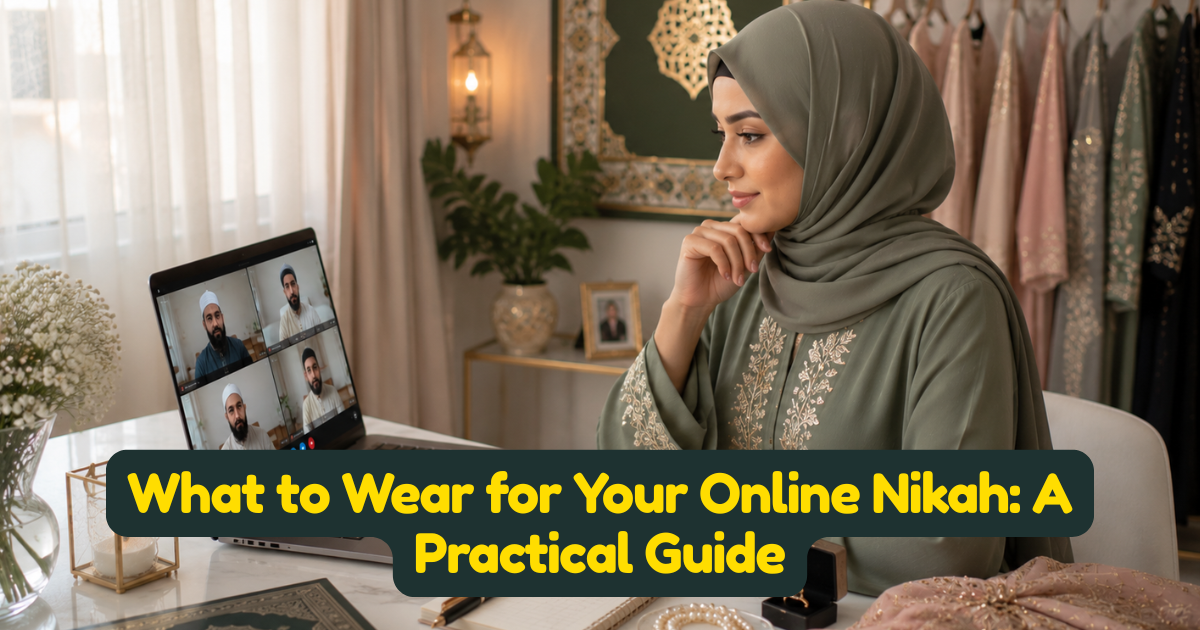
What to Wear for Your Online Nikah: A Practical Guide
"What to wear for online nikah" is searched by couples navigating a genuinely different consideration than a typical in-person ceremony — dressing not just for the occasion's significance, but for how you'll appear on camera to an officiant, witnesses, and family joining remotely. This guide walks through the practical and religious considerations together.
Modesty Requirements Remain the Same, Regardless of Format
The Islamic modesty standards relevant to a nikah ceremony don't change simply because the ceremony happens over video — both spouses should dress in a manner consistent with Islamic guidelines for modest attire, exactly as they would for an in-person ceremony. The video format doesn't loosen these expectations; if anything, being visible on a recorded or widely joined call is worth keeping in mind when choosing an outfit.
What Brides Commonly Choose
Brides often choose an outfit reflecting their cultural background and personal style within modest guidelines — a traditional dress, a modest gown, or formal wear appropriate to their family's customs, paired with hijab or a headscarf for those who observe it. Comfort matters practically too, since the ceremony, even when brief, often involves sitting attentively for a meaningful stretch of time.
What Grooms Commonly Choose
Grooms typically opt for formal or semi-formal attire — a suit, a traditional outfit like a sherwani or thobe depending on cultural background, or simply smart, respectful clothing appropriate to the occasion's significance, without needing to match any specific formal dress code beyond general modesty and respectfulness.
Camera Considerations Specific to Video Ceremonies
Since the ceremony will be viewed on camera, a few practical considerations matter that wouldn't apply in person: solid or simple patterns generally read more clearly on video than very busy or highly detailed prints, good lighting matters as much as the outfit itself for how you'll actually appear, and testing how your chosen outfit looks on camera beforehand — even a quick phone photo — can catch issues you wouldn't notice looking in a mirror alone.
Accommodating Niqab or Limited Camera Visibility
As discussed in our detailed guide on camera requirements, brides who observe niqab or prefer limited visibility on camera can be fully accommodated without any impact on the ceremony's validity — dress and camera preferences here are entirely personal choices, not something that needs to be justified or explained to anyone conducting or observing the ceremony.
Family and Guest Attire
Family members joining the call as witnesses or guests generally follow the same modest dress expectations, though this is less strictly significant than the couple's own attire, and most services don't impose specific requirements on guests beyond general appropriateness for a religious occasion.
What About Traditional Ceremonial Items
Some couples want to incorporate traditional ceremonial items — a specific dupatta, a particular piece of jewelry, or a family heirloom — into their online ceremony attire, which is entirely appropriate and often adds meaningful personal or cultural significance, exactly as it would in an in-person ceremony.
Dressing for a Combined Ceremony and Family Gathering
For couples combining their online nikah with an in-person gathering on the same day, as discussed in our article on the same-room ceremony scenario, attire planning should account for both the video ceremony itself and any broader celebration happening around it, ensuring comfort across the full duration of the day.
Practical Tips for the Day Itself
- Test your outfit on camera in the same lighting you'll actually use for the ceremony.
- Choose solid colors or simple patterns over busy prints for better video clarity.
- Ensure comfort for sitting attentively through the full ceremony, including the khutbah.
- Confirm any camera-visibility preferences with your officiant in advance, so everyone's expectations align.
Why This Question Deserves a Genuine Answer, Not Dismissal
Some might treat "what to wear" as a trivial concern compared to the ceremony's religious significance, but feeling genuinely prepared and comfortable in how you'll appear during one of the most meaningful moments of your life is entirely legitimate — practical readiness and religious meaning aren't in tension with each other.
How InstantNikah.com Supports Couples Preparing for Their Ceremony
While attire choice is entirely personal, our officiants are happy to discuss camera setup, lighting, and any modesty-related accommodations during your pre-ceremony consultation, ensuring you feel genuinely prepared — visually and otherwise — for the moment itself.
Admin User
Author