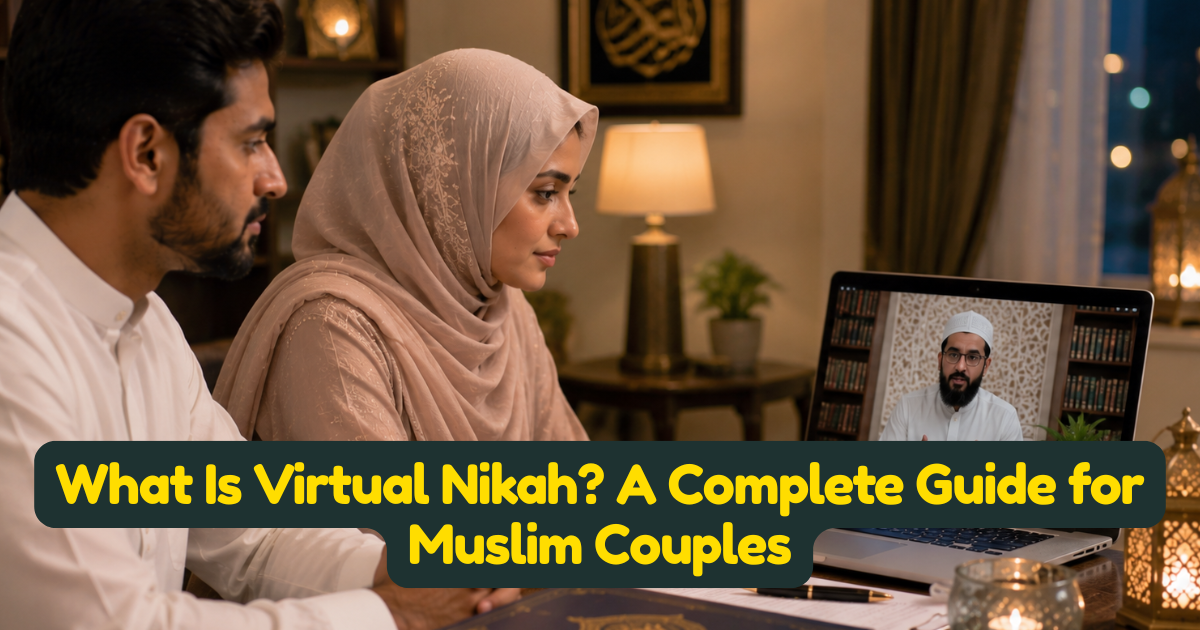
What Is Virtual Nikah? A Complete Guide for Muslim Couples
"Virtual nikah" is one of the most searched phrases among Muslim couples exploring their marriage options today, yet the term itself often means different things to different people — some picture a fully remote ceremony with no physical presence at all, others assume it must involve some compromise on Islamic requirements to work over video. Neither assumption is quite right, and this guide walks through exactly what virtual nikah is, how it works, and what makes it fully valid.
Defining Virtual Nikah Clearly
Virtual nikah refers to an Islamic marriage ceremony conducted through live video communication rather than requiring all parties to be physically gathered in one location. The officiant, the couple, the witnesses, and where applicable the wali, connect via a secure video call, and the ceremony proceeds through the same essential structure as an in-person nikah — offer, acceptance, mahr confirmation, and proper witnessing — adapted to this format.
Why "Virtual" Doesn't Mean "Less Valid"
A common misconception is that virtual nikah represents some kind of compromise or shortcut version of a proper marriage. This isn't accurate. The core Islamic conditions for a valid nikah — clear, free consent from both spouses, two qualified witnesses genuinely present and attentive, an agreed mahr, and wali involvement where required — can be fully satisfied over live video exactly as they can in person. What matters is that each condition is genuinely met, not the specific physical arrangement of the parties involved.
The Real-Time Requirement
The single most important technical detail underlying virtual nikah's validity is that the ceremony must happen live, in real time — a pre-recorded video sent afterward, or an asynchronous written exchange, does not satisfy the witnessing requirement, since witnesses must observe the actual offer and acceptance as it occurs, not review a recording of it after the fact. This is why every reputable virtual nikah service conducts ceremonies through live video call rather than any recorded or delayed format.
Who Typically Chooses Virtual Nikah
- Long-distance couples, including those in different countries navigating visa timelines before they can physically be together.
- Diaspora Muslims in regions without easy access to a local imam experienced in marriage officiating.
- Couples with family spread across multiple countries, wanting relatives in different time zones to witness the ceremony together.
- Couples facing time constraints — an approaching visa deadline, a medical circumstance, or simply wanting to formalize their marriage promptly without waiting for an in-person gathering to be arranged.
- Couples prioritizing privacy, preferring a smaller, more discreet ceremony than a larger in-person gathering would typically involve.
What a Virtual Nikah Ceremony Actually Looks Like
A properly conducted virtual nikah opens with identity verification for both spouses, followed by the officiant confirming witness and wali presence, a khutbah (sermon), the formal offer and acceptance exchange, confirmation of mahr terms, and closing du'a — the same structural sequence as an in-person ceremony, simply conducted with all parties connected via video rather than gathered physically.
Documentation From a Virtual Nikah
Following the ceremony, couples receive a nikah certificate documenting the marriage — including the date, officiant credentials, witness details, and mahr terms — exactly as they would from an in-person ceremony. This certificate holds the same religious weight and, depending on the couple's jurisdiction, can support subsequent civil registration through the same processes covered throughout our country guides.
Does Virtual Nikah Have Civil Legal Recognition
This depends entirely on the couple's specific country, exactly as it does for an in-person religious ceremony — in most jurisdictions, a virtual nikah, like an in-person one, is religiously valid but doesn't automatically constitute civil marriage recognition unless the officiant is specifically registered as an authorized civil marriage officer or the couple separately pursues civil registration.
Common Concerns Couples Have About Virtual Nikah
Couples new to this concept often ask whether witnesses need to be physically together, whether the ceremony feels less meaningful conducted this way, and how modesty preferences are accommodated on camera — all of which are addressed in depth throughout our broader content, but the short answers are: witnesses can join from different locations entirely, many couples find virtual ceremonies deeply meaningful precisely because they allow distant loved ones to attend, and modesty preferences including camera use can be fully accommodated without affecting validity.
Technology Requirements for a Smooth Virtual Nikah
A stable internet connection, a device with working camera and microphone, and a quiet, private space for the ceremony are the main practical requirements — reputable services will confirm these details with couples ahead of time and often provide backup platform options in case of technical issues during the live call itself.
How Virtual Nikah Differs From "Nikah by Proxy"
It's worth distinguishing virtual nikah, where both spouses actively participate live via video, from nikah by proxy (wakalah), where one spouse is fully represented by another person acting on their behalf without direct participation — these are related but distinct concepts, covered in more depth in our dedicated comparison article, and most couples searching for "virtual nikah" are looking for the live, directly-participatory format rather than proxy representation.
How InstantNikah.com Conducts Virtual Nikah Ceremonies
We conduct fully Shariah-compliant virtual nikah ceremonies via live, secure video call, with certified officiants, proper witness arrangement, and complete documentation — treating every virtual ceremony with exactly the same religious rigor as an in-person one, because that's precisely what Islamic law requires.
Admin User
Author