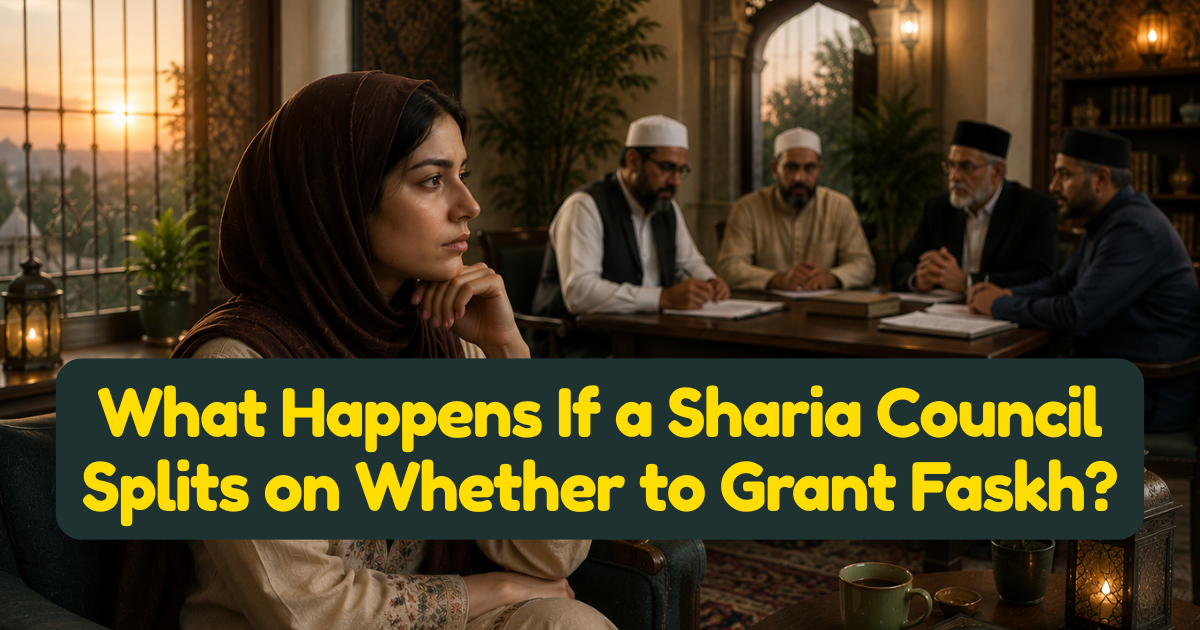
A faskh decision isn't made by a single scholar working alone — it's reached by a panel, precisely so that one person's individual reading of a complicated case doesn't single-handedly determine something as serious as ending a marriage. But putting multiple scholars in a room together inevitably raises a real question: what happens when they genuinely don't agree?
Disagreement Among Qualified Scholars Has Always Been Considered Legitimate
This isn't treated as a flaw or failure in the system — it reflects a principle deeply embedded in Islamic legal tradition itself. A detailed explainer from Theos Think Tank on what Sharia law actually is notes that while jurists across the four orthodox Sunni schools genuinely disagreed with each other on particular issues, many recognised that difference of opinion (ikhtilaf) was inevitable and indeed legitimate, provided the basic principles of Islam remained upheld. This isn't a modern accommodation — it's a longstanding feature of Islamic jurisprudence, which has never treated scholarly consensus as a strict requirement for every individual ruling.
How a Real Council Actually Frames the Panel's Role
A practical description of how an operating Sharee Council processes faskh and khula applications confirms that the panel of scholars adjudicates based on the genuine merits and validity of each case — explicitly warning applicants that it must not be assumed every application will automatically result in ending the marriage. This framing matters: it presents the panel's decision as a genuine collective deliberation over the specific facts presented, not a rubber-stamp process — which is exactly the kind of process where individual scholars weighing the same evidence might reasonably reach different initial conclusions before reaching a final collective decision.
What Actually Resolves a Genuine Split
- Further deliberation and discussion among panel members is the first and most common response — genuine disagreement is usually worked through collectively before any formal vote or final position is reached, rather than immediately escalated.
- Senior or more experienced scholars on the panel often carry particular weight in resolving genuine disagreement, given their deeper familiarity with how similar cases have been handled previously.
- Postponing the decision, as discussed in our earlier piece on refiling rejected faskh applications, is itself often the practical response to a panel that hasn't reached sufficient agreement — buying time for further evidence, clarification, or discussion rather than forcing a premature decision either way.
- Where genuine theological disagreement persists — for instance, different scholars weighing a particular ground differently based on their own school of thought — the panel's collective judgment, reached through its established process, becomes the council's operative position for that case, even if not every individual scholar shares it.
Why This Reflects Sound Practice, Not a Weakness
A panel made up of multiple scholars exists precisely because complex, fact-specific cases benefit from more than one trained perspective — and a panel where disagreement never surfaced would arguably be less rigorous, not more. The fact that scholars can genuinely differ on how a specific set of facts maps onto recognised grounds for faskh is consistent with how Islamic jurisprudence has always functioned, and a council's internal process for working through that disagreement — discussion, deferral to more experienced members, or postponement for further information — reflects a deliberative system functioning as intended, rather than a sign that something has gone wrong.
Key Takeaway
A genuine split among panel members considering a faskh application isn't a system failure — it reflects the longstanding Islamic principle that qualified scholars can legitimately reach different conclusions from the same facts. Real councils generally work through this disagreement collectively, often resolving it through further deliberation, the weight of more experienced members' views, or postponing the case for additional evidence rather than forcing an immediate, possibly premature decision. For an applicant, this means a delay caused by panel disagreement reflects genuine, careful consideration of her case, not an indication that something has gone wrong with it.
```Admin User
Author