Can You Have Two Different Officiants Split the Ceremony Between Them?
For couples whose families are each connected to a different respected imam or community leader, choosing just one officiant can feel like an unwanted decision between two meaningful relationships. Some couples ask whether it's possible to involve both — having each contribute to different parts of the ceremony rather than selecting one over the other. This is generally workable, provided the ceremony's core requirements remain clearly and properly fulfilled.
Why This Is Generally Permissible
There is no religious requirement that a single individual conduct every element of a nikah ceremony from start to finish. What matters is that the essential elements — the offer, the acceptance, mahr confirmation, and proper witnessing — are each clearly and correctly handled, regardless of whether one person manages this entire sequence or it's thoughtfully divided between two respected figures each contributing meaningfully to different parts.
How Couples Typically Structure a Two-Officiant Ceremony
A common approach involves one officiant delivering the khutbah — the opening sermon and reflection — while the other conducts the core ijab-qabul exchange itself, or vice versa depending on which figure the couple feels is better suited to which role. Another common structure has one officiant leading the overall ceremony while inviting the second to offer a blessing, a portion of du'a, or a few words of reflection at a specific point, without formally splitting the core contractual elements themselves.
The Part That Should Not Be Genuinely Split: The Core Exchange
While the khutbah, blessings, and surrounding elements can be flexibly divided, the core ijab-qabul exchange itself works best conducted clearly by a single officiant guiding that specific moment, to avoid any confusion for witnesses about exactly what's being asked and confirmed at the pivotal point of the ceremony. This doesn't mean the second officiant can't be present, involved, and visibly part of the moment — simply that the actual guiding of the offer-and-acceptance sequence benefits from clear, singular direction rather than two voices potentially creating ambiguity during this specific exchange.
Coordinating Two Officiants Who May Not Know Each Other Well
Where the two officiants involved aren't already well acquainted, a brief planning conversation beforehand — ideally arranged by the couple or their family — helps ensure both understand exactly how the ceremony will be divided, who will lead which portion, and how the transition between their respective roles will flow smoothly, rather than each simply arriving on the day with their own separate expectations.
Why This Can Be Particularly Meaningful for Blended or Multicultural Families
Couples from different cultural, regional, or community backgrounds sometimes find that involving an officiant connected to each side of the family, rather than choosing one exclusively, helps the ceremony feel genuinely representative of both families coming together — a small but meaningful gesture of inclusion that can matter significantly for family harmony going into the marriage.
Managing This Logistically in an Online Setting
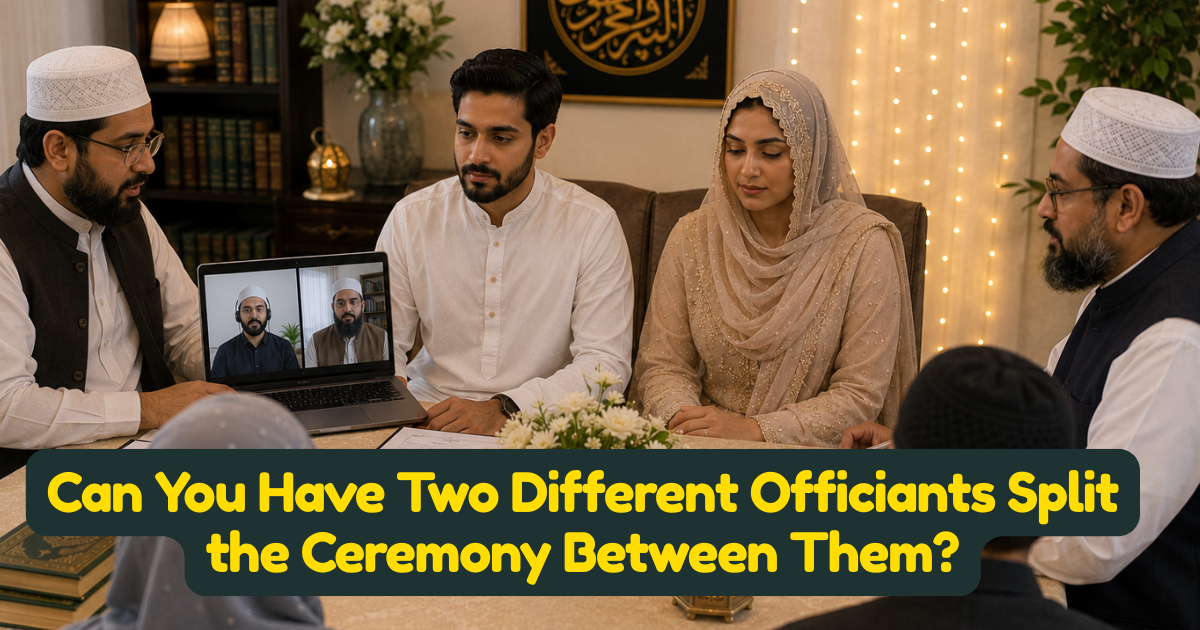
For an online ceremony specifically, having two officiants join the same video call requires some additional coordination — confirming who speaks when, ensuring the transition between them is smooth on camera, and making sure witnesses remain clear throughout about which officiant is guiding which portion of the proceedings, all of which benefits from a brief rehearsal or walkthrough conversation before the actual ceremony date.
Documentation When Two Officiants Are Involved
The resulting nikah certificate should clearly note both officiants' involvement and their respective roles in the ceremony, rather than listing only one as though the other's participation didn't occur — this provides an accurate, complete record of exactly how the ceremony was conducted, which can matter if either officiant's specific role or credentials are ever relevant to a future question about the marriage.
What If the Two Officiants Follow Different Madhabs
Where the two involved officiants come from different schools of thought, this is generally workable as long as the couple is clear about which madhab's specific conditions (particularly around wali involvement and witness requirements) will govern the ceremony overall, avoiding a situation where mixed or unclear standards create confusion about which specific conditions actually needed to be satisfied.
When a Single Officiant Might Genuinely Be the Simpler, Better Choice
While a two-officiant structure is entirely workable, couples should weigh whether it genuinely serves their goals or adds unnecessary logistical complexity to an already significant day — for couples without a specific reason driving the desire for two officiants, a single, well-chosen officiant often provides a smoother, less complicated ceremony without sacrificing any meaning.
How InstantNikah.com Supports Two-Officiant Ceremonies
We're able to coordinate ceremonies involving a second, family-connected officiant alongside our own certified officiant, structuring the division of roles clearly beforehand and ensuring the core ijab-qabul exchange remains clearly guided by a single voice, while documenting both officiants' involvement accurately on the resulting certificate.
Admin User
Author