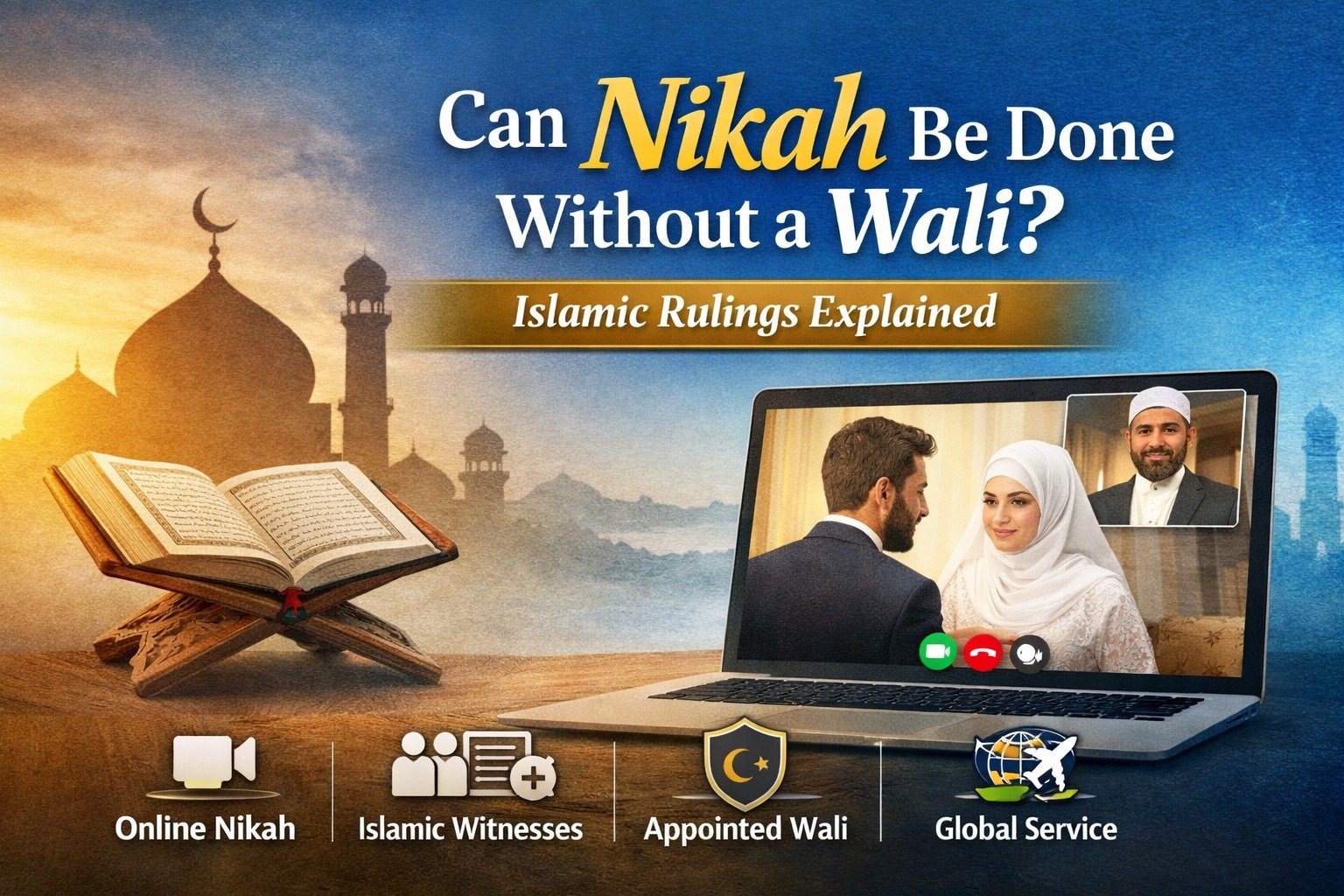
The wali (guardian) plays an important role in Nikah. While most scholars require a wali, Islamic law also provides solutions when a wali is unavailable or unjustly prevents marriage. This guide explains Qur’anic guidance, prophetic rulings, and Sunni fiqh — including when a Qazi becomes wali-e-hakim.
Purpose of a Wali
A wali safeguards the bride’s welfare and dignity. Traditionally, this is the father or closest male relative acting in her best interest.
Guardianship exists to protect, not control.
Qur’anic Guidance
“And marry off those among you who are single…” (Surah An-Nur 24:32)
Qur’an 24:32
Prophetic Ruling
“If they dispute, then the ruler is the wali for the one who has no wali.” — Abu Dawood, Tirmidhi
This establishes wali-e-hakim: when no wali exists or he acts unjustly, authority transfers to the Islamic judge or qualified imam.
When Can Nikah Proceed Without a Family Wali?
No Wali Exists
For converts or orphans, the Qazi or authorized Nikah officiant acts as wali-e-hakim.
Wali Unjustly Refuses (Adhal)
If marriage is blocked without valid Shariah reason, judicial substitution applies to protect the woman’s Islamic rights.
Positions of the Four Sunni Schools
- Hanafi: Mature women may contract Nikah in limited cases.
- Maliki: Wali required; judge replaces unjust wali.
- Shafi‘i: Wali required; Qazi intervenes when needed.
- Hanbali: Wali essential; wali-e-hakim permitted.
Can an Imam or Nikah Reciter Act as Wali?
Yes. When no wali exists or refusal is unjust, a qualified Qazi, Mufti, or appointed Nikah reciter may serve as wali-e-hakim after verifying identity and consent.
Classical fiqh confirms judicial guardianship replaces family guardianship when required to prevent harm.
Practical Nikah Framework
- Live ijab and qabul
- Two Muslim witnesses
- Visual ID verification
- Qazi or imam as wali-e-hakim
- Documented bride consent
Conclusion: While wali is the norm, Islam provides compassionate alternatives. When a wali is unavailable or unjust, a Qazi or Nikah officiant lawfully becomes wali-e-hakim, ensuring Nikah remains dignified and Shariah-compliant.
Authentic hadith references:
Sunnah.com