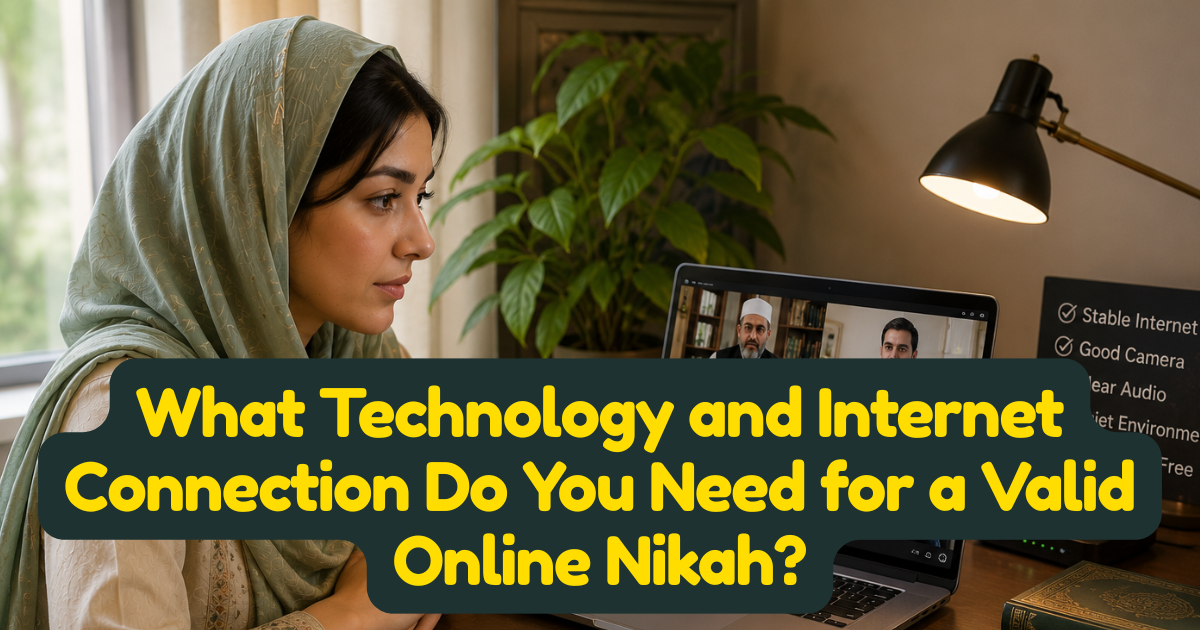
A nikah conducted over video call rests on a deceptively simple requirement: the witnesses need to actually see and hear the proposal and acceptance clearly enough to testify to it later if ever asked. That requirement sounds obvious until you consider how often video calls genuinely glitch, freeze, or drop audio at exactly the wrong moment — which makes the technology behind an online nikah a real, practical part of its religious validity, not just a convenience.
Why Audio and Video Clarity Is a Genuine Validity Issue
This isn't a minor technical preference — it's tied directly to the fiqh requirement itself. A detailed legal analysis of whether a Zoom call can satisfy the "one-meeting" requirement for Muslim marriage notes that modern scholars increasingly accept virtual interactions as fulfilling this requirement specifically when the communication is genuinely real-time, the identities of the parties are properly verified, and witnesses can hear and see the parties simultaneously, with consent expressed clearly. Each of those conditions depends entirely on the technology actually working as intended — a witness who can technically "attend" a call but can't make out the words being spoken hasn't meaningfully witnessed anything at all.
What Actually Needs to Be in Place
A detailed 2026 guide to digital nikah practice spells out the practical standard clearly: high-definition cameras and clear audio equipment genuinely matter here, because they're what allows witnesses to truly testify to the identity and willing consent of the people getting married — not just a vague impression that a ceremony of some kind took place. The same guide recommends that identity verification happen through a series of live video calls before the ceremony itself, checking that the person on screen matches their photos and identity documents, given the genuine modern risk of digital impersonation.
Reliable Internet Is the Foundation Everything Else Depends On
A comparison of traditional and online nikah practices notes plainly that both the bride and groom need access to a reliable internet connection and a suitable device for the video call — a basic-sounding requirement that's actually foundational, since every other condition (clear audio, stable video, uninterrupted witnessing) depends on the connection itself holding steady throughout the entire exchange.
What to Do If the Connection Drops Mid-Ceremony
This is the scenario every couple planning an online nikah should genuinely prepare for, because it happens more often than anyone expects. The same digital nikah guide is direct about the consequence: if the connection drops, the session of the contract is technically interrupted, and to remain safely Shariah-compliant, the couple should reconnect and repeat the full ijab and qabul (offer and acceptance) once everyone is back on the call — the witnesses need to hear the entire declaration without gaps to be confident the consent was clearly given and understood. Trying to simply pick up mid-sentence where the call dropped isn't a safe substitute for restarting that specific exchange cleanly.
A Practical Pre-Ceremony Checklist
- Test the full setup in advance — camera, microphone, lighting, and internet speed — for everyone joining: bride, groom, both witnesses, the wali, and the officiant.
- Use a platform that supports stable, simultaneous video for everyone involved, not just a basic voice call, since witnesses need to see as well as hear.
- Have a backup connection ready — a mobile hotspot or a second device — so a single point of failure doesn't derail the entire ceremony.
- Agree in advance on the plan if the connection drops — specifically, that the ijab and qabul will be repeated in full once everyone has reconnected, rather than assuming a partial exchange is sufficient.
- Confirm everyone can hear clearly, not just technically "be present" — a witness on a poor connection straining to make out words isn't fulfilling the same role as one who heard the exchange plainly.
Key Takeaway
The technology behind an online nikah isn't a background convenience — clear audio, stable video, and a reliable connection are what actually let witnesses fulfil their religious role of seeing and hearing the proposal and acceptance directly. A dropped connection during the ceremony isn't something to simply work around; the safest practice is reconnecting and repeating the full exchange so there's no doubt every witness heard the complete declaration. Testing everything properly beforehand, and agreeing on what happens if something goes wrong, turns a real technical risk into a manageable, well-prepared part of the ceremony.
```Admin User
Author