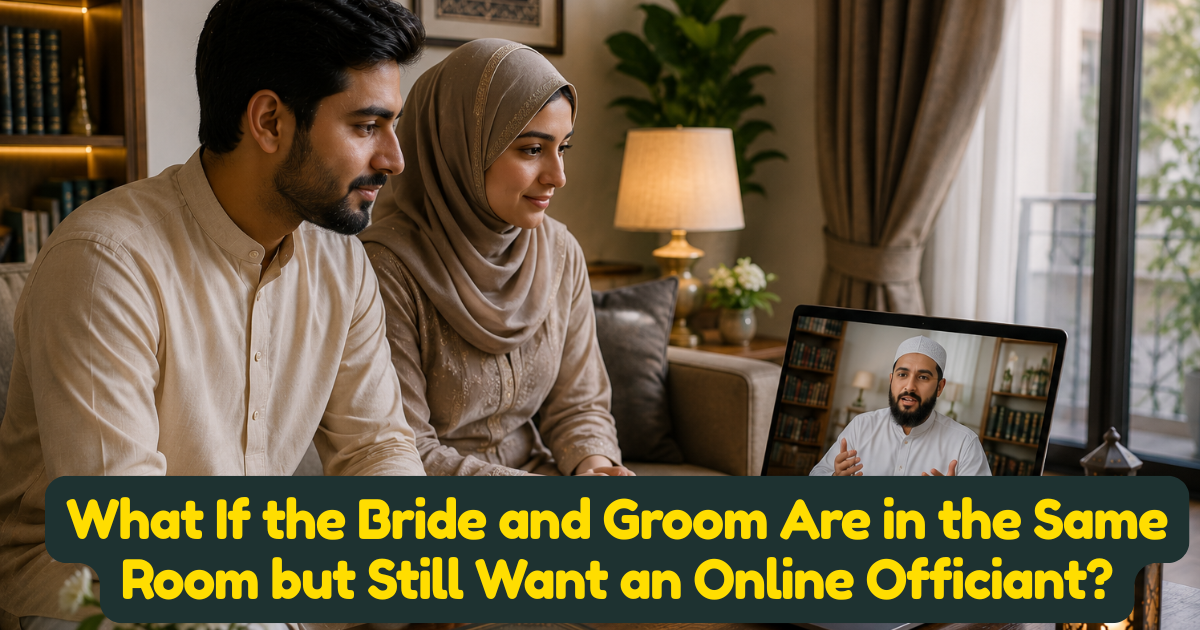
What If the Bride and Groom Are in the Same Room but Still Want an Online Officiant?
Online nikah is often associated with couples separated by distance, but a meaningful number of our ceremonies actually involve a bride and groom sitting together in the same room, with only the officiant joining remotely. This isn't unusual, and it's worth explaining why couples choose this setup and confirming that it's every bit as valid as a ceremony involving spouses in different countries.
Why Couples in the Same Location Still Choose an Online Officiant
- Access to a specific officiant — the couple wants a particular imam known for a certain madhab expertise, language, or reputation who isn't locally based.
- Scheduling flexibility — an online officiant can often accommodate a specific date or time more readily than coordinating a local imam's availability.
- Privacy — some couples prefer a smaller, more private ceremony without the visibility that comes with inviting a well-known local imam into their community's social network.
- Cost or logistics — in some areas, arranging a qualified local officiant may be more expensive or complicated than booking a certified online service.
- Simply having already built trust with a specific online service through prior interactions, consultations, or recommendations from friends.
Does the Couple's Physical Proximity Change the Ceremony's Validity?
Not at all. What matters religiously is that the officiant properly conducts the ijab and qabul exchange, witnesses are present (whether physically with the couple or joining the same call), and consent is clear and freely given. Whether the officiant is in the same room or joining remotely by video doesn't affect any of these core conditions — the officiant's physical presence has never been a strict requirement, only their proper conduct of the ceremony.
How Witnesses Are Typically Arranged in This Setup
Since the couple is together, witnesses are often physically present with them in the same room, joining the same video call as the remote officiant, which keeps the arrangement straightforward — witnesses can observe both the couple and hear the officiant clearly, satisfying the requirement without needing multiple remote connections to coordinate.
Identity Verification When the Couple Is Together
Identity verification proceeds the same way regardless of the couple's physical arrangement — government identification shown on camera to the remote officiant before the ceremony begins, ensuring the same standard of verification applies whether the couple is local to each other or separated by distance.
Mahr Exchange When Physically Together
One practical advantage of this setup is that any prompt mahr portion intended to be handed over at the ceremony can be exchanged in person between the spouses, even though the officiant is joining remotely — something that requires more coordination when spouses are in different countries.
Combining an Online Ceremony With an In-Person Celebration
Couples in the same location sometimes use this setup specifically to combine a smaller, officiant-remote nikah ceremony with a larger in-person celebration or walimah immediately afterward, getting the benefits of both a specific chosen officiant and a full in-person gathering with family and friends on the same day.
Technical Setup Considerations
For a same-room ceremony, ensuring a stable internet connection, a device positioned so the officiant can clearly see and hear both spouses and witnesses, and a quiet enough space for clear audio all matter just as much as in a long-distance ceremony — the technical requirements don't relax simply because the couple happens to be together.
How InstantNikah.com Supports Same-Room Ceremonies
We regularly conduct ceremonies for couples who are physically together but have chosen an online officiant for their own reasons — treating these ceremonies with exactly the same rigor around witnesses, identity verification, and documentation as any long-distance ceremony we perform.
Admin User
Author