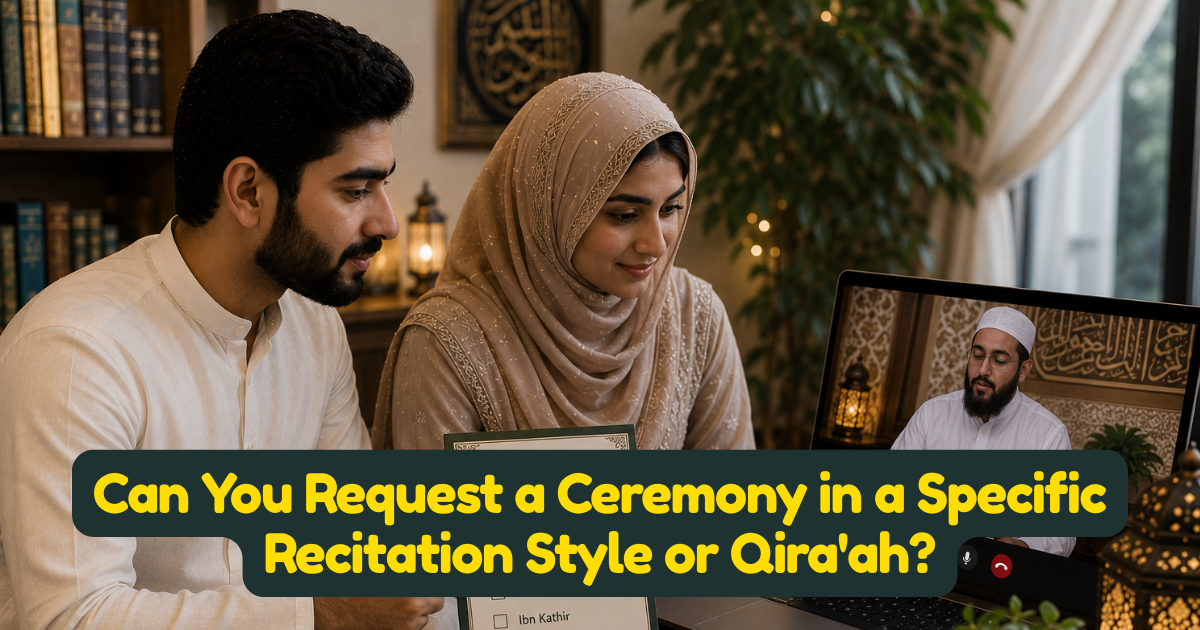
Can You Request a Ceremony in a Specific Recitation Style or Qira'ah?
For couples from backgrounds with strong regional or family recitation traditions, the specific way Quranic verses are recited during their nikah can carry real meaning — a familiar rhythm and style connected to their upbringing, their local mosque, or a beloved relative's own manner of recitation. It's a thoughtful thing to want, and worth understanding how it fits within the ceremony.
What Qira'ah Actually Refers To
Qira'ah refers to the different accepted styles or transmissions of Quranic recitation, the most widely known and used globally being Hafs 'an 'Asim, common across most of the Muslim world, alongside other recognized transmissions like Warsh 'an Nafi', more prevalent in parts of North and West Africa. All widely recognized qira'at are considered authentic and valid, reflecting the Quran's preserved oral transmission through multiple sound chains rather than competing or conflicting versions.
Does Qira'ah Choice Affect the Nikah's Validity?
Not at all — any verses recited during the khutbah or elsewhere in the ceremony remain fully valid regardless of which recognized qira'ah tradition the officiant follows, since the underlying text and meaning are consistent across the accepted transmissions. The choice of recitation style is a matter of tradition and personal or regional familiarity, not religious correctness or validity.
Requesting a Specific Style
If a couple has a specific qira'ah tradition connected to their family or regional background — for example, a family from North Africa more familiar with Warsh recitation — they can absolutely request that their officiant recite in this style during the ceremony, provided the officiant is trained and comfortable doing so. This is a reasonable request that many officiants, particularly those from diverse regional backgrounds themselves, can accommodate.
What If Your Officiant Isn't Trained in Your Preferred Qira'ah
Not every officiant is trained across multiple qira'at — most are proficient in the widely used Hafs transmission, with fewer trained specifically in less common styles like Warsh. If your preferred style isn't something your assigned officiant can deliver, this is worth raising during consultation so the service can either match you with an officiant who is trained in that specific tradition, where available, or clarify that the ceremony will proceed in the more widely practiced style.
Family Recitation, Rather Than Formal Qira'ah Distinctions
Sometimes what a couple is actually asking for isn't a formal qira'ah distinction but simply a particular tone, pace, or melodic style (tajwid delivery) they associate with a beloved family member or local tradition — this is generally easier to accommodate than a full alternate qira'ah transmission, since it's more about delivery style within the same recitation tradition than a different underlying transmission.
Including a Family Member's Recitation
Some couples request that a specific family member — someone known for beautiful or meaningful recitation — deliver the Quranic portion of the ceremony themselves, while the officiant handles the contractual elements. This is a lovely way to include a loved one meaningfully, provided the family member is comfortable and reasonably capable, and the officiant is agreeable to sharing this part of the ceremony.
Setting Expectations Early
As with any specific ceremony preference, raising qira'ah or recitation style requests during the initial consultation, rather than expecting the officiant to accommodate an unexpected request on the day of the ceremony, gives the service time to match you appropriately or set clear expectations about what's realistically possible.
How InstantNikah.com Handles Recitation Preferences
We ask couples about any specific recitation or qira'ah preferences during consultation, matching them with an officiant trained in that tradition where possible, or clearly explaining what style will be used if a specific request can't be accommodated, so there are no surprises during the ceremony itself.
Admin User
Author