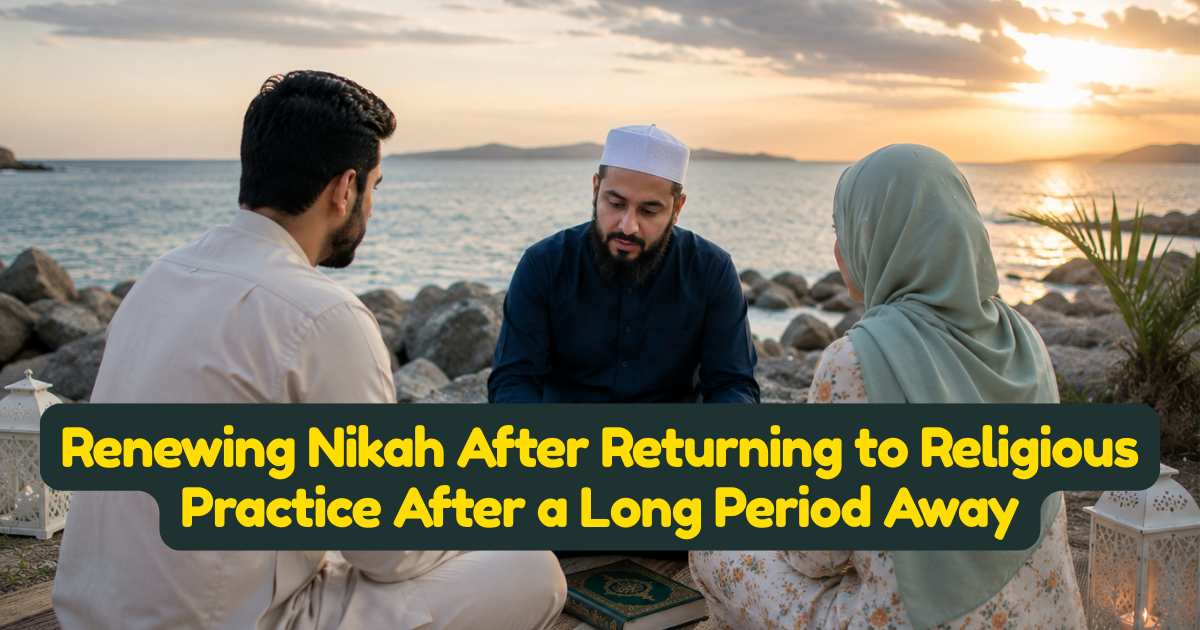
Renewing Nikah After Returning to Religious Practice After a Long Period Away
Faith journeys are rarely linear. Many Muslim couples married during a period of their lives when religious practice was not a central priority — a quick civil-style ceremony, minimal attention to Islamic conditions, little thought given to mahr or witness requirements beyond what felt necessary at the time. Years later, after a personal journey back toward consistent practice, often described as a return to hidayah, these same couples frequently arrive at the same realization together: they want their marriage to reflect who they are now, not who they were when they first married.
Why This Moment Often Triggers a Renewal Request
A renewed commitment to prayer, fasting, and broader religious practice naturally extends to wanting the foundational contract of the marriage itself to be solid, deliberate, and fully aligned with Islamic requirements. For some couples, this is purely an emotional and spiritual desire — nothing was technically wrong with the original nikah, but performing it again, now, with full religious consciousness, feels like an important act of gratitude and recommitment. For others, looking back honestly at the original ceremony raises genuine questions about whether witnesses were truly present, whether mahr was properly specified, or whether a wali was correctly involved — questions that simply did not feel important at the time but matter deeply now.
This Is Not an Indictment of the Earlier Marriage
It is worth saying directly: choosing to renew a nikah after returning to practice does not mean the original marriage was sinful or invalid in the eyes of Allah. Marriage validity and personal religious consistency are different questions. A couple who married with minimal religious observance, provided the core contractual conditions were technically met, were validly married throughout, even during years of less consistent practice. The renewal is an expression of where the couple is now, not a correction of where they were then — a distinction echoed in guidance from scholars at the Yaqeen Institute addressing how Muslims navigating a return to practice should think about past life decisions made during less observant periods.
Common Elements Couples Choose to Add This Time
- A more deliberate khutbat al-nikah, often including reflection on the couple's spiritual journey together.
- A renewed or restated mahr, sometimes adjusted to reflect the couple's current circumstances.
- Witnesses chosen specifically from within their current, practicing community rather than whoever happened to be available originally.
- Explicit conditions reflecting shared religious goals going forward, such as commitments around raising children Islamically.
Verifying the Original Marriage's Conditions First
Before scheduling a renewal purely for spiritual reasons, it is worth taking the time to honestly review whether the original ceremony actually met the core conditions — particularly witnesses and, where applicable, wali involvement. If it did, the renewal can proceed as a precautionary, spiritually motivated ceremony with no concern about the prior marriage's status. If a genuine gap is identified, the renewal instead becomes a corrective one, and the couple should approach mahr and documentation accordingly, exactly as described for any defect-driven renewal.
Bringing Extended Family Into This Kind of Renewal
Unlike privacy-motivated renewals, couples renewing their nikah as part of a return to religious practice often want exactly the opposite — a more visible, community-witnessed ceremony than their original one had. Inviting family, particularly family members who may also be part of the couple's renewed religious community, can make this version of Tajdeed e Nikah a genuinely joyful, shared milestone rather than a private legal correction.
How to Approach the Khutbah for This Kind of Ceremony
Officiants performing this type of renewal often tailor the khutbat al-nikah to reflect the couple's specific journey — drawing on relevant Quranic guidance about steadfastness and renewal of faith, and reflecting on the mercy emphasized throughout the Quran toward those returning to consistent practice. This personal touch is part of what makes this category of renewal feel meaningfully different from a purely administrative one.
How InstantNikah.com Supports Couples Renewing After Returning to Practice
Our officiants are accustomed to this specific, often emotional category of renewal request and approach it accordingly — beginning with a warm conversation about the couple's journey, confirming the original marriage's conditions were properly met, and structuring a ceremony, including khutbah content, that reflects the significance of the moment for the couple.
Admin User
Author