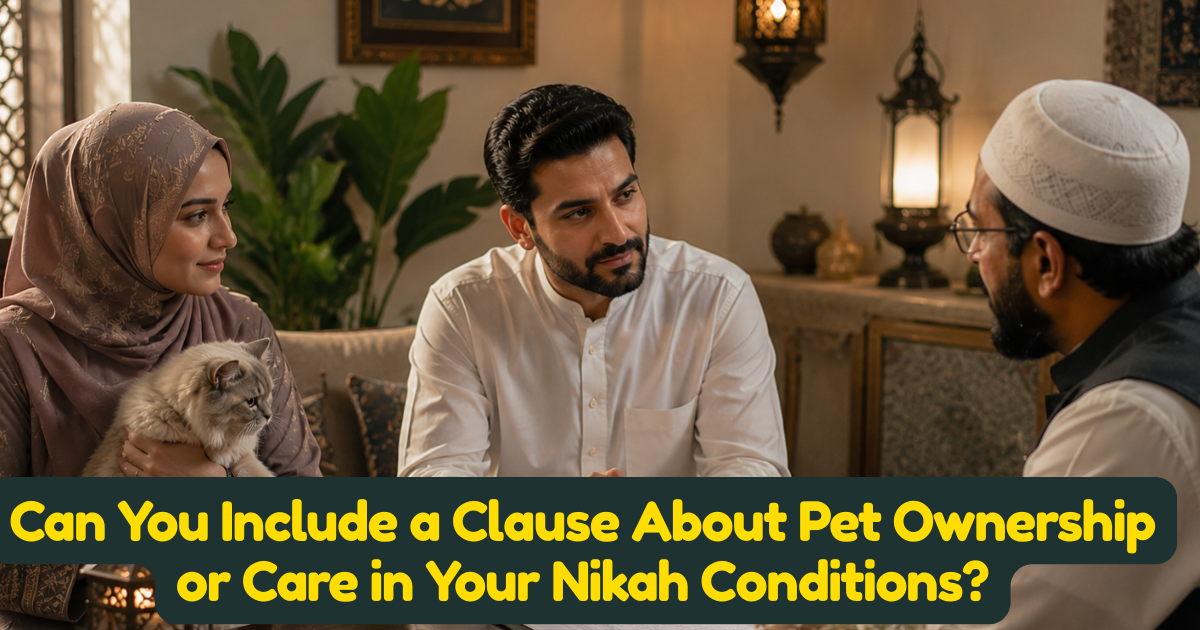
Can You Include a Clause About Pet Ownership or Care in Your Nikah Conditions?
It might seem like a minor lifestyle detail compared to the weightier topics typically discussed in nikah conditions, but pet ownership — whether one spouse wants a dog and the other has religious reservations, or a couple wants to formalize responsibilities for an existing pet — is a genuinely practical matter some couples want addressed clearly before marriage, and it's entirely possible to include as a formal condition.
Why Nikah Conditions Can Cover Practical Lifestyle Matters
As covered in our broader article on nikah contract conditions, Islamic law permits couples to include a wide range of mutually agreed, Sharia-compliant conditions in their marriage contract — not limited only to weighty matters like mahr structure or divorce rights, but extending to practical lifestyle agreements both spouses want formalized. A condition addressing pet ownership, care responsibilities, or related expectations fits comfortably within this broader permission, provided it doesn't conflict with anything Islamically impermissible.
The Underlying Islamic Consideration Around Dogs Specifically
Dogs carry a specific and somewhat nuanced position in Islamic jurisprudence — the majority scholarly view holds that dog saliva is considered impure (najis), affecting matters like ritual purity for prayer if contact occurs, though scholars differ on the precise scope of this ruling and on exceptions for working or guard dogs, which are more broadly permitted across schools of thought. This is a genuinely relevant consideration for couples where one spouse wants a dog as a companion pet and the other has concerns rooted in this jurisprudential position, making it worth discussing thoroughly rather than assuming either party's preference should simply prevail.
Cats and Other Pets: Generally More Straightforward
Cats hold a notably different and more favorable position in Islamic tradition, with numerous hadith reflecting the Prophet's own affection for cats and no equivalent purity concern attached to them. Most other common household pets — birds, fish, and similar animals — carry no comparable jurisprudential complexity, making disagreements about these generally more about personal preference, allergies, or practical living considerations than religious permissibility.
Why a Written Condition Helps Prevent Future Conflict
Couples who discover, only after marriage, that they have fundamentally different expectations around pets — one assuming a future dog is a given, the other having genuine religious reservations they never fully expressed — often find this becomes a recurring source of tension. Addressing it explicitly and in writing before the marriage, whether the agreement is "no dogs in the home" or "dogs are welcome under specific conditions," removes ambiguity that might otherwise fester into repeated disagreement.
Structuring a Pet-Related Condition Thoughtfully
A useful pet-related condition specifies clearly what's actually being agreed to — for example, whether pets are permitted at all, which types, how care responsibilities will be divided, and any relevant boundaries around the home (such as keeping a dog outdoors or in specific areas, addressing the purity concern some couples want to accommodate while still allowing pet ownership). Specificity here genuinely helps, since vague language ("we'll figure it out about pets") tends to reproduce exactly the ambiguity a written condition is meant to resolve.
What If the Couple Already Has an Existing Pet
For couples where one spouse already has an established pet before the marriage, a condition can formalize expectations around that specific animal's continued place in the household, avoiding a scenario where the other spouse assumes the pet's presence is negotiable or temporary when the original owner considers it a settled, non-negotiable part of their life.
Balancing Personal Preference With Religious Consideration
Where the disagreement is rooted purely in personal preference rather than religious conviction — one spouse simply doesn't enjoy animals, or has allergies, rather than holding a specific jurisprudential concern — this is a matter for ordinary compromise and negotiation between spouses, similar to any other lifestyle preference disagreement, rather than requiring the same careful religious consideration that a dog-specific purity concern might warrant.
Revisiting the Condition Later in the Marriage
As with any nikah condition, a pet-related agreement can be revisited and modified by mutual consent later in the marriage if circumstances or preferences genuinely change — a couple who agreed "no dogs" early on might, years later, both feel differently and choose to update their arrangement, provided this revision reflects a genuine, mutual change of mind rather than one spouse simply overriding the other's continued reservation.
Discussing This Alongside Broader Lifestyle Compatibility
Pet ownership is one example of a broader category of practical lifestyle questions worth discussing thoroughly before marriage — alongside other everyday matters like household division of labor, living arrangements, and daily routine preferences — none individually as weighty as mahr or divorce rights, but collectively significant to how comfortably a shared life actually unfolds day to day.
How InstantNikah.com Handles Pet-Related Conditions
We're happy to help couples formalize a pet-related condition as part of their nikah contract, discussing the relevant jurisprudential considerations around dogs specifically where that's part of the couple's conversation, and ensuring whatever agreement they reach is documented clearly enough to serve as a genuine, useful reference point going forward.
Admin User
Author