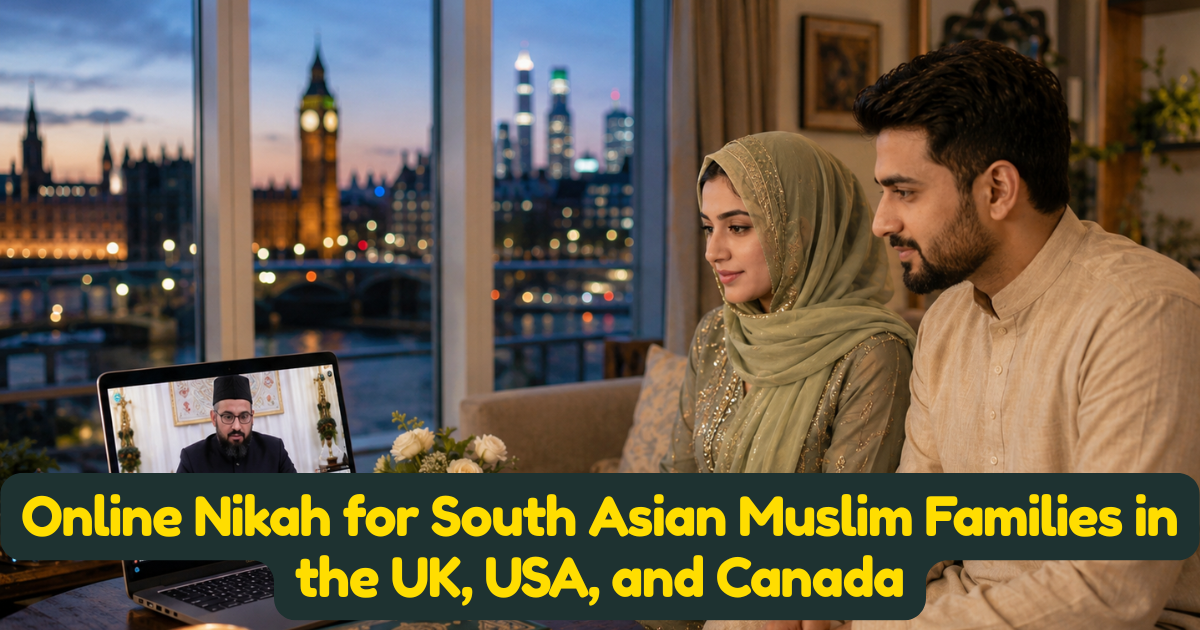
Online Nikah for South Asian Muslim Families in the UK, USA, and Canada
"Desi online nikah" and its variations are among the most searched phrases by South Asian Muslim families across the diaspora — Pakistani, Bangladeshi, and Indian communities settled throughout the UK, USA, and Canada who want a nikah service that understands not just the Islamic requirements, but the specific cultural and linguistic expectations their families carry into the ceremony. A generic online nikah service can technically fulfill the religious conditions, but families searching for this term are usually looking for something more: an officiant who speaks their language, understands their family dynamics, and won't need everything explained from scratch.
Why This Search Is So Common
South Asian Muslim communities form some of the largest Muslim populations across the UK, USA, and Canada, and family involvement in marriage decisions tends to run deeper and more formally than in many other diaspora communities — parents negotiating on behalf of their children, extended family expecting to be consulted, and a strong cultural emphasis on the ceremony reflecting recognizable customs. When a couple in this community searches for an online nikah service, they're often hoping to find one that won't require them to explain these dynamics before the officiant can properly navigate them.
Language Matters More Than Many Services Account For
A ceremony conducted entirely in English, with no Urdu, Punjabi, Bengali, or Hindi-Urdu terminology woven in, can feel disconnected from what many South Asian families actually expect, particularly for older relatives joining the video call who may not be fully comfortable in English. Finding an officiant genuinely able to conduct portions of the ceremony — the khutbah, key phrases, or even brief remarks — in the family's preferred language makes a real, tangible difference to how meaningful the occasion feels.
The Hanafi Majority and What It Means for Wali Requirements
The overwhelming majority of Pakistani, Bangladeshi, and Indian Muslims follow the Hanafi school of thought, which carries specific implications for wali involvement, as covered in more depth in our broader guide on this topic. An officiant familiar with Hanafi jurisprudence specifically — rather than defaulting to whichever school they personally happen to follow — can navigate this correctly for South Asian families without requiring the couple to explain their own tradition first.
Family Involvement Beyond the Couple Themselves
It's common for South Asian Muslim families to want multiple relatives actively present and speaking during the ceremony — a father delivering a few words, an uncle formally representing the family in negotiations, or extended relatives across three countries all wanting to be visibly included. A service experienced with this community understands how to structure a video call that accommodates this kind of active, multi-generational family participation without it becoming chaotic, as discussed in our guide on managing larger ceremony guest lists.
Mahr Negotiation Dynamics in South Asian Families
Mahr conversations in South Asian Muslim families sometimes involve extended family negotiation, cultural expectations around specific customary amounts, and, in some families, a blurred line between mahr and broader dowry-adjacent customs that Islamic scholars have long cautioned against conflating, as covered in our dedicated article on this exact confusion. An officiant familiar with this community can help gently guide families toward a mahr conversation that's religiously sound and genuinely reflects the bride's actual right, rather than simply following whatever a family's informal custom dictates without examination.
Why Same-Day and Express Options Matter for This Community Specifically
Many South Asian Muslim families in the diaspora manage marriages involving relatives traveling from overseas on tight visa windows, or coordinating around family visits that only happen once every year or two. Same-day and express online nikah booking, covered in our dedicated guide on realistic booking timelines, is particularly valuable for this community, where a narrow travel window sometimes leaves only days to arrange a properly conducted ceremony.
Documentation for Spousal Sponsorship and Family Reunification
South Asian diaspora families frequently navigate spousal sponsorship processes connecting a partner still overseas with a spouse settled in the UK, USA, or Canada. As detailed in our guide on documenting nikah for spousal visa files, a certificate built specifically to support this kind of immigration process — clear names matching identification, properly documented witnesses, honest and consistent details — matters enormously for this community's most common documentation need.
Navigating Interfaith and Cross-Cultural Considerations
South Asian Muslim families increasingly include marriages between different regional, sectarian, or national backgrounds — a Pakistani groom and Bangladeshi bride, for instance, or families with different madhab traditions, as covered in our article on mixed-madhab marriages. A service experienced with this diversity can navigate these blended family expectations respectfully, rather than assuming every South Asian family follows an identical set of customs.
Common Concerns This Community Raises During Consultation
- Whether the khutbah can include specific Urdu or regional-language phrases meaningful to the family.
- How to properly involve a wali who may be overseas and joining via a separate call or through a representative.
- Whether witnesses need to be family members specifically, or can be arranged independently.
- How mahr should be documented when family customs and Islamic requirements aren't perfectly aligned.
- How quickly a ceremony can be arranged around a relative's limited visiting window.
Why Cultural Fluency Isn't a Luxury for This Search
A couple searching specifically for a South Asian Muslim-friendly online nikah service isn't asking for anything beyond what any couple deserves: an officiant who understands their context well enough that the ceremony feels natural rather than like a generic template applied without adjustment. This kind of cultural fluency directly affects how comfortable extended family feels throughout the process, which matters enormously in communities where family harmony around a marriage carries real weight.
How InstantNikah.com Serves South Asian Muslim Families Across the Diaspora
Our officiants are experienced with Pakistani, Bangladeshi, and Indian Muslim family customs, comfortable conducting portions of the ceremony in Urdu and other regional languages on request, well-versed in Hanafi jurisprudence and wali requirements as they apply to this community specifically, and practiced at structuring multi-generational family calls that keep everyone meaningfully involved — while building certificates designed to support the spousal sponsorship and family reunification documentation this community relies on most.
Admin User
Author