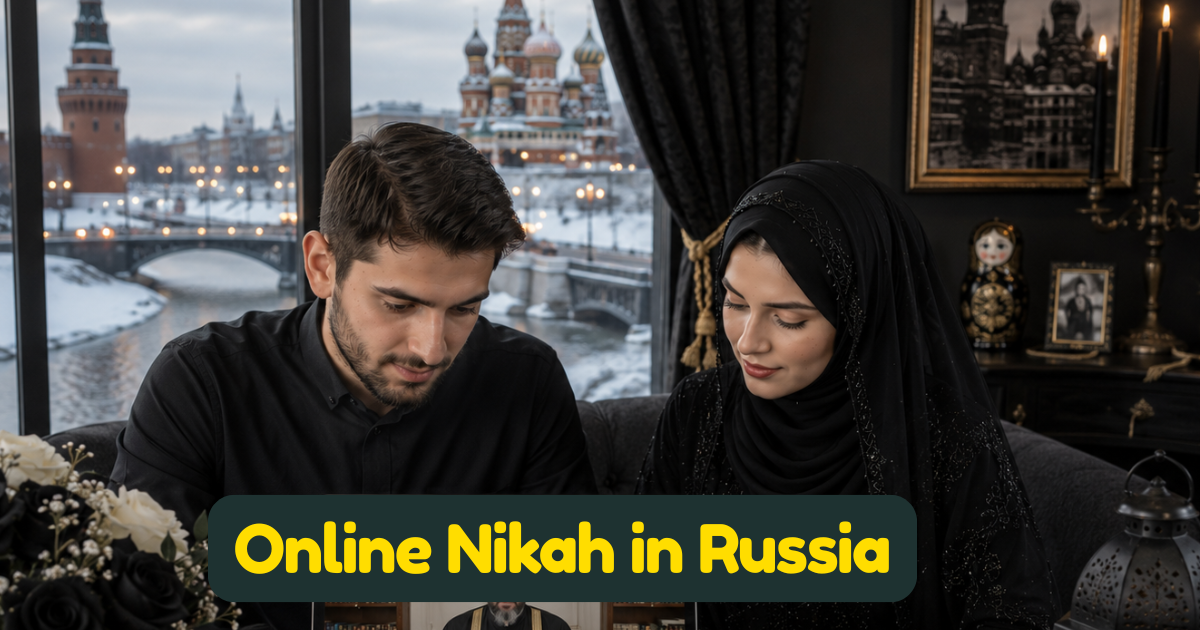
Russia's Muslim community is one of the most misunderstood in the world. When Western media discusses Islam in Russia, it focuses almost exclusively on geopolitical tensions — rarely on the fourteen million Muslims who simply live their faith, raise their families, and navigate the daily realities of Islamic life within the Russian Federation's legal framework. That number — fourteen million — makes Russia home to the largest Muslim population of any non-Muslim majority country in Europe. It is a figure that demands to be taken seriously.
Russia's Muslims are not a monolith. They are Tatars and Bashkirs of the Volga-Ural region, who have been Muslim since the tenth century. They are Chechens, Dagestanis, Ingush, Kabardins, and dozens of other Caucasian peoples whose Islamic heritage runs as deep as any in the world. They are Central Asian migrants in Moscow and Saint Petersburg. They are Russian converts who found Islam through marriage, philosophy, or spiritual searching. And they are diaspora families who have built lives in Russia while maintaining ties to Turkey, the Arab world, Pakistan, and beyond.
For all of them, marriage remains one of the most important acts of religious and civic life — and the intersection of Islamic Nikah and Russian civil law creates specific challenges that most guides never address with the accuracy this community deserves.
Russia's Muslim Republics — A Geography of Islamic Life
The Russian Federation officially recognises eight Muslim republics — federal subjects where Islam is the majority or predominant religion of the indigenous population. These are Tatarstan and Bashkortostan in the Volga-Urals, and Chechnya, Dagestan, Ingushetia, Kabardino-Balkaria, Karachay-Cherkessia, and Adygea in the North Caucasus.
Dagestan has the highest Muslim population in absolute numbers — a republic of extraordinary ethnic diversity where over thirty distinct peoples share an Islamic identity. Chechnya has the highest Muslim proportion — around 95% of the population — and a distinctive Sufi-influenced Islamic practice that sets it apart from other regions. Tatarstan, the most economically developed and most internationally visible Muslim republic, is home to the Russian Islamic University in Kazan and has a long tradition of Islamic scholarship going back to the Tatar Khanate of Kazan.
Beyond the Muslim republics, Moscow is estimated to have the largest urban Muslim population in Russia — between one and two million Muslims in the capital alone, the majority of whom are Central Asian migrant workers and their families from Uzbekistan, Tajikistan, Kyrgyzstan, and Kazakhstan.
Russian Civil Law and Islamic Marriage — The ZAGS System
This is the central legal fact for every Russian Muslim couple — and one that creates genuine tension in practice.
Under Russian federal law — specifically the Family Code of the Russian Federation — a marriage is legally recognised only when registered at the civil registration office, known as the ZAGS (Записи актов гражданского состояния, or Records of Civil Status Acts). The ZAGS system is a legacy of the Soviet civil registration infrastructure, maintained across the entire Russian Federation. A Nikah conducted by an Imam — however Islamically correct — does not create a legally recognised marriage under Russian law without corresponding ZAGS registration.
As academic research published by ResearchGate on Russia's legal policy regarding Muslim marriages confirms: for a marriage to be recognised under Russian law, it must be registered with the local ZAGS. Islamic legal principles recognise marriages as valid based on religious conditions — but Russian state law treats these two systems as entirely separate. The Islamic Nikah establishes the religious union. The ZAGS registration establishes the civil marriage.
The practical consequences for Russian Muslim women without ZAGS registration are significant. A wife with only a Nikah certificate in Russia has no inheritance rights under Russian succession law, no automatic spousal support claim, no pension entitlements, and no legal standing in Russian family courts. She is treated as a cohabitant — not a spouse — under Russian civil law. Research on Muslim families in Russia has consistently documented the vulnerabilities this creates, particularly for women in regions where Nikah-only marriages are common.
The ZAGS Registration Process
The ZAGS civil marriage registration in Russia is straightforward in principle. Both parties appear at the ZAGS office with valid Russian identification — a Russian internal passport (паспорт) for Russian citizens, or valid documents for foreign nationals. They submit a joint application and set a date for the registration ceremony. Russian law requires a minimum waiting period of one month between the application and the ceremony — allowing time for any legal objections to be raised.
The ZAGS ceremony itself is brief — typically ten to fifteen minutes. Both parties declare their consent. The ZAGS registrar records the marriage in the civil registry. A marriage certificate (Свидетельство о заключении брака, Svidetelstvo o zaklyuchenii braka) is issued. From this moment, the marriage carries full civil legal weight under Russian law.
For foreign nationals marrying in Russia, additional documentation is required — including legalised identity documents and a certificate confirming civil status from the home country. All foreign documents must be translated into Russian by a certified translator.
Islamic Marriage in the Muslim Republics — A Distinct Cultural Context
In Tatarstan, Dagestan, Chechnya, and other Muslim republics, the Nikah ceremony is a deeply embedded cultural and religious institution — often conducted before a large family gathering, with the Imam officiating a ceremony that may have taken months to prepare. The ZAGS registration is frequently treated as an administrative formality that follows the Nikah — and in some communities, Nikah-only marriages without ZAGS registration are accepted within the community even if they carry no civil legal weight.
This practice — the Nikah without ZAGS — is a well-documented phenomenon in Russian Islamic communities, particularly in the North Caucasus and increasingly in Moscow. Islamic scholars within Russia have consistently advised that the ZAGS registration should accompany the Nikah for the protection of both spouses, particularly the wife. The Council of Muftis of Russia — the highest Islamic authority in the country — has issued guidance emphasising the importance of civil registration alongside the religious ceremony.
Where Online Nikah Serves Russian Muslim Couples
The situations where an online Nikah service serves Russian Muslim couples are specific and practically important — particularly for diaspora Russians, cross-border couples, and Muslims in regions with limited access to qualified scholars from their own tradition.
Diaspora Russian Muslims in Western Countries
Russian Muslim communities in Germany, France, the United Kingdom, the United States, Canada, and across Western Europe are significant. Tatars, Chechens, Dagestanis, and Central Asians who have emigrated from Russia often want a Nikah conducted according to the scholarly tradition of their home region, with a qualified Imam from that tradition. An online Nikah service can connect diaspora Russian Muslims with qualified scholars who understand their specific scholarly and cultural context.
Cross-Border Couples — One Partner in Russia, One Abroad
A Muslim living in Russia marrying a partner in Turkey, Pakistan, Kazakhstan, or elsewhere faces the practical challenge of arranging a ceremony across international borders. An online Nikah through InstantNikah.com provides the Islamic ceremony for both partners simultaneously from their respective locations. The Russian ZAGS registration follows when both parties are together, or through the overseas marriage recognition pathway where applicable.
Muslims in Smaller Russian Cities
Russia is a vast country. Muslims live not only in the Muslim republics and Moscow, but in cities across Siberia, the Urals, and the Russian Far East — where Islamic religious infrastructure is often minimal. An online Nikah service reaches any Muslim in Russia via a video call, regardless of how remote their location.
Russian Muslim Converts
Russia has a meaningful and growing convert Muslim community. Russian converts often have no established Islamic community connection and no Muslim male relatives to serve as Wali. The Wali-e-Hakim pathway — where a qualified Imam formally assumes the guardianship role — is handled as standard at InstantNikah.com with proper scholarly assessment. Our complete guide to online Nikah for converts covers every scenario.
Scholarly Traditions Across Russia's Muslim Republics
Russia's Muslim communities follow distinct scholarly traditions shaped by their history and geography. Understanding these distinctions helps explain the specific Wali and Nikah conditions that apply to each community.
The Tatar and Bashkir communities of the Volga-Urals follow the Hanafi school — the same madhab as most of Turkey and Central Asia, and the dominant scholarly tradition of the Sunni world's most populous regions. The Hanafi position on online Nikah is confirmed by IslamWeb's detailed ruling: a Nikah between parties in different locations using real-time communication is valid when all conditions are met.
The Chechen and Ingush communities follow a blend of Shafi'i fiqh and Sufi traditions — particularly the Qadiriyya and Naqshbandiyya orders. The Shafi'i Wali requirement is a firm condition for these communities. The Dagestani peoples — Avars, Dargins, Lezgins, and others — predominantly follow the Shafi'i school as well, with strong Sufi influence from the Naqshbandiyya tradition that shaped Islamic life in the eastern Caucasus for centuries.
At InstantNikah.com, our scholars work within the madhab each couple follows — Hanafi for Tatar, Bashkir, and Central Asian couples; Shafi'i for Chechen, Dagestani, and Ingush couples — ensuring the Nikah is conducted according to the scholarly tradition of the family.
The Wali Situation for Russian Muslim Women
For Russian Muslim women whose Wali is in Dagestan, Tatarstan, Turkey, Kazakhstan, or elsewhere, the online Nikah model is directly practical. Russia spans eleven time zones — but the Muslim-majority republics are in the Moscow Time zone (UTC+3) or close to it, making scheduling with most Muslim-majority countries manageable. The Wali joins the live video call from wherever he is.
For Russian Muslim convert women with non-Muslim families, the Wali-e-Hakim pathway applies — handled as standard at InstantNikah.com. Our guide on online Nikah without a Wali explains every scenario in full.
Frequently Asked Questions
Is a Nikah legally recognised in Russia without ZAGS registration?
No. Under the Russian Family Code, a marriage is legally recognised only when registered at the ZAGS civil registration office. A Nikah conducted by an Imam — whether in a mosque or online — does not create a legally recognised Russian marriage without ZAGS registration. A Russian Muslim wife with only a Nikah certificate has no inheritance rights, spousal support claim, or legal standing under Russian civil law. ZAGS registration is essential for full civil legal protection.
What is the ZAGS and how does it work?
The ZAGS — Записи актов гражданского состояния — is Russia's civil registration authority, responsible for recording births, marriages, and deaths. Civil marriage registration at the ZAGS requires a joint application, valid identity documents, and a minimum waiting period of one month. The ceremony itself is brief — typically ten to fifteen minutes — after which a state marriage certificate is issued.
Can we do an online Nikah with one partner in Russia and one abroad?
Yes. An online Nikah through InstantNikah.com accommodates both partners from their respective locations — Russia and Turkey, Russia and Kazakhstan, or any other cross-border combination. The Islamic marriage is valid immediately. Russian ZAGS civil registration follows when both parties are together in Russia.
Which madhab do most Russian Muslims follow?
Tatar, Bashkir, and Central Asian Muslim communities in Russia predominantly follow the Hanafi school. Chechen, Ingush, and Dagestani communities predominantly follow the Shafi'i school, with strong Sufi traditions including the Qadiriyya and Naqshbandiyya orders. InstantNikah.com's scholars work within the madhab each couple follows.
Is polygamy legally recognised in Russia?
No. The Russian Family Code explicitly prohibits polygamy — a marriage can only be contracted between a man and a woman, neither of whom is already married. Russia does not recognise polygamous marriages contracted in other countries. InstantNikah.com does not facilitate polygamous marriages under any circumstances.
Fourteen Million Muslims. One Islamic Contract. Done Properly.
Russia's Muslim community is ancient, diverse, and resilient. From the minarets of Kazan to the Sufi shrines of the North Caucasus, from the suburban mosques of Moscow to the prayer rooms of migrant workers in Siberian cities, Islam in Russia is a living, breathing tradition — not an imported faith, but one that has been part of Russia's landscape for over a thousand years.
The Nikah is at the heart of Islamic family life across all of these communities. Done properly — with a qualified Imam, verified witnesses, a proper Wali process, a stated Mahr, and a signed certificate — it is the beginning of a marriage that stands before Allah. The ZAGS registration that follows gives it standing before the Russian state. Together, both provide complete protection.
InstantNikah.com serves Muslim couples connected to Russia — whether in Moscow, Kazan, Makhachkala, Grozny, or in the Russian diaspora across Europe and beyond. Qualified Imams. Verified witnesses. Complete Wali process. Same-day availability. Speak with our team or book your ceremony — no commitment required until you are ready.
Admin User
Author