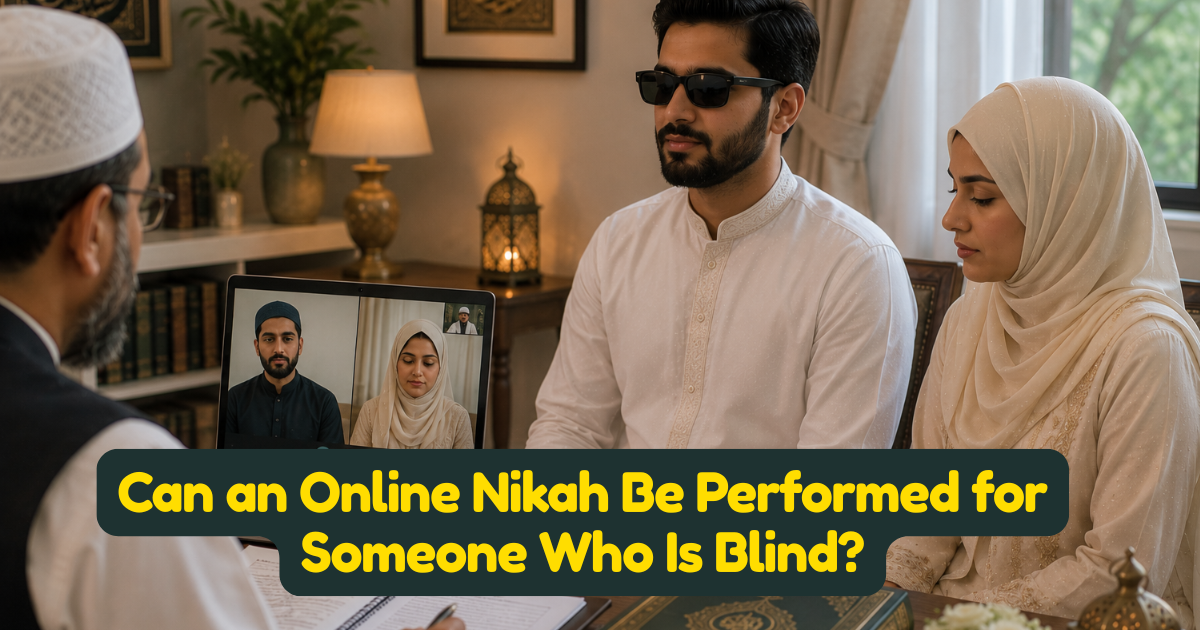
Can an Online Nikah Be Performed for Someone Who Is Blind?
A video call format might seem, at first glance, to disadvantage a blind participant — after all, online nikah is often described in terms of seeing and observing the ceremony over video. But this framing misunderstands what actually makes a nikah valid, and a blind spouse, witness, or wali can participate fully, meaningfully, and validly in an online ceremony, provided the setup accounts for their needs properly.
Why Sight Was Never the Operative Condition
As established elsewhere on our site regarding camera use more generally, the core requirement of a nikah is that the offer and acceptance be clearly heard and understood, and that witnesses be capable of confirming what occurred — none of this depends on visual observation as the specific sensory channel through which understanding happens. Audio, clear speech, and genuine comprehension are what matter; a blind participant who hears everything clearly and understands fully is in exactly the same religiously relevant position as a sighted participant who both sees and hears.
A Blind Spouse's Full Participation
A blind bride or groom can give their offer and acceptance exactly as any other spouse would — verbally, clearly, and with full understanding of what's being agreed to. Their blindness has no bearing whatsoever on their capacity to consent to marriage, negotiate mahr terms, or understand any conditions attached to the contract, provided all of this information is properly and audibly communicated to them rather than assuming visual materials alone suffice.
Ensuring Documentation Is Communicated, Not Just Displayed
Where certificates, mahr terms, or conditions are typically shared visually — on screen during the ceremony, or as a written document afterward — these should be read aloud clearly to a blind participant, not simply displayed with the assumption that verbal discussion during the consultation covered everything adequately. A blind spouse deserves the same opportunity to review and confirm every detail of their marriage terms as a sighted spouse would have through reading, just accomplished through audio rather than visual review.
A Blind Person Serving as a Witness
A blind individual can validly serve as one of a couple's two required witnesses, since the witnessing function centers on the capacity to hear, understand, and later confirm what occurred — a blind witness who clearly hears the ijab and qabul exchange is fully capable of fulfilling this role, exactly as a witness who both sees and hears would be. There is no religious basis for excluding a blind person from serving as a witness purely on the basis of their blindness.
A Blind Wali
Similarly, a blind father or other relative can serve as wali, since the wali's role centers on understanding, consenting to, and actively participating in the marriage arrangement on behalf of the bride, where required — none of which depends on visual capacity. His full engagement and clear verbal consent fulfill the wali role exactly as a sighted wali's would.
Practical Video Call Setup Considerations
For a blind participant joining via video call, a few practical accommodations help ensure a smooth experience: ensuring audio quality is prioritized and clear (since this is the primary channel through which a blind participant experiences the ceremony), having a sighted family member or assistant nearby to help with any technical navigation of the call itself if needed, and the officiant speaking clearly and at a measured pace, describing verbally what's happening at each stage rather than assuming visual cues convey information a blind participant can independently access.
Screen Reader and Accessibility Technology Compatibility
Many blind individuals use screen readers and other assistive technology to navigate digital platforms independently, including video calling applications and any documentation shared electronically. Couples should confirm with their chosen service which video platform will be used, so a blind participant or their support person can confirm compatibility with their preferred assistive technology ahead of the ceremony date, avoiding last-minute technical surprises.
Identity Verification for a Blind Spouse
Identity verification, typically involving showing government identification on camera, may require some accommodation for a blind spouse — a sighted family member or the officiant can assist in confirming the document is properly displayed, while the blind spouse's own verbal confirmation of their identity and details supplements this visual check, ensuring the verification process remains thorough despite the accommodation needed.
Certificate Accessibility After the Ceremony
Following the ceremony, providing the nikah certificate in a format accessible to a blind spouse — whether through a screen-reader-compatible digital document, a braille version if requested, or simply ensuring the terms were thoroughly explained verbally and understood — ensures ongoing access to the marriage's documented terms, not just accessibility during the ceremony itself.
Approaching This With Genuine Care, Not Just Technical Compliance
Beyond the technical accommodations, a blind participant deserves a ceremony conducted with genuine warmth and attentiveness — an officiant who takes the time to ensure they feel fully included and informed throughout, rather than treating their participation as a logistical checklist item to work around.
How InstantNikah.com Supports Blind Participants
We accommodate blind spouses, witnesses, and walis by prioritizing clear audio communication throughout the ceremony, verbally confirming all terms and documentation rather than relying on visual review alone, and working with the couple beforehand to ensure any assistive technology needs are addressed so the ceremony feels fully accessible and meaningful.
Admin User
Author