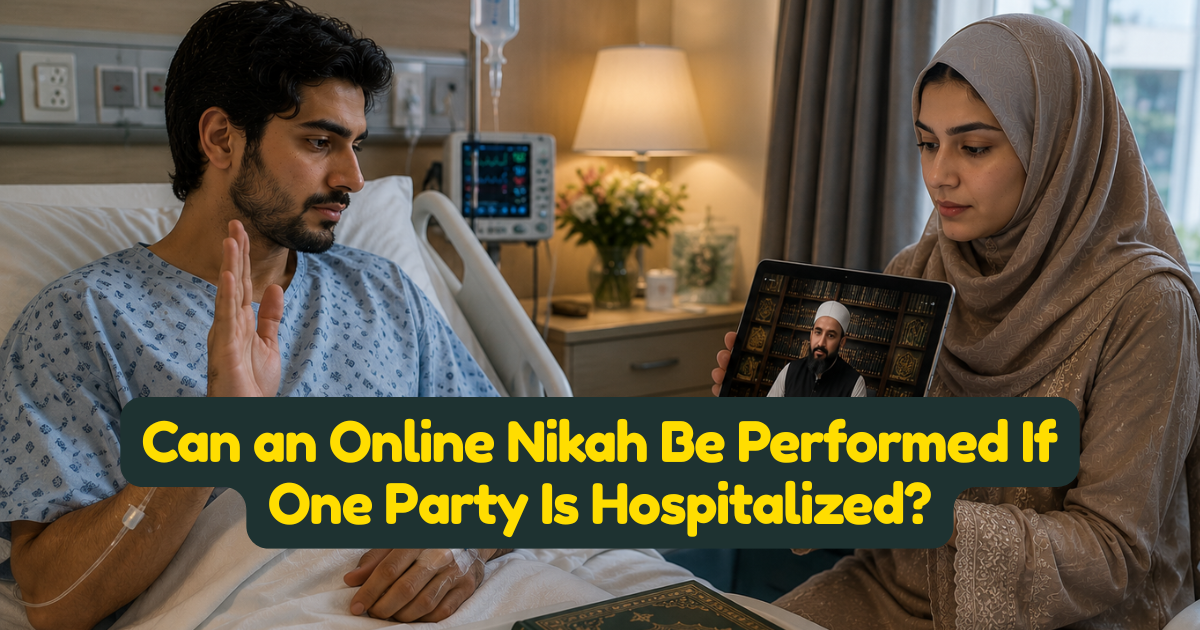
Can an Online Nikah Be Performed If One Party Is Hospitalized?
Hospitalization itself isn't a barrier to a valid nikah — what matters is whether the person is genuinely capable of clear, free, and informed consent at that specific moment, which depends entirely on their actual condition, not simply the fact that they're in a hospital bed.
The Real Question Is Capacity, Not Location
A clear summary of nikah's underlying conditions confirms what actually matters here: both spouses must be mentally capable of giving consent, and must not be intoxicated or impaired at the time. This is the precise standard that applies regardless of where the ceremony takes place — a hospital room changes nothing about the requirement itself, but it does mean the people involved need to think carefully about whether that standard is genuinely being met in this specific person's current state.
What Actually Affects Capacity in a Hospital Setting
- Pain and medication can genuinely impair judgment — sedation, strong pain medication, or a person still recovering from anesthesia can affect the kind of clear understanding consent requires, even if the person seems alert and willing.
- Physical illness alone doesn't impair capacity — someone fully lucid, recovering from surgery or managing a physical condition, but mentally clear and able to genuinely understand and freely consent, meets the standard just as well as anyone else would.
- The specific reason for hospitalization matters — a person hospitalized for an unrelated physical injury is in a very different position than someone whose condition itself directly affects cognition or consciousness.
- Timing relative to treatment matters — scheduling around medication cycles, avoiding the period immediately following sedation, and choosing a moment when the person is genuinely at their most clear-headed all matter in practice.
A Note of Extra Caution for Serious Illness
Where the hospitalization involves a genuinely serious or potentially terminal condition, additional care is worth taking — for reasons closely related to the marad al-mawt (death-illness) considerations covered elsewhere in this series regarding divorce during fatal illness. The same underlying concern applies here in reverse: a marriage entered into during a serious illness can later raise legitimate questions about both capacity and motive, particularly if it affects inheritance or other significant rights. This doesn't mean such a marriage can't be valid — it means it deserves clearer documentation and, ideally, independent confirmation of genuine capacity at the time, precisely because it may be scrutinised more closely later.
Practical Considerations for an Online Ceremony From a Hospital
- Confirm hospital wifi or cellular connectivity is genuinely reliable before scheduling, since a dropped connection during the actual offer and acceptance creates the same problem covered in our piece on technology requirements generally.
- Arrange for privacy where possible, particularly in a shared hospital room, since the ceremony's witnesses need to clearly hear the exchange without interference.
- Have the officiant directly confirm understanding with the hospitalized party — clear, simple questions confirming they understand what's happening and genuinely consent — rather than assuming willingness from limited engagement on a screen.
- Document the circumstances clearly, including the date, time, and the person's apparent condition, particularly for a serious illness situation where the marriage's validity might reasonably be questioned later.
- If there's any genuine doubt about capacity at the moment, it's far safer to delay briefly than to proceed and create lasting uncertainty about whether the marriage was validly consented to at all.
Key Takeaway
A hospital setting doesn't itself prevent a valid online nikah — the real question is always whether the hospitalized party is genuinely capable of clear, free consent at that specific moment, a standard that depends entirely on their actual condition rather than their location. Where illness is serious or potentially affects long-term capacity, extra documentation and clear confirmation of genuine consent are well worth the additional care, protecting both the marriage's validity and everyone's peace of mind going forward.
Admin User
Author