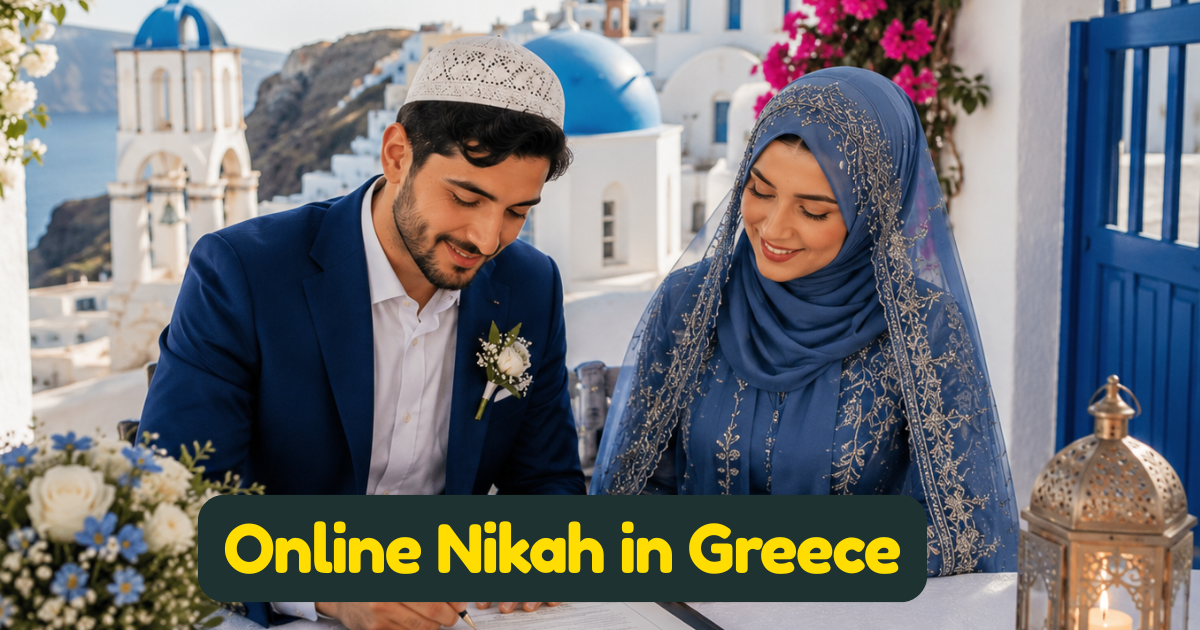
No country in the European Union has a more legally complex relationship with Islamic marriage than Greece. Spain's Ley 26/1992 gives Islamic Nikah the same legal status as civil marriage — a remarkable provision. But Greece goes further still: it is the only EU member state with officially recognised Islamic courts operating under Sharia law, rooted in international treaties that predate the European Union by decades.
Understanding this system requires separating two distinct Muslim populations in Greece — because they face entirely different legal frameworks when it comes to marriage. Getting this distinction wrong leads to serious practical errors.
Two Muslim Populations, Two Legal Systems
The first population is the Muslim minority of Western Thrace — approximately 100,000 to 150,000 Greek citizens living in the northeastern corner of Greece, bordering Turkey. This community is predominantly Turkish in origin, alongside Pomak and Roma Muslim communities. Their status is governed by the 1923 Treaty of Lausanne, which exempted them from the compulsory population exchange between Greece and Turkey and guaranteed them specific minority rights — including the application of Islamic law to personal status matters including marriage.
The second population is far larger — an estimated 500,000 to 600,000 Muslim immigrants, refugees, and expatriates living across Athens, Thessaloniki, Patras, and cities throughout the country. Albanian Muslims, Pakistani and Bangladeshi communities, Egyptian and Syrian families, and convert Greeks form a diverse immigrant Muslim community that has no connection to the Western Thrace minority system. They are subject to standard Greek civil law — the Greek Civil Code — not the Mufti jurisdiction.
Most guides that write about Muslim marriage in Greece focus exclusively on the Western Thrace system and completely ignore the much larger immigrant Muslim population. This guide addresses both.
The Western Thrace Mufti System — History, Reform, and What It Means Today
The Mufti jurisdiction in Western Thrace has its roots in a series of international treaties stretching from the 1881 Treaty of Constantinople through to the defining 1923 Treaty of Lausanne. The Treaty of Lausanne — which remains in force today — guaranteed the Muslim minority of Western Thrace the right to be governed by their own religious law in matters of personal status, including marriage, divorce, custody, and inheritance. As MDPI's peer-reviewed analysis of the Mufti jurisdiction confirms, Article 4 para. 1 of Law 147/1914 — still operative — states directly: all matters relating to the marriage of persons belonging to the Muslim religion shall be governed by their holy law and adjudicated in conformity with it.
Three Mufti offices operate in Western Thrace — in Komotini, Xanthi, and Didymoteicho — each serving as both a religious authority and a judicial tribunal with jurisdiction over family law matters including Nikah. The Mufti conducts and registers Islamic marriages for the Muslim minority. These marriages have direct legal effect in Greek law because they are recognised by the Greek state through the Lausanne framework.
The 2018 Reform — Sharia Becomes Optional
For most of the twentieth century, the Mufti jurisdiction was not optional — it was mandatory for the Muslim minority. A Muslim from Western Thrace could not choose Greek civil courts for family matters; they were compelled to use the Mufti system regardless of personal preference. This became the subject of the landmark case of Molla Sali v. Greece at the European Court of Human Rights, where a Muslim woman from Komotini challenged the mandatory application of Sharia inheritance law that had disadvantaged her after her husband's death.
In January 2018, anticipating the ECHR ruling, the Greek Parliament passed legislation making the Mufti jurisdiction optional rather than mandatory. As Euronews reported at the time, the new law allows Muslims of Western Thrace to go before a Greek civil court for divorce, child custody, and inheritance matters instead of appealing to the Mufti — a choice that was previously unavailable. Greek Prime Minister Tsipras called it a historic step extending equality before the law to all Greek citizens.
For marriage specifically, the position under the updated Law 4964/2022 is nuanced: the Mufti retains jurisdiction over marriage matters for the Muslim minority, but only where all parties accept this jurisdiction. A member of the Western Thrace Muslim minority who wishes to marry through the Greek civil system may do so. The choice now belongs to the individual — not the state.
What the Mufti Nikah Means in Practice — For Western Thrace Muslims
For the Muslim minority of Western Thrace who choose the Mufti system for their Nikah, the process is genuinely distinct from anywhere else in Europe. The Mufti officiates the marriage according to Hanafi fiqh — the dominant scholarly tradition in Western Thrace, inherited from the Ottoman period. The marriage is simultaneously an Islamic contract and a legally registered Greek marriage, requiring no separate civil ceremony. The Mufti's jurisdiction in this regard mirrors what Spain's registered Imams provide under Ley 26/1992 — but through a centuries-older institutional framework.
However — and this is critical — the Mufti system applies only to Greek citizens who are members of the Muslim minority of Western Thrace. An Albanian Muslim in Athens, a Pakistani Muslim in Thessaloniki, a Syrian refugee in Patras, or a Greek convert anywhere in the country has absolutely no connection to the Mufti jurisdiction. They are governed by the Greek Civil Code like any other resident of Greece.
Muslim Immigrants in Greece — A Much Larger Community Under Civil Law
The Muslim immigrant population in Greece dwarfs the Western Thrace minority in size — and faces a completely different legal environment for marriage.
Albania's Muslim community is the largest — Albanian Muslims make up a significant proportion of the immigrant population in Athens and northern Greece. Pakistani and Bangladeshi communities are established in Athens, particularly around the Omonia neighbourhood. Egyptian Muslims, Syrian and Iraqi refugees, and smaller communities from Morocco, Afghanistan, and sub-Saharan Africa together constitute a large and diverse immigrant Muslim population with no systematic access to Islamic marriage infrastructure.
Greece has no central mosque in Athens — a situation unique among EU capital cities, and one that has been a source of controversy for decades. An official mosque for Athens has been in development for years, opening in 2020 on a limited basis, but Islamic religious infrastructure for the large immigrant community remains limited compared to other European capitals.
For this immigrant Muslim population, marriage operates through standard Greek civil law. A Nikah conducted by an Imam for an immigrant Muslim in Greece is an Islamic religious ceremony — valid under Islamic law — but not automatically a legally recognised Greek civil marriage. Civil registration at the local registry office (ληξιαρχείο, Lixiarcheio) is required for full Greek legal standing.
The Greek Civil Marriage Process for Muslim Immigrants
For Muslim immigrants in Greece — the overwhelming majority of Muslims living in Athens, Thessaloniki, and other Greek cities — civil marriage follows the Greek Civil Code through the local civil registry office.
Both parties must appear in person at the Lixiarcheio with valid identity documents, and proof of civil status — a certificate confirming they are free to marry (αγαμία, agamia). Foreign nationals must provide legalised, apostilled, and officially translated documents. Two witnesses must be present at the civil ceremony. The civil ceremony can take place at the registry office or, in some municipalities, at another approved location.
There is no Greek law requiring the civil ceremony to precede the religious one. A Nikah can be conducted before or after the civil registration — the sequence is flexible. What matters is that both take place for a couple who wants both Islamic and civil legal standing.
Where Online Nikah Serves Muslim Couples in Greece
The practical need for an online Nikah service in Greece is strongest among the large immigrant Muslim community — and for specific cross-border situations affecting all Muslim groups.
Athens and Thessaloniki — Limited Islamic Infrastructure
Greece's limited mosque infrastructure in major cities means that accessing a qualified Imam willing to conduct a proper Nikah — with verified witnesses, a proper Wali process, and complete documentation — can be genuinely difficult for immigrant Muslims. An online Nikah service removes this barrier entirely. The ceremony reaches any Muslim in Greece via a secure video call, regardless of how developed the local Islamic infrastructure is.
Cross-Border Couples — One Partner in Pakistan, Albania, or Elsewhere
Cross-border marriages are very common across Greece's immigrant Muslim communities. A Pakistani Muslim in Athens marrying a partner still in Lahore, or an Albanian Muslim whose fiancée is still in Tirana, needs the Islamic marriage completed immediately while Greek immigration processes run their longer course. An online Nikah provides the Islamic ceremony within 24 hours. Both partners join the live video call from their respective locations.
Muslim Converts in Greece
Greece has a small but present convert Muslim community — Greeks who have embraced Islam, often through marriage or interfaith encounter. Greek converts typically have no established mosque connection and no Muslim male relatives to serve as Wali. The Wali-e-Hakim pathway is handled as standard at InstantNikah.com with proper scholarly assessment. Our guide to online Nikah for converts covers every scenario in detail.
Western Thrace Muslims With Cross-Border Needs
Even for Muslims of the Western Thrace minority, cross-border marriage situations — where one partner is still in Turkey or elsewhere — create practical needs that an online Nikah addresses. The Wali and other family members can participate via live video call from wherever they are located, supporting the couple's process regardless of which legal framework they ultimately use for registration.
The Wali Situation for Muslim Women in Greece
For Muslim women in Greece whose Wali is overseas — in Turkey, Albania, Pakistan, Egypt, or elsewhere — the online Nikah model is directly practical. Greece is in the Eastern European time zone — two hours ahead of the UK, one hour ahead of most of Western Europe, and three to four hours behind Pakistan. The Wali joins the live video call from wherever he is. For Greek Muslim converts with non-Muslim families, the Wali-e-Hakim pathway is handled as standard. Our guide on online Nikah without a Wali explains the full process.
Frequently Asked Questions
Does Greece have Islamic courts?
Yes — Greece is the only EU member state with officially recognised Islamic courts. The Mufti courts in Western Thrace have jurisdiction over family law matters including marriage for the Muslim minority of that region, rooted in the 1923 Treaty of Lausanne. Since 2018, this jurisdiction has been optional rather than mandatory — members of the Western Thrace Muslim minority can choose between the Mufti system and Greek civil courts. The Mufti system does not apply to Muslim immigrants and expats living in the rest of Greece.
Can a Muslim immigrant in Athens get a legally recognised Nikah in Greece?
The Nikah conducted by an Imam for an immigrant Muslim in Athens is an Islamic marriage — valid under Islamic law. For Greek civil legal recognition, civil registration at the local Lixiarcheio (civil registry office) is required. The Mufti system does not apply to Muslim immigrants. An online Nikah through InstantNikah.com provides the Islamic ceremony. Civil registration follows separately through the Greek civil registry process.
What is the Treaty of Lausanne and why does it matter for Nikah in Greece?
The Treaty of Lausanne (1923) is the international agreement that exempted the Muslim minority of Western Thrace from the Greek-Turkish population exchange and guaranteed them specific minority rights including the application of Islamic law to personal status matters including marriage. It is still in force today and is the legal basis for the Mufti courts' jurisdiction over marriage for the Western Thrace Muslim minority.
Is there a mosque in Athens where Muslims can have a Nikah?
Athens opened a limited official mosque in 2020, but Islamic religious infrastructure for the large immigrant Muslim population in Athens and other major Greek cities remains limited compared to other European capitals. This makes access to a qualified Imam for a properly conducted Nikah genuinely difficult for many Muslims in Greece — a practical gap that an online Nikah service addresses directly.
My partner is in Turkey or Pakistan. Can we do an online Nikah from Greece?
Yes. An online Nikah through InstantNikah.com accommodates both partners from their respective locations — Greece and Turkey, Greece and Pakistan, or any other cross-border combination. Greece's Eastern European time zone is manageable with most Muslim-majority countries. The Islamic ceremony happens in real time across all locations simultaneously.
Ancient Land, Modern Challenge
Greece's relationship with Islam is ancient — Islam reached the Byzantine Empire in the seventh century, and Ottoman rule shaped much of what is now modern Greece for nearly four hundred years. The Mufti system in Western Thrace is a living remnant of that history — one of the most extraordinary examples of legal pluralism in any Western democracy.
For the large and growing immigrant Muslim population of modern Greece — navigating life in Athens, Thessaloniki, and cities across the country — the connection to that history is distant. What they need is practical: a properly conducted Nikah by a qualified Imam, with verified witnesses, a proper Wali process, and complete documentation. Whether the civil registration follows through the Greek Lixiarcheio or through an overseas jurisdiction, the Islamic contract itself must be right.
InstantNikah.com serves Muslim couples across all of Greece — Athens, Thessaloniki, Patras, Heraklion, Komotini, Xanthi, and beyond. Qualified Imams. Verified witnesses. Complete Wali process. Same-day availability. Eastern European time zone covered as standard. Speak with our team or book your ceremony — no commitment required.
Admin User
Author