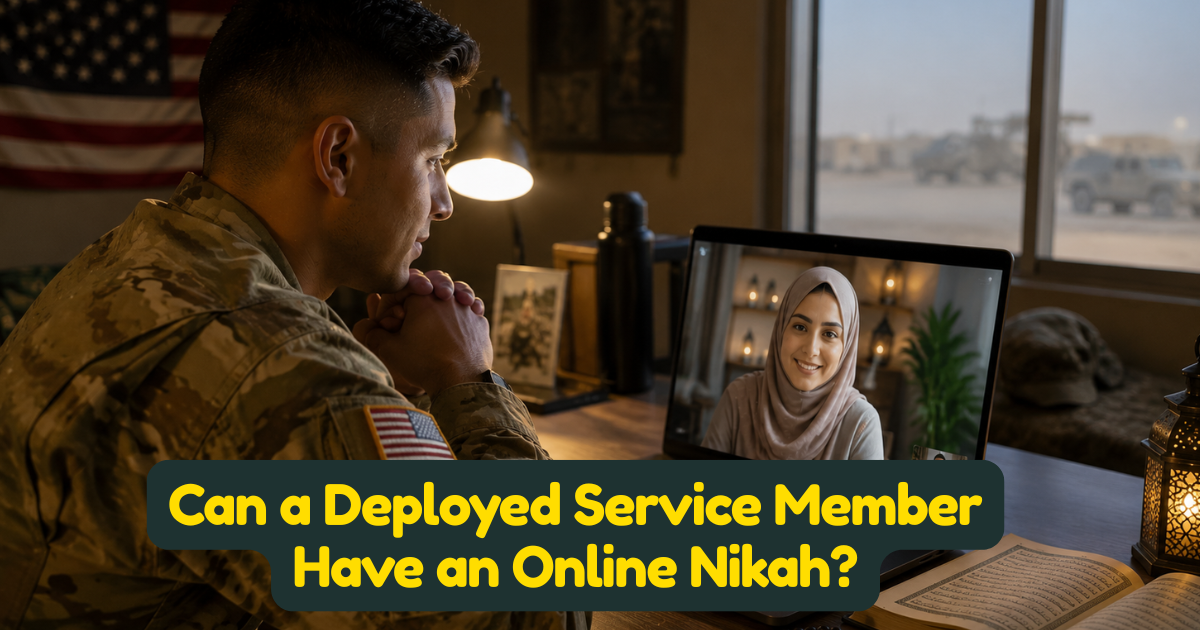
Deployment creates one of the most genuinely difficult logistical situations for a couple wanting to marry — and it's worth understanding clearly what an online nikah actually solves here, and what it doesn't, because the religious and civil sides of this diverge in important ways.
Why Marriage During Deployment Is Already Known to Be Difficult
This isn't a niche problem — it's well documented. Detailed guidance on marrying someone deployed overseas confirms directly that military chaplains do not perform marriage ceremonies in theater, and that there's generally no procedure allowing a US service member to marry during an active deployment at all, given how rarely leave is granted specifically for that purpose in a conflict zone. This is precisely why proxy marriage exists as a civil alternative — but that alternative comes with its own serious limitations.
Civil Proxy Marriage Is Far More Restricted Than People Expect
A detailed explanation of military proxy marriage confirms that this option is legal in only a handful of US states, with double-proxy marriage — where neither party is physically present — legal in just one state, Montana. Each state imposes its own specific requirements, and a couple where the civilian partner doesn't reside in one of the permitting states may find the option simply isn't available to them at all, regardless of the military circumstances.
Where an Online Nikah Genuinely Helps
This is exactly the gap an online nikah is positioned to close. Because the religious ceremony relies on a live video connection rather than requiring a representative to be physically present in a permitting jurisdiction, a service member with internet access while deployed can participate directly in their own ijab and qabul — the same exchange covered in our piece distinguishing online nikah from proxy marriage — without needing to qualify for one of the very limited state-specific civil proxy provisions at all. The religious marriage doesn't depend on the same restrictive legal framework that civil proxy marriage does.
What This Doesn't Solve: Civil Recognition and Benefits
This is the critical distinction couples need to understand clearly. Detailed guidance on military marriage rules confirms that a military ID card and access to spouse benefits — healthcare, housing allowance, and other support — require being legally married, and that the military does not recognise common law marriage or simply being engaged. A religiously valid online nikah, on its own, doesn't automatically satisfy this civil legal marriage requirement for military benefit purposes — that still depends on completing the actual civil marriage process in the relevant jurisdiction, which deployment itself can make genuinely difficult to arrange, given the same leave and chain-of-command restrictions that block in-person ceremonies in the first place.
What a Deployed Couple Should Actually Plan For
- The online nikah itself can typically proceed via video call as soon as connectivity allows, establishing the religious marriage without needing civil proxy marriage eligibility.
- Civil registration is a separate process that may need to wait until the service member returns, or be pursued through whatever specific civil proxy provisions are genuinely available and applicable to the couple's situation.
- Chain of command notification generally applies to military marriage regardless of how the religious ceremony was conducted, and should be handled according to the relevant branch's actual procedures.
- Benefits eligibility specifically depends on the civil marriage being completed, not on the religious ceremony alone — couples relying on military spouse benefits should treat this civil step as genuinely time-sensitive, not an afterthought.
Key Takeaway
An online nikah genuinely solves the part of this problem that civil proxy marriage struggles with — it doesn't require either party to be in a specific permitting jurisdiction, just a working video connection. What it doesn't solve is civil recognition and military benefits eligibility, which remain tied to completing an actual civil marriage process, something deployment itself continues to complicate regardless of how the religious ceremony was conducted. Couples in this situation are best served treating the two tracks — religious and civil — as genuinely separate, with the civil step planned for as soon as circumstances genuinely allow.
```Admin User
Author