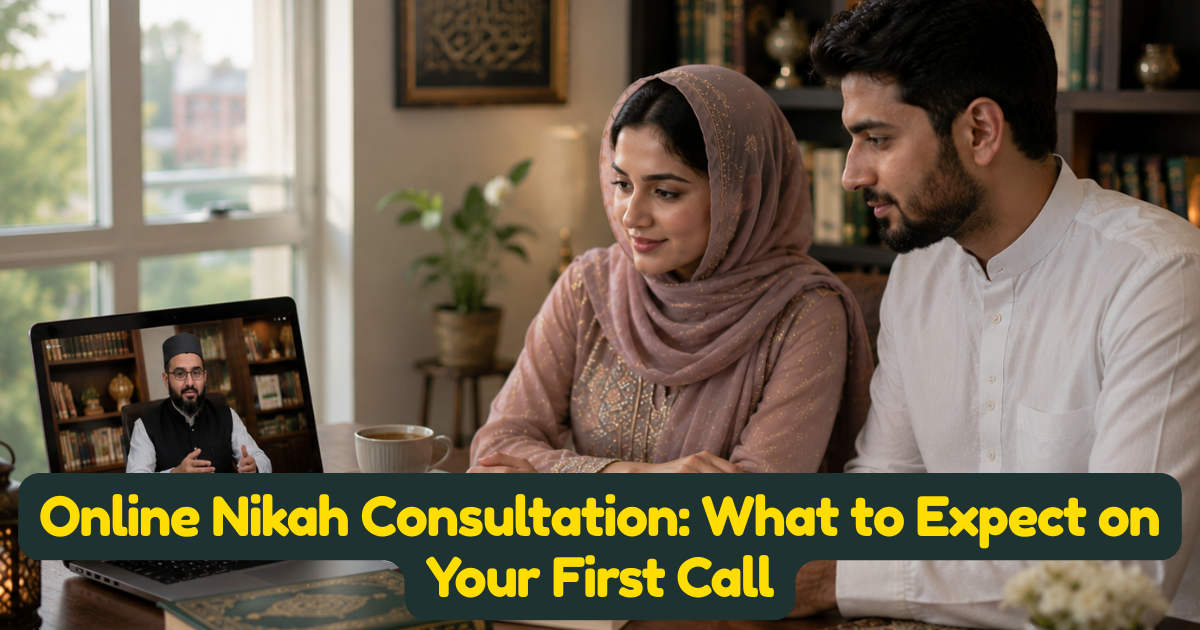
Online Nikah Consultation: What to Expect on Your First Call
Before any ceremony takes place, a properly run online nikah service should begin with a genuine consultation — not a sales call, and not a rushed formality on the way to payment, but a substantive conversation that shapes how your specific ceremony will actually be conducted. Couples booking for the first time often aren't sure what this call should cover, which makes it harder to recognize when a service is doing this well versus cutting corners.
Why the Consultation Matters as Much as the Ceremony Itself
The consultation is where an officiant gathers the information that shapes everything about how your ceremony proceeds — your marital status and eligibility, your madhab and its specific requirements, your mahr preferences, and any particular circumstances (a wali who's unavailable, a language preference, a documentation need) that require planning ahead of time. Skipping this step, or treating it superficially, risks a ceremony that doesn't actually fit your specific circumstances.
Confirming Eligibility to Marry
A proper consultation begins with confirming that both parties are actually free to marry — not currently in an unresolved marriage, and, where applicable, past any relevant iddah period following a prior divorce or the death of a previous spouse, as covered in our detailed guides on these specific scenarios.
Understanding Your Madhab and Specific Requirements
The officiant should ask about your specific religious tradition, particularly regarding wali involvement, since this significantly shapes how the ceremony needs to be structured. A consultation that skips this question and simply schedules a generic ceremony regardless of your background is missing an important step.
Discussing Mahr Directly With Both Spouses
As covered in our article on mahr negotiation dynamics, a proper consultation involves speaking with the bride directly, not only relaying terms through the groom or family, to confirm her genuine comfort with the proposed mahr amount and structure before the ceremony proceeds.
Confirming Witness and Wali Arrangements
The consultation should address who will serve as witnesses — whether the couple has their own or needs them arranged — and, where relevant, who will serve as wali, including working through the wali hierarchy if the primary wali is unavailable, deceased, or estranged, as covered throughout our dedicated content on these scenarios.
Reviewing Documentation Requirements
A thorough consultation covers what identification and documentation you'll need to provide, and clarifies what the resulting certificate will need to support — civil registration, immigration documentation, or purely religious record-keeping — since this shapes exactly how the certificate should be structured, as discussed in our article on certificate elements.
Walking Through What the Ceremony Will Actually Involve
A good consultation gives you a clear preview of the ceremony's structure — roughly how long it will take, what will be said and in what order, and what's expected of you specifically during the acceptance — removing much of the uncertainty and nervousness that comes from not knowing what to expect, as discussed in our broader guide on ceremony structure.
Discussing Camera, Modesty, and Privacy Preferences
This is the appropriate moment to raise any preferences around camera use, niqab accommodation, privacy from certain family members, or whether you want the ceremony recorded — a proper consultation should invite these questions directly rather than leaving couples to wonder whether it's appropriate to ask.
Addressing Any Special Circumstances Upfront
If your situation involves anything beyond a standard first marriage — a renewal, a remarriage after divorce, a cross-border couple who haven't met in person, a time-sensitive medical or immigration circumstance — the consultation is where this should be discussed thoroughly, since these situations often require specific handling covered throughout our broader content.
Signs a Consultation Is Being Rushed or Skipped
- Being pushed toward payment before any real conversation about your specific circumstances.
- The officiant not asking about your madhab or wali requirements at all.
- No discussion of mahr terms directly with the bride.
- No explanation of what the ceremony will actually involve.
- Vague or evasive answers about what documentation you'll ultimately receive.
How Long a Proper Consultation Typically Takes
A thorough consultation generally takes somewhere between fifteen minutes and half an hour, though more complex situations — involving multiple special circumstances — may reasonably take longer. A consultation that concludes in a couple of minutes, without meaningfully covering the topics above, likely isn't giving your specific situation the attention it deserves.
What to Bring or Prepare Before Your Consultation Call
Having a general sense of your mahr preferences, knowing who you'd like as witnesses and wali if applicable, and having your identification documents accessible helps the consultation move efficiently, though a good officiant should still walk you through each of these areas rather than expecting you to arrive with everything already decided.
How InstantNikah.com Structures Every First Consultation
Every couple booking with us goes through a genuine, thorough consultation covering eligibility, madhab-specific requirements, mahr terms discussed directly with both spouses, witness and wali arrangements, documentation needs, and a clear preview of the ceremony itself — before any ceremony date is confirmed, ensuring the ceremony that follows genuinely fits your specific circumstances.
Admin User
Author