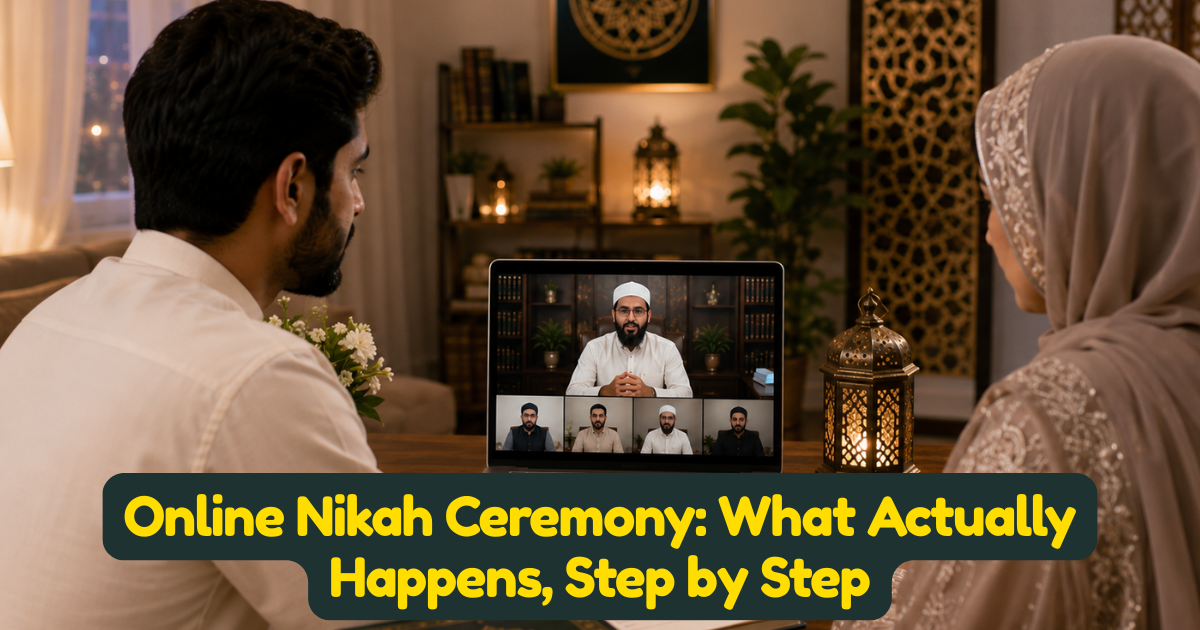
Online Nikah Ceremony: What Actually Happens, Step by Step
Couples researching "online nikah ceremony" are usually looking for one thing above all: a clear picture of what actually happens, from the moment they decide to book through to holding their finished certificate. Uncertainty about an unfamiliar process adds unnecessary stress to what should be a meaningful occasion, so this guide walks through the entire journey in order.
Step One: Initial Consultation
The process begins with a consultation between the couple and their chosen service, covering the couple's specific circumstances — whether they're marrying for the first time, navigating a cross-border relationship, or bringing any specific religious or documentation needs to the table. This is also when madhab-specific requirements, particularly wali involvement, are clarified.
Step Two: Identity Verification
Both spouses provide government-issued identification, verified ahead of the ceremony itself. This step protects against fraud and ensures the resulting certificate matches the couple's legal names precisely, which matters significantly for any future civil or immigration documentation built on top of it.
Step Three: Confirming Witnesses and Wali
The couple confirms who will serve as their two witnesses — either arranged themselves or, where needed, provided through the service — and, where the wife's madhab requires it, confirms wali involvement. All participants are briefed on how to join the same secure video call for the actual ceremony.
Step Four: Mahr Discussion
The couple and officiant confirm the mahr amount and structure — whether paid promptly, deferred, or split between the two — with both spouses directly involved in this conversation, ensuring genuine, informed agreement on the terms before the ceremony date.
Step Five: The Live Ceremony Begins
On the scheduled date, all participants join the video call. The officiant opens the ceremony, confirms witness presence and attentiveness, and often begins with a brief opening reflection setting the tone for the occasion.
Step Six: The Khutbah
The officiant delivers the khutbat al-nikah — praise of Allah, testimony of faith, and reflection connected to marriage — which can be brief or more extended depending on the couple's preference, and can incorporate personal touches like a meaningful verse or reflection on the couple's specific journey.
Step Seven: The Ijab and Qabul
This is the pivotal moment: the officiant guides the formal offer (ijab), typically from the bride or her wali, and the groom's clear acceptance (qabul), with witnesses confirmed as attentively present throughout. This exchange, along with confirmation of mahr, is what actually constitutes the marriage contract.
Step Eight: Confirmation and Closing Du'a
Once the exchange is complete, the officiant typically confirms the marriage has been validly contracted and leads a closing du'a, asking for blessing and success in the couple's new life together. Some couples include a brief word from the groom or a family member at this point, though this is entirely optional.
Step Nine: Certificate Issuance
Following the ceremony, the officiant or service issues a nikah certificate documenting the date, officiant credentials, witnesses, and mahr terms — the couple's lasting religious record of the marriage, and a document that may later support civil registration depending on their jurisdiction.
Step Ten: Civil Registration, Where Applicable
In most countries, the religious ceremony and civil marriage registration are separate processes, as detailed throughout our country-specific guides. Couples wanting full legal recognition alongside their religious marriage generally need to pursue this separately, using their nikah certificate as supporting documentation where relevant.
How Long the Entire Process Typically Takes
For most couples, the full journey from initial consultation to certificate issuance takes between a few days and about a week, though same-day and express options exist for couples with genuinely urgent circumstances, and more complex situations — such as arranging a wali al-hakim or navigating a specific documentation need — may take somewhat longer.
What Guests Experience During the Ceremony
Family and friends can join the same video call as observers, seeing and celebrating the moment alongside the core participants, with the option to mute non-essential participants during the pivotal exchange itself to keep the ceremony's most important moment clear and focused.
Common Concerns Addressed Along the Way
Throughout this process, a good officiant proactively addresses common concerns — camera and modesty preferences, connectivity backup plans, pronunciation guidance for names, and reassurance for nervous participants — so couples don't need to independently research every detail before feeling confident about what to expect.
How InstantNikah.com Guides Couples Through Every Step
We walk every couple through this complete process personally, from the first consultation through certificate delivery, ensuring each step is handled with the same religious rigor and genuine care — so that by the time your ceremony actually begins, there's nothing left uncertain or unexpected.
Admin User
Author