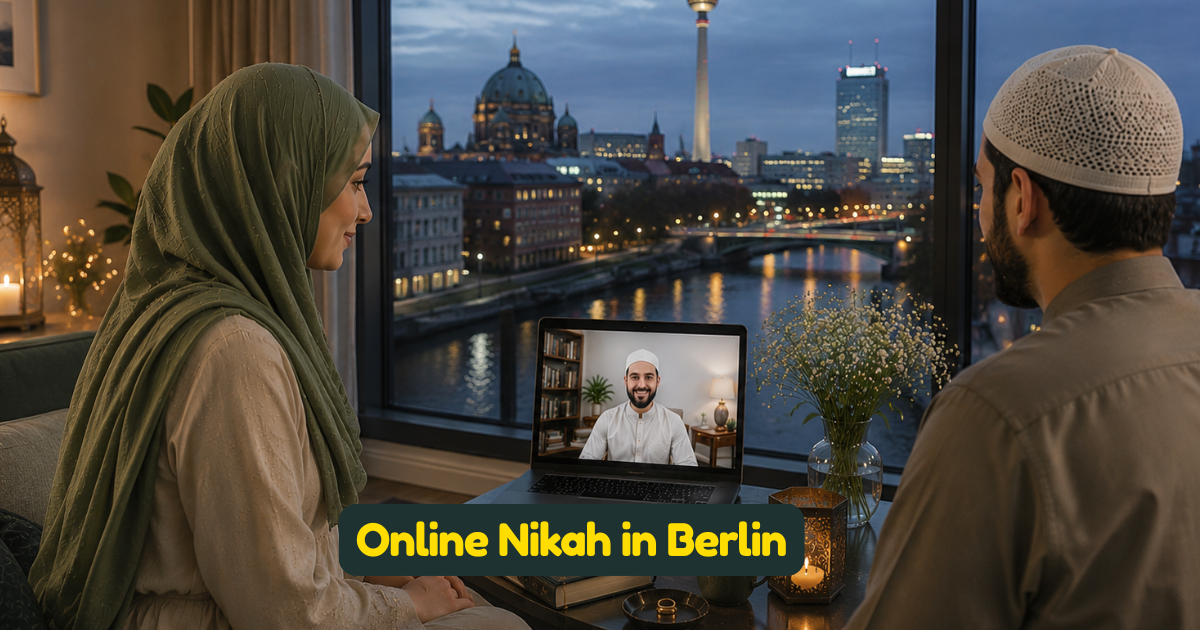
Online Nikah in Berlin
Berlin has more mosques than any other city in Germany — over 80, spread across nearly every district, reflecting Europe's largest Turkish Muslim community alongside significant Arab, Bosnian, and other communities. The Sehitlik Mosque in Kreuzberg, near Columbiadamm, is the city's best-known and most iconic, though smaller neighborhood mosques handle a large share of everyday nikah ceremonies across the city.
A Legal Point Where Germany Genuinely Differs From France
This is worth explaining clearly, because it's often misunderstood, including by some couples and even some officiants: unlike France, Germany does not legally require a civil marriage before a religious one. Germany's "Verbot der religiösen Voraustrauung" — the ban on performing a religious wedding before the civil one — was formally repealed effective January 1, 2009, as part of a reform to the Personenstandsgesetz (Civil Status Act). Before that date, an imam or priest conducting a religious ceremony ahead of the civil marriage could technically face a minor administrative penalty; since 2009, that penalty no longer exists, and religious ceremonies can legally take place before, after, or entirely without a civil marriage.
What Hasn't Changed: A Nikah Alone Still Has No Legal Effect
This is the part that matters most in practice, and it's easy to lose in the "order doesn't matter legally" point above: even though the order is no longer restricted, a religious marriage on its own still creates no legal marriage under German civil law. Under §1310 of the German Civil Code (BGB), a marriage is only legally concluded when both parties declare their intent to marry before a registrar (Standesbeamter) at the Standesamt. A nikah — whether performed first, last, or on its own — carries real religious and spiritual weight, but none of the legal rights, protections, or obligations of marriage under German law unless a civil marriage is also completed.
Why Many Berlin Mosques Still Ask for the Civil Marriage First Anyway
Despite the 2009 legal change, many Berlin mosques and imams continue, as a matter of their own policy rather than a legal obligation, to prefer or require that the civil marriage happen before the nikah — a practice that predates the reform and that many communities have simply continued. Couples researching options in Berlin should expect this preference to vary noticeably by mosque, and asking directly about a specific imam's policy before assuming either way is the safest approach.
Where an Online Nikah Fits
An online nikah's underlying religious requirements don't change based on any of this — a clear offer and acceptance, the wali's role, two qualifying witnesses, and an agreed, documented mahr, exactly as at any Berlin mosque. What it adds is flexibility for families spread across Berlin's many districts or beyond Germany entirely, and — for couples who understand and accept that the religious ceremony alone doesn't create legal marriage either way — the freedom to sequence their civil and religious ceremonies according to their own preference rather than a specific mosque's policy.
Civil Marriage in Berlin
Couples wanting legal marriage recognition in Germany register their intent with the Standesamt in the district where at least one partner lives, a process that can be started as early as six months before the intended date. Once the registration is confirmed, the couple can legally marry at any Standesamt in Germany within that six-month window. Couples with international documentation, foreign-born partners, or a previous marriage abroad should expect a more involved documentation process and are encouraged to consult their local Standesamt directly given how much this can vary by individual circumstance.
Who This Tends to Fit in Berlin
- Couples who want to sequence their civil and religious ceremonies on their own terms, now that German law doesn't dictate the order.
- Families spread across Berlin's many districts or with ties elsewhere in Germany or abroad.
- Couples navigating international documentation requirements for their civil marriage, who want the religious ceremony to proceed independently of that timeline.
- Couples who want a documented, recorded religious ceremony alongside their eventual German civil registration.
Frequently Asked Questions
Is it illegal to have a nikah before civil marriage in Germany?
No — this restriction was repealed in Germany effective January 1, 2009. It remains a real legal requirement in some other European countries, including France, so the rule genuinely differs by country.
Does an online nikah count as a legal marriage in Germany?
No — neither an online nor an in-person nikah alone creates legal marriage status under German law; civil registration at the Standesamt is a separate, required step for legal recognition.
Should we still check with our local Berlin mosque about their own policy?
Yes, if you also plan to have a ceremony there or maintain a relationship with a specific mosque — many continue their own long-standing preference for the civil marriage to come first, even though it's no longer a legal requirement.
Authority References Used (Live & Clickable)
- Berlin.de — official City of Berlin government resource on civil marriage registration
Suggested Internal Links
- Online Nikah in Germany
- Online Nikah in Paris
- France's Criminal Law on Religious Marriage Before Civil Marriage
- Documents Needed Before Booking an Online Nikah
- Book Your Online Nikah
Why This Article Is Different
Most content on nikah in Germany either assumes French-style rules apply everywhere in Europe or repeats outdated forum claims that a pre-civil nikah is "illegal" in Germany — neither is accurate since the 2009 reform. This page gets the actual legal history right, cites the specific reform and civil code provision, and is honest about the real, separate reason many mosques still prefer civil-first (established local custom, not law) — a level of accuracy most competing content in this space doesn't reach.
Zainab Butt
Author