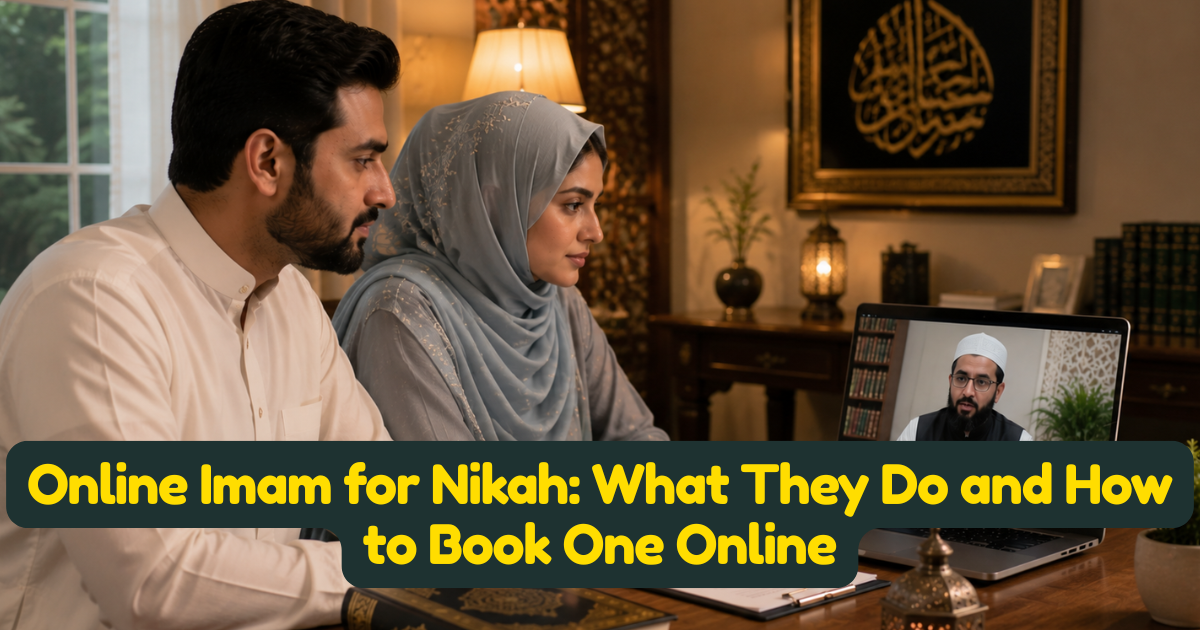
Online Imam for Nikah: What They Do and How to Book One Online
"Online imam for nikah" is searched constantly by couples across the diaspora — Muslims in cities and towns without an easily accessible local imam experienced in marriage ceremonies, long-distance couples needing an officiant who can join both parties remotely, and converts navigating this process for the first time without an existing community connection. Understanding exactly what an imam's role involves in this context, and how to identify a genuinely qualified one, makes a real difference in the outcome.
The Imam's Core Role in a Nikah Ceremony
In the context of officiating a marriage, an imam guides the couple through the full ceremony — delivering the khutbat al-nikah, confirming the mahr agreement, leading the ijab and qabul exchange, and ensuring the essential Islamic conditions (witnesses, wali involvement where required) are properly satisfied. Beyond the technical requirements, a good imam also brings spiritual guidance and warmth to what should be a meaningful occasion, not merely a procedural transaction.
Imam Versus Qazi: A Quick Clarification
As covered in our companion guide on online qazis, these terms are often used interchangeably in diaspora contexts, though "qazi" carries a more specifically judicial connotation historically, while "imam" more broadly describes a religious leader capable of leading prayer and officiating religious ceremonies including marriage. For practical purposes, when searching for either term, couples are generally looking for the same core service: a qualified religious officiant to conduct their nikah.
Why Online Access to an Imam Matters for Diaspora Communities
Many Muslim communities across smaller cities, rural areas, and countries with limited Islamic infrastructure simply don't have a local imam experienced specifically in marriage officiating, even where a mosque exists. An online imam service closes this gap entirely, giving couples in Estonia, rural Canada, the Caribbean, or anywhere else access to the same quality of religious officiating available in larger, more established Muslim communities.
What Qualifications to Look For
- Formal Islamic education from a recognized institution or under a recognized scholar, rather than self-taught or informal knowledge alone.
- Experience specifically officiating marriages, not just general religious leadership — the two skill sets overlap but aren't identical.
- Familiarity with multiple madhabs, given how diverse diaspora communities are, allowing the imam to properly navigate a couple's specific school of thought rather than defaulting to only their own tradition regardless of fit.
- Comfort with the online format specifically — understanding how to verify witness attentiveness, confirm identity, and manage the ceremony's flow effectively over video call.
Red Flags Worth Watching For
Given how many informal, low-cost officiants now advertise online nikah services through freelance platforms and social media, couples should be cautious of anyone unwilling to clearly explain their background, anyone pushing for immediate payment before any real consultation about the couple's specific circumstances, or anyone offering to skip essential conditions like witness confirmation or mahr discussion in the name of speed.
How an Imam Handles Different Madhab Requirements
A knowledgeable imam should be comfortable navigating differences between Hanafi, Shafi'i, Maliki, and Hanbali positions on matters like wali involvement, adjusting the ceremony's structure appropriately based on the couple's specific background rather than applying a single rigid approach to every couple regardless of their tradition, as covered in more depth in our article on mixed-madhab marriages.
What Happens During Consultation Before the Ceremony
A properly run consultation with your online imam should cover: confirming both spouses' identity and marital eligibility, discussing and agreeing mahr terms, confirming witness and wali arrangements, and walking through what the ceremony itself will actually involve — giving couples a clear sense of what to expect rather than leaving them uncertain until the day itself.
Language Considerations When Choosing an Online Imam
For couples more comfortable in a specific language, or families wanting the ceremony delivered in a language that guests can fully understand, confirming your officiant's language capabilities in advance — rather than assuming English or Arabic will automatically be used — ensures the ceremony feels accessible and meaningful to everyone present, not just to the couple.
Recitation Style and Personal Preference
As discussed in our dedicated guide on requesting specific recitation traditions, some imams are trained in particular qira'at beyond the most widely used Hafs transmission — worth raising during your initial consultation if this matters to your family's background, rather than assuming it will be automatically accommodated.
Booking an Online Imam for a Time-Sensitive Ceremony
Where circumstances require an expedited timeline, a well-organized service should still be able to confirm the imam's credentials, complete identity verification, and arrange qualified witnesses quickly — speed and diligence are not mutually exclusive when the underlying process is properly structured.
How InstantNikah.com Connects You With a Qualified Online Imam
Every ceremony we conduct is led by a formally trained imam or qazi, experienced across the major Sunni schools of thought and specifically practiced in the requirements of a properly conducted online ceremony — from identity verification to witness confirmation — giving couples the same rigor and warmth they'd expect from a well-established local mosque, wherever in the world they happen to be.
Admin User
Author