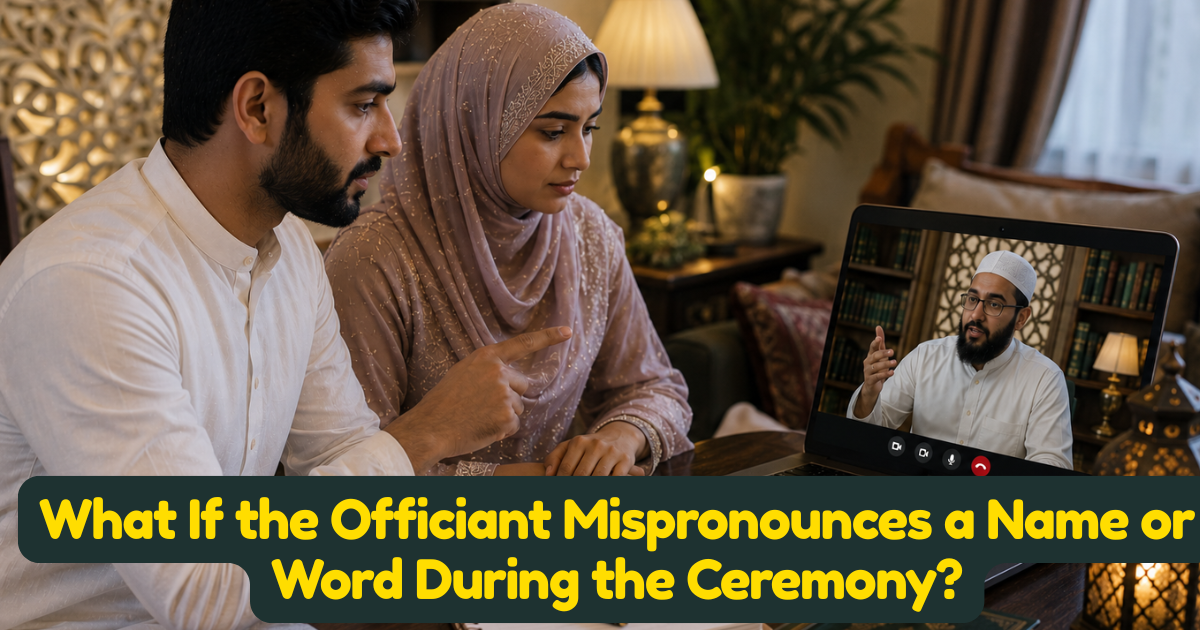
What If the Officiant Mispronounces a Name or Word During the Ceremony?
Names get mispronounced constantly in everyday life, but hearing your own name said incorrectly during your nikah — a moment you've likely thought about and anticipated — can feel unexpectedly jarring. It's a common enough occurrence, especially with names originating from a wide range of languages and transliteration conventions, and it's worth knowing clearly: this almost never affects the ceremony's validity, and there's a simple, respectful way to handle it in the moment.
Why a Mispronunciation Generally Doesn't Affect Validity
The core requirement of the nikah contract is that the offer and acceptance are clearly understood by all parties — the couple themselves, the witnesses, and, where required, the wali. A mispronounced name, provided everyone present still clearly understands who is being referred to and there's no genuine confusion about the parties' identities, doesn't undermine this understanding. The substance of the exchange remains intact even if the pronunciation isn't perfect.
When It's Worth Pausing to Correct
While minor pronunciation slips generally don't matter, it's still worth pausing to correct clearly mispronounced names or key terms — not because leaving it uncorrected would invalidate anything, but because getting it right adds to the moment's dignity and ensures the recorded certificate, if the officiant is reading from or referencing it aloud, matches the couple's actual names precisely.
How to Handle It Gracefully in the Moment
A simple, calm correction works best — either the couple or a family member politely noting the correct pronunciation, or the officiant themselves catching the error and self-correcting. There's no need for embarrassment on anyone's part; officiants regularly work with names from languages and dialects outside their own primary fluency, and a brief pause to get it right is a completely normal part of many ceremonies, not a disruption worth dwelling on.
Providing Pronunciation Guidance in Advance
One of the most effective ways to avoid this altogether is sharing phonetic pronunciation guidance with your officiant during the pre-ceremony consultation, particularly for names with less common transliterations or regional variations in how they're typically said. A few minutes of preparation here can prevent most mispronunciations before they happen.
What Matters More: The Written Certificate
Regardless of how names are pronounced during the live ceremony, what matters most for documentation purposes is that the written certificate reflects the correct spelling exactly as it appears on government identification — a spoken mispronunciation during the ceremony has no bearing on this, provided the written record is accurate, which is worth double-checking as covered in our guide on certificate errors.
If a Key Religious Term Is Mispronounced
Occasionally the concern isn't a name but a specific Arabic term — a word within the khutbah or the ijab-qabul formula itself. A qualified officiant should be comfortable and accurate with these terms as a matter of basic competency, but if a genuine error occurs, the same principle applies: what matters is that the meaning and intent were clearly understood by all parties, and a minor slip corrected promptly doesn't undermine that.
Keeping Perspective on the Moment
A small pronunciation stumble, corrected calmly, often becomes a minor, even fondly remembered detail of the ceremony rather than something couples look back on with concern — it's worth not letting a brief moment of imperfection overshadow what is otherwise a significant and meaningful occasion.
How InstantNikah.com Handles Pronunciation
We ask couples for pronunciation guidance on names and any specific terms during consultation, and our officiants correct any slip calmly and promptly if one occurs during the ceremony, while ensuring the written certificate always reflects the accurate spelling matching the couple's official identification.
Admin User
Author