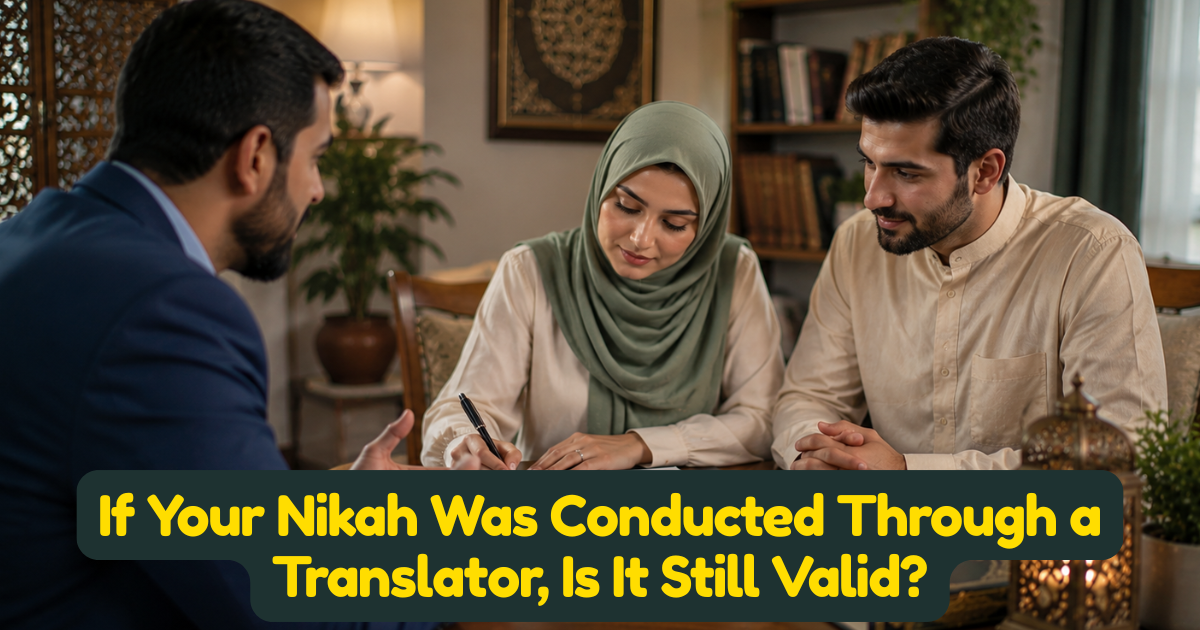
When the bride, groom, wali, or witnesses don't share a language, a translator becomes essential — and the same "no risk of tampering" principle scholars apply to phone and video nikahs applies just as directly here.
Nikah Across a Language Barrier: What Makes a Translated Ceremony Valid
Diaspora and convert marriages increasingly involve a bride, groom, wali, or witnesses who don't all share a common language. A translator solves the practical communication problem — but the same underlying concern scholars raise about phone and video nikahs applies directly to translation as well.
The Core Requirement Hasn't Changed: Genuine, Verified Understanding
Classical fiqh requires that the offer and acceptance be clearly understood by all parties and the witnesses present — this is the substantive requirement behind the ceremony's verbal form, not a fixation on a particular language. A scholarly ruling on remote and technologically-mediated nikah, discussed by Islam Question & Answer's guidance on online nikah validity, permits modern communication methods specifically "if there is no danger of tampering" and the parties can verify what was actually said and meant — a standard that translates directly onto interpretation accuracy.
Why Translation Risk Deserves the Same Caution as Phone/Video Tampering
A poor or inaccurate translation creates a real risk that the witnesses understood something different from what was actually offered and accepted — functionally similar to the "tampering" concern scholars raise about phone or video calls where a voice could be imitated or words altered. If a witness only understands the translated version, and that translation subtly misrepresents the mahr amount, the names involved, or the nature of the consent given, the underlying requirement of clear, verified understanding has arguably not been met — even though everyone present believed it had.
What Makes a Translated Nikah Religiously Sound
The safest approach draws directly from the same principles scholars apply elsewhere: use a translator whose competence and neutrality are not in question (ideally not a close family member with a personal stake in the outcome), have the translator repeat back the core terms — names, mahr amount, and the explicit offer and acceptance — clearly enough that any party or witness who understands either language can confirm accuracy, and, where possible, have the translation itself documented in writing alongside the nikah certificate, creating a verifiable record of exactly what was conveyed.
A Practical Safeguard: Confirm in Both Languages Separately
Rather than relying on a single real-time interpretation, many officiants now have each non-native-language speaker separately confirm, in their own language, that they understood and consented to the specific terms — mirroring the practice some scholars require for remote witnesses confirming they heard the offer and acceptance clearly. This creates redundancy: even if the live translation had a minor error, the separate confirmation step catches it before the ceremony is considered complete.
The Bottom Line for Multilingual Couples
A nikah conducted through a competent, neutral translator is religiously sound on the same basis that phone and video nikahs are: because the underlying requirement — verified, accurate understanding among all parties — has been genuinely satisfied, not because any particular method was used. The method matters only insofar as it serves that underlying goal.