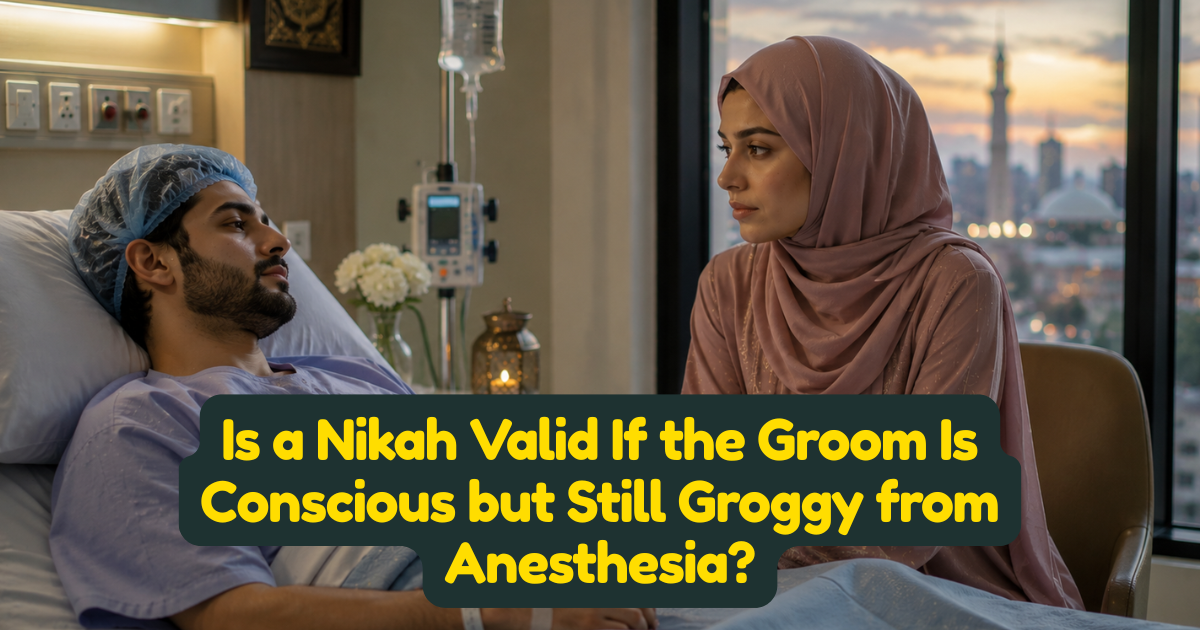
"Conscious" and "capable of valid consent" are not the same thing — medically or legally. Here's where the line actually sits for a nikah contracted while one party is still recovering from sedation.
Groggy, Not Unconscious: Where Capacity to Consent Actually Begins
There's a meaningful difference between someone who is fully unconscious and someone who is awake, responsive, and able to answer questions — but still noticeably foggy from anesthesia or sedation. Both Islamic jurisprudence and Western law converge on the same uncomfortable answer: consciousness alone is not the test.
Medical and Legal Frameworks Both Reject "Awake" as the Standard
Clinical research protocols, which apply some of the most carefully worked-out capacity standards in any field, draw the line well past simple wakefulness. According to a published clinical trial protocol available through a registered clinical trial's documented consent-capacity assessment standard, capacity to consent requires that a person can genuinely understand what is being proposed and express a clear, considered choice — not merely respond to questions or follow simple instructions while sedated.
The Legal Standard: Intoxication and Sedation Are Treated as a Genuine Capacity Defect
Western contract law treats this as a settled exception to ordinary capacity, not a gray area. According to the American Medical Association Journal of Ethics' analysis of mental capacity and contracts, intoxication or impairment at the time an agreement is made is one of the two major recognized exceptions to the legal presumption that an adult has full capacity to contract — directly relevant since a nikah is, in its civil dimension, a contract.
How Medicine Itself Defines "Impaired Judgment" in This Context
A peer-reviewed forensic psychiatry analysis published in the Journal of the American Academy of Psychiatry and the Law defines this precisely in a closely related legal context: a person is "mentally incapacitated" when under the influence of a narcotic, anesthetic, or similar substance to a degree that they lack the judgment to give a reasoned consent — language that applies with equal force to a marriage contract as to any other consequential decision made while sedated.
The Islamic Principle Reaches the Same Place From a Different Direction
Islamic jurisprudence requires free, conscious, and considered consent as a non-negotiable pillar of a valid nikah, regardless of physical presence or the ability to speak. A person groggy from anesthesia, even if able to nod, answer simple yes-or-no questions, or sign a document, has not necessarily met that bar — because the underlying concern in both legal traditions is identical: was the decision genuinely understood and freely made, or was it produced by a temporarily impaired mind reacting rather than deciding?
The Safer Course When This Situation Arises
If a nikah is being contemplated immediately before or after a medical procedure — a common scenario for couples facing a health emergency — the religiously and legally safer path is to wait until the affected party is fully alert and lucid, confirmed by direct, unprompted conversation rather than yes/no responses to questions. If genuine urgency exists, the alternative is to have the person clearly express their specific marital intention while still fully lucid, before any sedation, and appoint a wakeel to formalize that already-settled decision once they are unable to participate directly — precisely mirroring the recognized wakeel framework for someone who is absent rather than impaired.