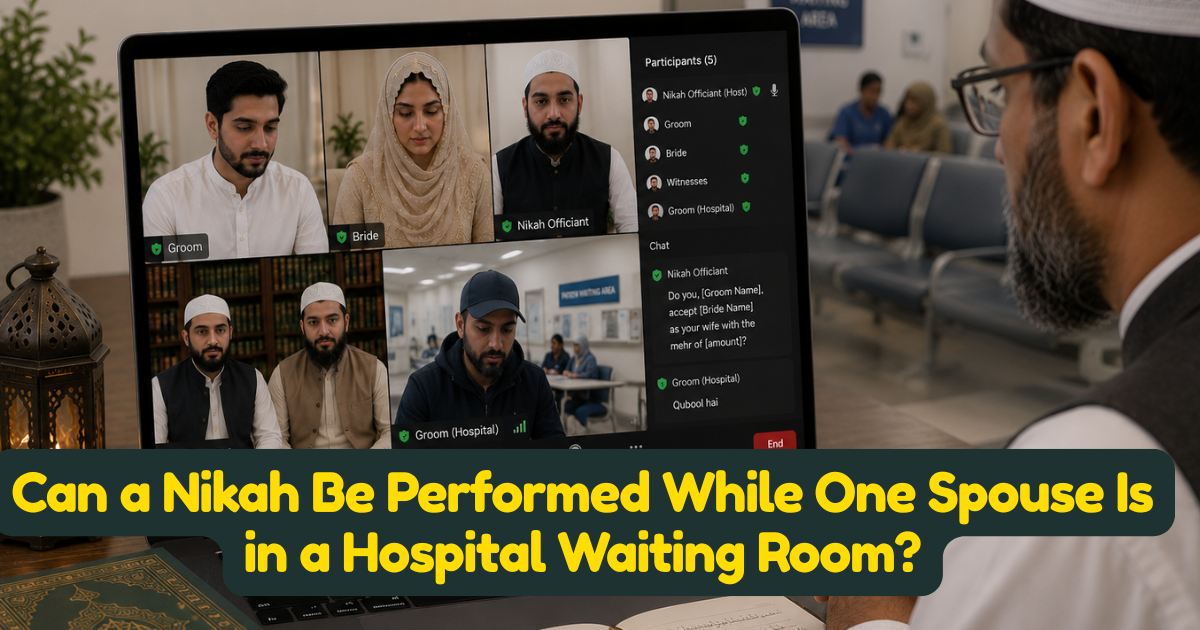
Can a Nikah Be Performed While One Spouse Is in a Hospital Waiting Room?
Some of the most urgent requests we receive come from families facing a medical crisis — a loved one in critical condition wanting to formalize a marriage before surgery, a couple wanting religious clarity on their relationship during a frightening hospital stay, or a partner wanting to be recognized as a spouse for medical decision-making and visitation purposes during an emergency. These situations call for both genuine compassion and a clear understanding of what's actually possible.
Yes, a Nikah Can Be Performed From a Hospital Setting
There is nothing about a hospital environment — whether a waiting room, a patient's room, or even, in classical scholarship, a deathbed situation — that prevents a valid nikah from being performed. Islamic law has long anticipated urgent circumstances requiring flexibility in how and where a marriage contract is completed, provided the essential conditions (clear consent, witnesses, mahr) can still be genuinely fulfilled despite the setting's constraints.
Ensuring Genuine Capacity to Consent
The most important consideration in a hospital-setting ceremony is confirming that the party who is unwell genuinely has the mental capacity to understand and freely consent to the marriage — this is not a formality to rush past. If someone is heavily sedated, in significant pain affecting their clarity of thought, or otherwise not in a state to give genuinely informed consent, the ceremony should wait for a moment of greater clarity, even if that creates additional urgency or difficulty, since a marriage contracted without genuine capacity for consent raises real validity concerns regardless of the circumstances driving the request.
Working With Medical Staff Confirming a Patient's Condition
A responsible officiant conducting a ceremony under these circumstances should, where possible, seek some confirmation from medical staff or family present that the patient is lucid and capable of understanding what's happening — not a formal medical clearance necessarily, but a reasonable check that the person isn't, for example, under the influence of medication that would compromise their ability to genuinely consent.
Video Ceremonies for Hospital-Based Circumstances
An online format is often particularly well suited to these urgent situations — a phone or tablet can be brought to a hospital bedside without the logistical complexity of gathering an in-person officiant, witnesses, and wali on short notice at a hospital location, especially where visitor restrictions might limit who can physically be present in the room. Witnesses and even a wali can join remotely via the same call, satisfying the requirement without needing anyone to travel urgently to the hospital itself.
Why Couples Seek This in Medical Emergencies
- Formalizing an already-committed relationship before a risky surgery or uncertain medical outcome, wanting religious clarity established regardless of what happens next.
- Spousal medical decision-making rights — in many jurisdictions, being a legally or clearly recognized spouse affects who can make medical decisions or receive information if a patient becomes unable to communicate.
- Hospital visitation rights, particularly in facilities with restrictions favoring immediate family, where being recognized as a spouse can affect visitation access.
- A couple's own desire for religious completion of their relationship during a moment when life's fragility feels especially present.
Important Caution About Medical Decision-Making Rights
It's worth being clear that a religious nikah certificate alone does not automatically grant legal medical decision-making authority in most jurisdictions — this generally depends on civil marriage recognition or separate legal documents like a healthcare power of attorney. Couples in this situation urgently needing legal medical decision-making rights should understand that the religious ceremony, while meaningful, may need to be paired with separate, faster legal steps depending on their country's specific healthcare and civil law framework, which a hospital social worker or patient advocate can often help clarify quickly.
Emotional Sensitivity Required in These Circumstances
Officiants conducting a ceremony under these circumstances should approach the moment with genuine gentleness and awareness of the emotional weight involved — this is rarely, if ever, a joyful, celebratory occasion in the usual sense, and the ceremony should be conducted with appropriate calm, brevity where needed, and compassion for everyone involved, including family members present who may be experiencing significant fear or grief alongside the couple.
Mahr Considerations in an Urgent Medical Setting
Mahr still needs to be clearly stated even in an urgent circumstance — this doesn't need to be elaborate or require immediate payment, as covered in our article on deferred mahr, but the amount and structure should still be clearly agreed and documented, even briefly, as part of a properly conducted ceremony regardless of the setting's urgency.
Documentation Following a Hospital-Based Ceremony
A certificate documenting a hospital-based ceremony should note the circumstances honestly and clearly — this isn't something to obscure, and clear documentation of the setting and reason for the ceremony's urgency can actually support any subsequent civil or legal recognition process the couple pursues.
How InstantNikah.com Approaches Hospital-Setting Ceremonies
We treat requests arising from medical emergencies with the highest priority and utmost compassion, arranging an expedited online ceremony where genuinely needed, while ensuring the unwell spouse's capacity to consent is thoughtfully confirmed and encouraging families to simultaneously pursue any separate legal steps needed for medical decision-making rights specific to their jurisdiction.
Admin User
Author