Is There a Maximum Number of Guests You Can Invite to an Online Nikah Call?
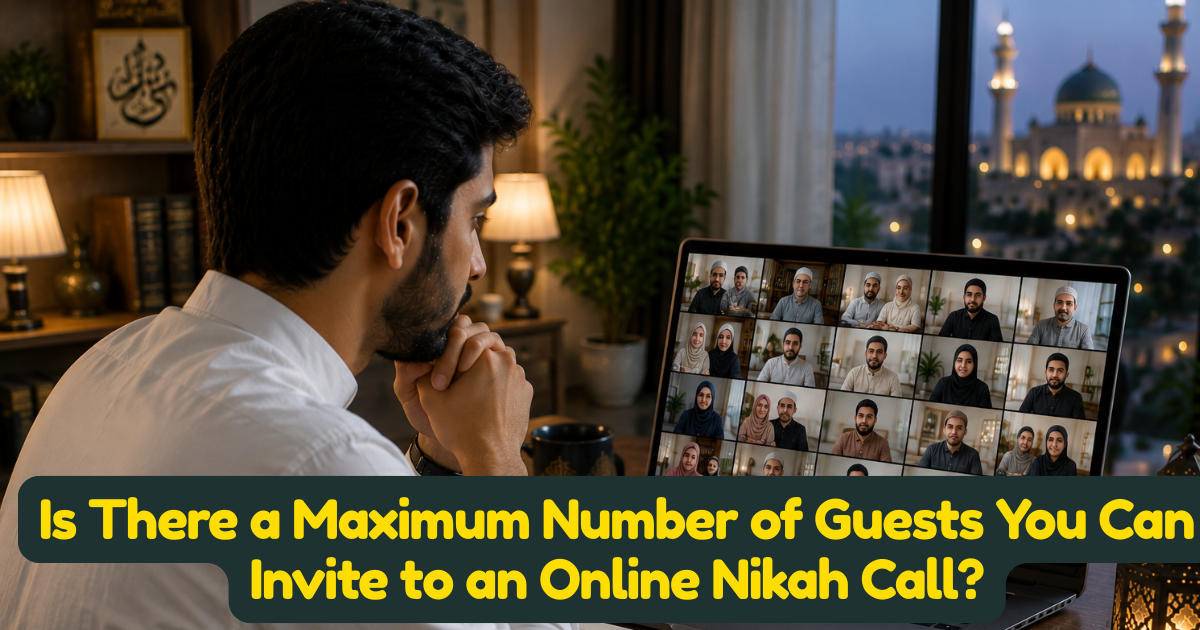
One of the genuine advantages of an online nikah is the ability to include family scattered across multiple countries — a grandmother in Lahore, cousins in London, siblings in Toronto — all joining the same ceremony without anyone needing to travel. Naturally, couples want to know: how many guests can actually join, and does a larger guest list complicate the ceremony itself?
The Core Ceremony Only Requires a Handful of Participants
Religiously, a valid nikah requires only the officiant, the couple, two qualified witnesses, and a wali where the wife's madhab requires one — a small, defined group whose presence and attentiveness genuinely matters for the ceremony's validity. Everyone beyond this core group is, from a strictly religious standpoint, attending as a guest rather than a required participant, similar to how extended family attends an in-person wedding without each person needing to fulfill a specific ceremonial role.
Practical Platform Capacity
Most video conferencing platforms used for online ceremonies comfortably support dozens of simultaneous participants, meaning guest numbers in the range of family gatherings — twenty, fifty, even more — are generally not a technical obstacle. Couples wanting a larger virtual gathering should confirm with their service what platform is used and its specific capacity, particularly if they're hoping to include a very large number of attendees.
Why Larger Guest Lists Can Complicate the Experience, Even If Technically Possible
While technically accommodating many guests is usually straightforward, a very large call can create its own challenges: background noise from multiple locations, difficulty ensuring the core participants (officiant, couple, witnesses) remain clearly audible above a larger group, and a less intimate feel for what is, at its heart, a significant personal and religious moment. Some couples deliberately keep the core ceremony smaller and more focused, then host a separate, larger celebratory gathering — virtual or in-person — afterward.
Muting Guests During the Core Ceremony
For larger guest lists, most officiants recommend muting non-essential participants during the actual ijab and qabul exchange, unmuting only the officiant, couple, witnesses, and wali, to ensure the core exchange is heard clearly without interference — guests can still see and celebrate the moment without their microphones creating background noise during the most important part of the ceremony.
Splitting the Ceremony From a Larger Celebration
Many couples structure their day in two parts: a smaller, focused online nikah ceremony with the essential participants and perhaps immediate family, followed by a separate, larger virtual or in-person walimah (wedding celebration) where the full extended guest list can join without the same need for careful audio management during a legally and religiously significant exchange.
Recording the Ceremony for Guests Who Couldn't Attend Live
For family members who couldn't join the live call due to time zone conflicts or other constraints, recording the ceremony (with the couple's consent) allows them to watch afterward, even though they weren't present as live witnesses in the religious sense — this is a thoughtful way to include more of the family in the moment without needing everyone present simultaneously.
Coordinating Time Zones for a Multi-Country Guest List
When family is spread across several countries, finding a single time that's reasonable for everyone can be genuinely difficult. Couples should expect to make some tradeoffs — a time that's a comfortable evening for one branch of the family might be very early morning for another — and communicate this clearly in advance so guests can plan accordingly.
How InstantNikah.com Supports Larger Family Gatherings
Our platform comfortably accommodates extended family joining the ceremony from multiple countries, with officiants experienced in managing larger calls — muting non-essential participants during the core exchange, keeping the ceremony's most important moments clear and audible, while still giving the couple's wider family a genuine sense of presence and celebration.
Admin User
Author