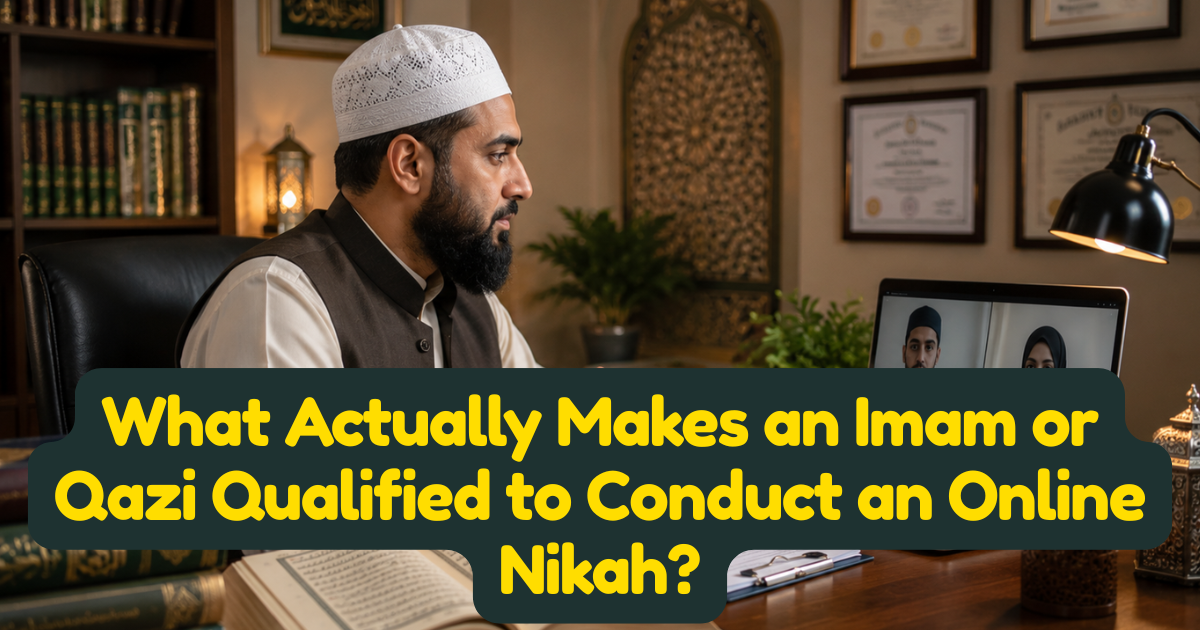
It's a reasonable assumption to make: surely someone needs a formal religious license to officiate a nikah, the way a priest or rabbi would for their own traditions. In fact, Islamic law's actual position is narrower and more flexible than that — but the real-world stakes of choosing an experienced, knowledgeable officiant are, if anything, higher than the assumption suggests, especially online.
The Core Requirement Is Knowledge, Not Ordination
A clear explainer on who qualifies to officiate confirms this directly: while an Imam or learned person usually officiates the ceremony, given how sacred and binding the commitment is, any knowledgeable Muslim — male or female — may technically officiate a nikah. There is no formal "ordination" comparable to priesthood in other traditions. What the same source stresses instead is finding someone with a genuinely deep understanding of the fiqh rulings around nikah, since that knowledge is what actually protects the ceremony from defects.
The Officiant Isn't Even Strictly a Pillar of Validity
A detailed guide to Muslim wedding requirements goes a step further: an officiant isn't even required to be present at all, at the bare minimum — the ceremony can consist simply of the spouses' exchange of vows in the presence of the wali (where applicable) and two witnesses. Couples may, of course, still involve an imam or religious figure if they wish, and most do. This means the "qualification" question isn't really about who has permission to conduct a nikah in some formal sense — it's about who has the genuine knowledge to make sure every actual pillar of the contract is correctly fulfilled.
What the Officiant's Role Actually Protects Against
A detailed walkthrough of how a nikah ceremony unfolds shows what a knowledgeable officiant genuinely contributes: opening the ceremony with the khutbat al-hajah, confirming the wali's involvement and the bride's consent, ensuring the offer and acceptance happen clearly in one sitting, and confirming the mahr and witnesses are all properly in place. None of this requires a formal title — it requires someone who actually understands each of these moving pieces well enough to catch a problem before it becomes a defect in the contract itself.
Why This Matters Even More for an Online Ceremony
- An experienced officiant catches witness and wali problems in real time — confirming before the ceremony begins that everyone present genuinely meets the required conditions, rather than assuming they do.
- They can guide a dropped-connection or technical interruption correctly, knowing exactly when the offer and acceptance need to be repeated rather than simply continued.
- They understand the specific school of thought the couple is following, since requirements like the wali's role and witness conditions genuinely differ across madhabs.
- They typically handle the documentation properly — the nikah certificate, witness details, and any civil registration steps — which matters enormously for a ceremony that, by its nature, leaves less of a physical paper trail than an in-person one.
What to Actually Look For
Given that formal "licensing" isn't the real fiqh requirement, the practical due diligence shifts to experience and reputation: a track record of conducting nikahs correctly, genuine fluency in the relevant fiqh, and — for an online ceremony specifically — direct experience with the particular challenges video and remote witnessing introduce. A knowledgeable independent scholar can absolutely be qualified; what matters is verifying that knowledge and track record before the day itself, not afterward.
Key Takeaway
There's no formal ordination required to conduct a nikah — the actual requirement is genuine knowledge of the fiqh involved, and in the strictest sense, the ceremony's validity doesn't even depend on an officiant being present at all. What this means practically is that "qualification" is really about experience and demonstrated care, not a title — and for an online nikah specifically, an experienced officiant who can catch a witness or connectivity problem before it becomes a validity problem is worth choosing as carefully as any other part of the ceremony.
```Admin User
Author