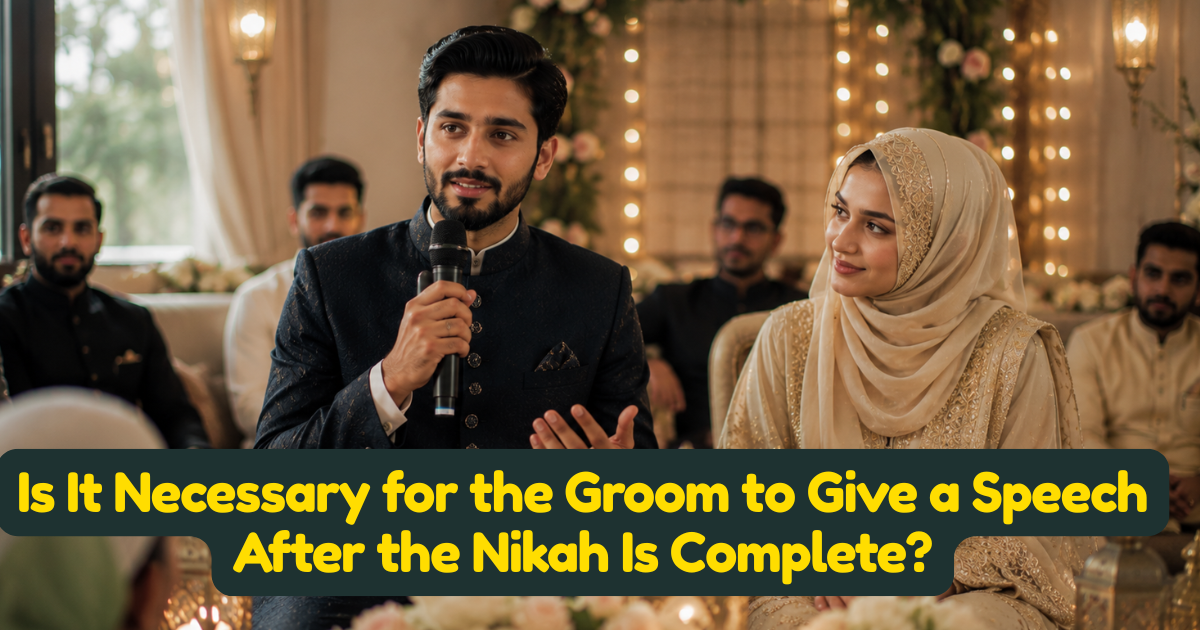
Is It Necessary for the Groom to Give a Speech After the Nikah Is Complete?
For some grooms, the moment right after the ijab and qabul is complete brings an unexpected wave of anxiety — not about the marriage itself, but about an entirely separate social expectation: everyone now seems to be waiting for a speech. Whether this pressure comes from cultural tradition, family expectation, or simply watching too many wedding videos where grooms deliver polished remarks, it's worth saying clearly: there is no religious requirement whatsoever for a groom to give a speech after his nikah.
Where This Expectation Actually Comes From
A post-nikah speech is a cultural tradition, not a religious one — it varies enormously by region, family background, and personal preference, ranging from an expected, almost mandatory moment in some cultural contexts to something rarely done at all in others. Unlike the khutbah, which has an established religious basis, a groom's personal remarks after the contract is complete are entirely a matter of custom, meaning couples and grooms have complete freedom to follow, adapt, or skip this expectation based on what actually feels right for them.
What the Ceremony Itself Actually Requires From the Groom
The groom's essential role in the ceremony is his clear, verbal acceptance (qabul) of the marriage offer, spoken audibly and understood by the witnesses present. Beyond this, and beyond his general presence and participation throughout the ceremony, there is no additional required speaking role — no toast, no formal remarks, no extended address to guests is part of what makes a nikah valid or complete.
Why Some Grooms Feel Real Pressure Around This
For grooms who aren't naturally comfortable speaking in front of a group, or who are already managing genuine nervousness about the ceremony itself, the added expectation of an eloquent speech can feel disproportionately stressful — sometimes more stressful, ironically, than the actual marriage vows themselves, since a speech carries a different kind of performance pressure than a religious contract does. This anxiety is completely understandable and doesn't reflect anything negative about the groom's readiness for marriage.
If You Want to Say Something, But Keep It Simple
For grooms who do want to mark the moment with a few words, without the pressure of a full formal speech, a brief and simple expression — thanking those who attended, acknowledging the significance of the moment, or a short word of gratitude to Allah and to the couple's families — fully satisfies whatever cultural expectation exists, without requiring polished, extended remarks. There's real freedom here to keep it as brief and genuine as feels comfortable.
If You'd Rather Not Speak at All
A groom who simply doesn't want to give any kind of speech is entirely within his rights to skip it. If family expectation is a factor, it can help to communicate this preference gently ahead of time, rather than being caught off guard in the moment — a simple heads-up to close family that a formal speech isn't planned tends to smooth over any awkward expectation before it arises during the ceremony itself.
Alternatives to a Formal Speech
Some grooms who want to mark the moment meaningfully, without the format of a traditional speech, choose other ways to express themselves — a brief personal message shared privately with the bride, a short written note read by someone else on their behalf if public speaking feels overwhelming, or simply a heartfelt but very brief thank-you rather than an extended address. There's no single correct format for marking this moment.
What the Bride's Role Looks Like in Comparison
Traditionally, and in most cultural contexts, the bride is not expected to give a parallel speech, though this varies and some brides do choose to say a few words if they wish. There's no religious asymmetry here either — the expectation, where it exists at all, is entirely cultural and can be adapted however the couple prefers, with either spouse speaking, both speaking briefly, or neither speaking beyond the ceremony's actual requirements.
Managing This in an Online Ceremony Specifically
In an online setting, a groom who wants to say a few words has the advantage of a more controlled, less overwhelming environment than a large in-person gathering — speaking to a screen of joined family members can feel less intimidating for some than standing in front of a physical room full of guests, which is worth keeping in mind if anxiety about this moment is part of what's driving your hesitation.
Letting Family Know What to Expect
Whatever the groom decides, letting officiants and key family members know ahead of the ceremony whether a speech is planned helps everyone's expectations align smoothly — the officiant can structure the ceremony's closing moments accordingly, and family members won't be left waiting expectantly for something that was never planned to happen.
How InstantNikah.com Supports Grooms Around This Moment
We never expect or require a speech as part of the ceremonies we conduct, and our officiants are happy to structure the closing moments of the call however feels most comfortable for the couple — whether that includes a brief word from the groom, a shared moment of du'a, or simply a graceful close to the ceremony without any additional remarks expected.
Admin User
Author