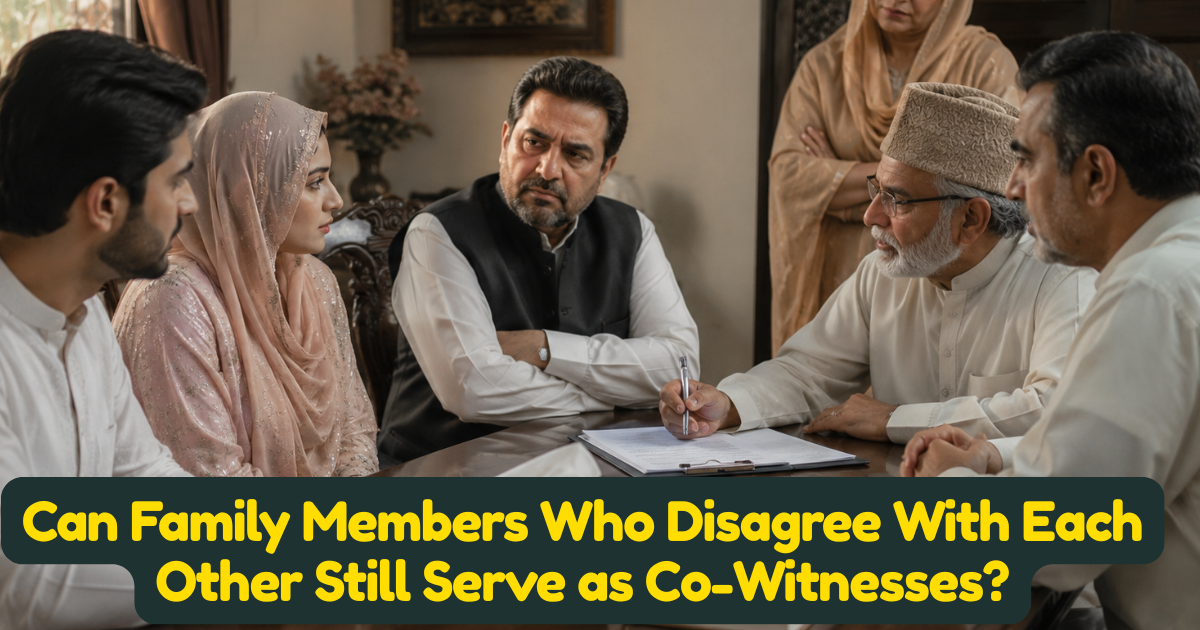
Can Family Members Who Disagree With Each Other Still Serve as Co-Witnesses?
Extended families rarely exist without some friction somewhere — an uncle and aunt who haven't spoken warmly in years, two cousins with an old unresolved disagreement, or siblings who love each other deeply but clash whenever they're in the same room. When a couple's most natural, trusted choice of witnesses happens to include two people who don't get along, it raises a genuinely practical question worth addressing directly.
Interpersonal Conflict Between Witnesses Doesn't Affect Their Individual Eligibility
As with the question of related witnesses covered elsewhere on our site, what determines witness eligibility is each individual's own qualifications — sound mind, generally being a practicing or believing Muslim, and the capacity to observe and later confirm what occurred — not their relationship or rapport with the other witness. Two people who are in active disagreement with each other can each independently and validly witness the same ceremony, since their conflict with one another has no bearing on either person's individual capacity to fulfill the witnessing function.
Why This Makes Sense Religiously
The witnessing requirement exists to ensure the marriage is properly observed and can be reliably confirmed later if needed — it's fundamentally about each witness's own honest capacity to attest to what they saw and heard, not about the two witnesses having a good relationship with each other. Two witnesses in the same courtroom testifying to an unrelated matter don't need to be friends for their individual testimonies to carry weight; the same logic applies here.
Practical Considerations Beyond Strict Eligibility
While religiously permissible, couples should still think practically about whether placing two feuding relatives together on the same ceremony call is likely to create an atmosphere that detracts from the occasion's dignity and joy. If there's a genuine risk of visible tension, awkward silence, or even open conflict during the ceremony itself, this is worth weighing — not because it affects validity, but because it affects the emotional experience of what should be a meaningful moment for the couple.
Setting Expectations Beforehand
If the couple decides to proceed with both individuals as witnesses despite their known tension, having a brief, direct conversation with each of them beforehand — asking for their cooperation and respectful conduct during the ceremony specifically, regardless of their personal history — can go a long way toward ensuring the moment stays focused on the couple rather than becoming another chapter in an ongoing family conflict.
When It Might Be Wiser to Choose Different Witnesses
If the conflict between the two individuals is severe, recent, or likely to be genuinely disruptive despite good intentions, couples shouldn't feel obligated to proceed with this specific pairing simply because both individuals are otherwise natural choices. There's no religious requirement forcing a couple into an uncomfortable arrangement — choosing one of the two, alongside a different, unconnected witness, or selecting entirely different witnesses altogether, remains a completely reasonable and available option.
Managing This in an Online Setting Specifically
A video call format offers some practical advantages here — witnesses joining from their own separate locations rather than being physically seated together can sometimes reduce the friction that in-person proximity might otherwise create, allowing each to focus on their role as a witness without the added discomfort of sitting directly beside someone they're in conflict with.
The Officiant's Role in Keeping the Ceremony Focused
A capable officiant, aware of the family tension in advance, can help keep the ceremony's focus clearly and firmly on the couple, managing the call's flow in a way that minimizes any opportunity for underlying tension to surface — a brief, warm, and well-paced ceremony often leaves little room for interpersonal friction to become a visible distraction.
Reassuring the Couple That This Doesn't Reflect on Their Marriage
It's worth saying directly: family conflict between witnesses, however uncomfortable, says nothing about the strength or validity of the couple's own marriage. This is a family dynamic entirely separate from the couple's relationship, and it shouldn't be allowed to overshadow what is, at its core, a moment about the two people getting married.
What If the Conflict Erupts During the Ceremony Itself
If tension does surface visibly during the ceremony despite best efforts to prevent it, this falls under the guidance covered in our article on disruptive guests — an officiant can pause, address the situation calmly, and if needed, mute or otherwise manage the individuals involved, without this affecting the underlying validity of the marriage contract itself, which depends on the core exchange being properly and clearly witnessed regardless of any surrounding friction.
How InstantNikah.com Supports Couples Navigating This
We accommodate witnesses who may have personal tension with each other, offering practical guidance on managing the ceremony smoothly, and always reassuring couples that this kind of family dynamic has no bearing on the religious soundness of their marriage, while remaining ready to help manage the moment gracefully if tension does surface during the call itself.
Admin User
Author