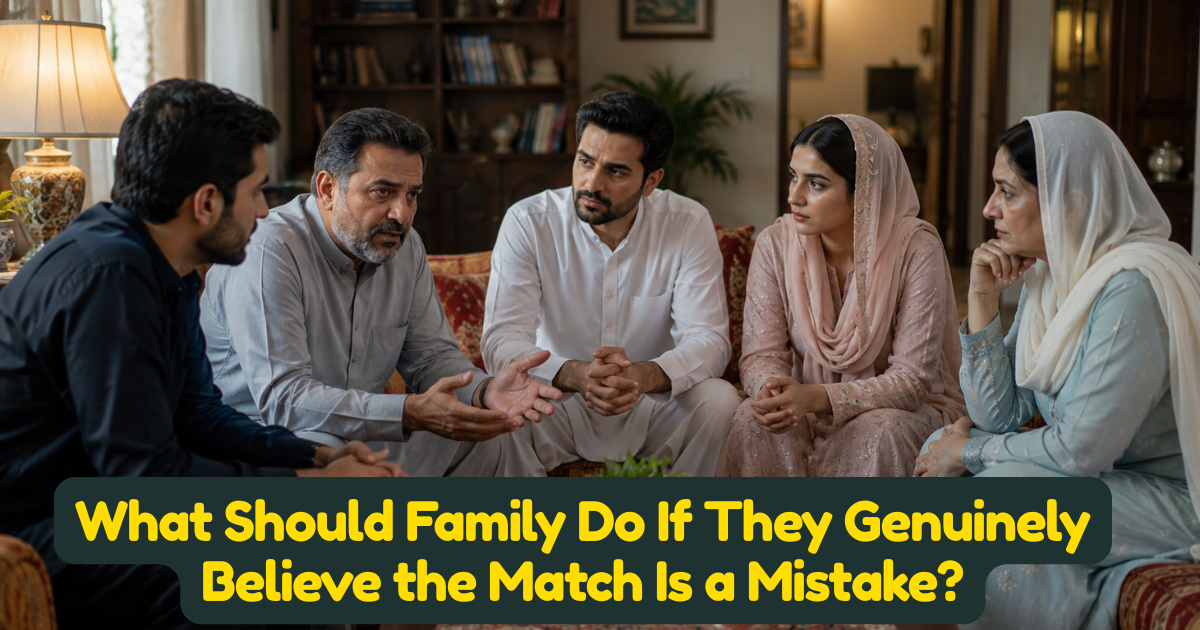
What Should Family Do If They Genuinely Believe the Match Is a Mistake?
There's an important difference between family opposition rooted in superficial preference — a different ethnicity, a family they simply don't know well, a background that doesn't match certain expectations — and family concern that comes from a place of genuine, substantive worry about the couple's compatibility, character, or circumstances. Both get labeled "opposition," but they call for very different responses, and conflating them does a disservice to families genuinely trying to protect someone they love.
Distinguishing Substantive Concern From Superficial Preference
Superficial preference tends to center on things that don't actually predict marital success or wellbeing — background, regional origin, family status, or simply "not who we imagined." Substantive concern, by contrast, centers on things that genuinely matter: evidence of dishonesty, a pattern of concerning behavior, financial recklessness that would seriously affect the couple's stability, or credible information about character issues the person considering marriage may not be fully aware of. Families owe it to themselves and to the couple to honestly examine which category their concern actually falls into before acting on it.
Why Dismissing Genuine Concern Purely as "Interference" Is a Mistake
In reaction against families who do interfere for superficial or controlling reasons, there's sometimes a tendency to treat all family concern as automatically illegitimate — something to be pushed past rather than engaged with. This isn't the right instinct either. Islam places real value on seeking counsel (mashwarah) and involving trusted family in significant decisions precisely because those closest to us sometimes see patterns or risks we're too emotionally invested to notice clearly ourselves.
How Family Should Raise Genuine Concerns
If a family member genuinely believes a specific match carries real risk, the concern is best raised directly, specifically, and with concrete reasoning — not vague unease, not "we just have a feeling," but clear articulation of what specifically worries them and, where relevant, what evidence or observation is driving that worry. A concern that can't be articulated beyond generalized discomfort is much harder for a couple to meaningfully evaluate or address.
How the Couple Should Receive This Concern
A couple genuinely committed to making a wise decision should be willing to hear out a specific, substantive concern from a trusted family member without immediately becoming defensive or dismissive — not because the family member is automatically correct, but because genuine engagement with the concern, rather than reflexive rejection, is how a couple actually tests whether the worry has merit or is misplaced.
Investigating a Concern Rather Than Simply Accepting or Rejecting It
Where a family member raises something specific and potentially serious — a concern about honesty, a pattern of behavior, or information from a source the family trusts — this deserves actual investigation rather than either blind acceptance or immediate dismissal. This might mean the couple, or a trusted mediator, directly and respectfully raising the specific concern with the other party involved, giving them a genuine opportunity to respond and clarify before any conclusion is reached.
What If the Couple Investigates and the Concern Doesn't Hold Up
Sometimes genuine investigation reveals that a concern, however sincerely held, was based on incomplete information, misunderstanding, or an outdated impression that no longer reflects reality. In this case, family members raising the concern in good faith should be willing to accept the outcome of honest investigation, even if it means updating their initial worry, rather than continuing to hold onto the concern purely out of attachment to their original position.
What If the Concern Does Hold Up
If investigation genuinely confirms a substantive concern — real evidence of dishonesty, a pattern that raises legitimate worry about the person's character or reliability — the couple owes it to themselves to take this seriously, even if doing so is painful and disappointing. This isn't the same as family simply not liking someone; a confirmed, substantive concern deserves real weight in the decision, and a couple proceeding despite clear evidence of a genuine problem is choosing to override caution their family rightly raised.
The Wali's Particular Role in This Process
For a bride whose madhab requires wali involvement, the wali's role specifically includes exercising judgment about the marriage's suitability, not simply rubber-stamping whatever the bride has already decided. A wali with a genuine, substantive concern is not obligated to approve a match he believes carries real risk, though as covered elsewhere on our site, an unreasonable, purely preference-based refusal (adl) is a different matter that may require a different response, including potential recourse through a Sharia council.
Avoiding Two Common Failure Modes
Families and couples navigating this territory should be wary of two opposite failure modes: family members who dress up superficial preference as substantive concern to maintain control over a decision that isn't ultimately theirs to make, and couples who dismiss every family concern as backward interference without genuinely engaging with what's actually being raised. Both undermine the honest, good-faith process that actually protects everyone involved.
When Outside Mediation Helps
Where family and couple reach an impasse — genuine disagreement that direct conversation hasn't resolved — involving a trusted, neutral third party, such as a respected imam or family counselor, can help everyone move past entrenched positions and evaluate the concern with more objectivity than either party can bring alone in the middle of an emotionally charged disagreement.
How InstantNikah.com Approaches Situations Involving Family Concern
While our role centers on conducting the religious ceremony itself, our officiants are attentive during consultation to any signs of unresolved, substantive family concern, and we're always willing to gently encourage a couple to ensure genuine concerns have been thoughtfully addressed — not as gatekeepers making the decision for them, but as part of the same care we bring to every ceremony we conduct.
Admin User
Author