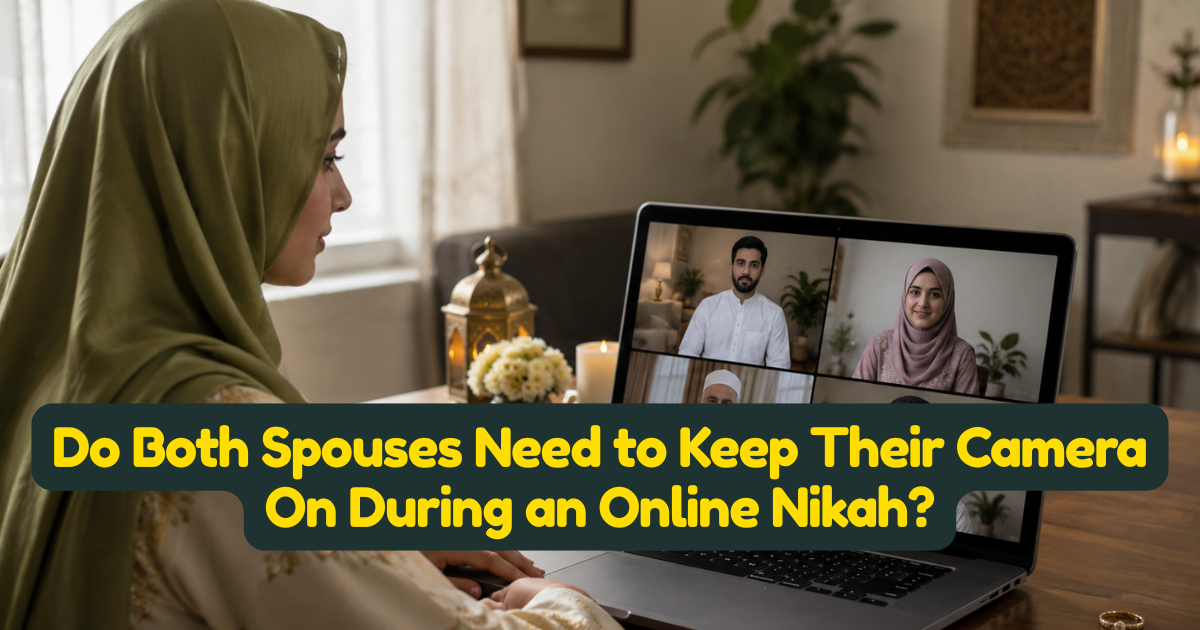
Do Both Spouses Need to Keep Their Camera On During an Online Nikah?
It's one of the first practical questions couples ask once they've decided on an online nikah: does everyone need their camera on the whole time, or is it enough to be heard? For couples who observe hijab or niqab, or who simply feel uneasy on camera, this isn't a small logistical detail — it touches directly on modesty and comfort during what should be a meaningful, unhurried moment.
What the Nikah Contract Actually Requires
The core pillars of a valid nikah are the offer (ijab) and acceptance (qabul), spoken clearly and heard by two qualified witnesses, along with a stated mahr. Nowhere in the classical requirements is visual observation of either spouse's face specified as a condition of validity — what matters is that witnesses hear the exchange clearly and can testify, if ever asked, that it took place. This means camera visibility is not, strictly speaking, a pillar of the contract itself.
Why Video Is Still Commonly Used
Despite not being a strict requirement, video serves a practical and protective function in an online ceremony: it allows the officiant to confirm identity, observe that both spouses appear to be speaking freely and without visible distress or coercion, and gives witnesses a fuller sense of the moment they're attesting to. For these reasons, most certified online nikah services, including ours, do use video for at least the officiant's confirmation of identity and the core ijab-qabul exchange, even where camera use for the full ceremony isn't mandatory.
Accommodating Modesty Preferences
For a bride who observes niqab or otherwise prefers not to be on camera in front of male witnesses or an officiant who is not mahram to her, several accommodations are common and fully compatible with a valid ceremony: audio-only participation for her specific portion of the exchange, camera on but positioned to show only what she's comfortable showing, or having her wali or a female representative confirm her consent on camera while she participates by voice. Scholars generally agree that as long as her voice is clearly identifiable and her consent is unambiguous, these accommodations do not affect the contract's validity.
What the Groom's Camera Requirement Looks Like
There is generally more flexibility, though the same principle applies: what matters is that the officiant and witnesses can clearly identify who is speaking and confirm the person's free consent. A groom who prefers audio-only participation for religious or personal comfort reasons can typically be accommodated the same way, provided identity has already been verified through the standard pre-ceremony documentation check.
Witnesses Do Need to See the Ceremony, Generally
While the spouses themselves have some flexibility, witnesses are typically expected to observe the ceremony via video, since their role is specifically to witness — and a witness who only hears an ijab and qabul exchange, without any visual confirmation of who is speaking, may face more scrutiny if the marriage's validity is ever questioned later. Most officiants therefore keep witnesses on camera even in ceremonies where one or both spouses opt for audio-only participation.
How Officiants Balance Modesty and Verification
A well-run online nikah service structures the call so that identity verification happens once, clearly, at the start — typically with government ID shown briefly on camera before the ceremony proper begins — after which spouses who prefer more privacy during the actual vows can adjust their camera use accordingly without compromising the officiant's confidence in who is present and consenting.
What Not to Compromise On
Regardless of camera preferences, a few things should never be skipped: clear audio throughout, so witnesses genuinely hear the exchange; unambiguous verbal consent from both spouses; and witness presence on the same live call as the ceremony, watching or listening in real time rather than reviewing a recording afterward. These are the elements that determine validity — camera use is a matter of comfort and verification convenience, not a religious pillar.
Setting Expectations With Family Guests
Couples who invite family members to observe the online ceremony should communicate camera preferences to guests ahead of time, particularly if the bride prefers limited visibility — this avoids an awkward moment during the ceremony itself and lets everyone understand the arrangement beforehand.
How InstantNikah.com Handles Camera Preferences
Our officiants discuss camera and modesty preferences with every couple before the ceremony, structuring the call to accommodate niqab, audio-only participation, or any other comfort need, while still ensuring the identity verification and witness observation standards that keep the certificate we issue fully reliable.
Admin User
Author