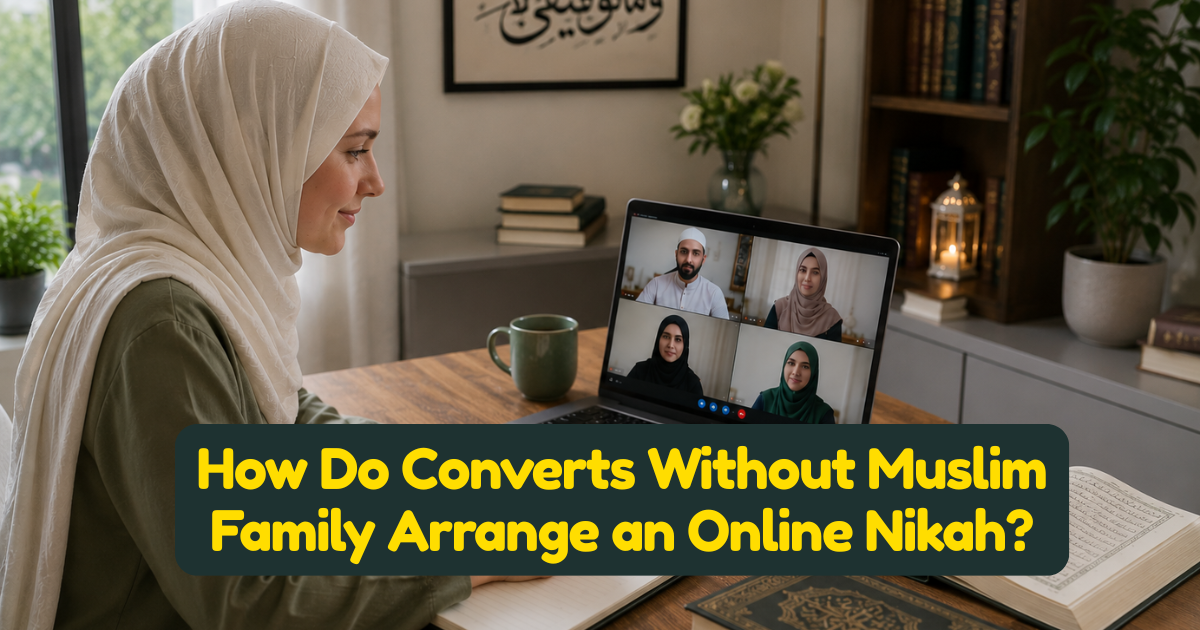
For many converts, the hardest part of arranging a nikah isn't the ceremony itself — it's the simple fact that the people who would normally fill the wali and witness roles, family members, simply aren't Muslim. This is a genuinely common situation, and Islamic scholarship has a clear, well-established answer for it.
A Non-Muslim Father Cannot Serve as Wali, Even for His Own Daughter
This is worth stating plainly, because it surprises some converts who assume their father's blessing alone should be enough. A detailed ruling on the wali of a revert confirms it directly: when a woman converts to Islam, none of her non-Muslim family members — including her own father — can act as her guardian in this capacity, since no disbeliever can hold this role over a Muslim. This isn't a matter of the father's character or his genuine love for his daughter; it's a structural requirement of the role itself.
Who Actually Fills the Role Instead
The same ruling gives the clear, standard solution: if there's a Muslim with recognised authority over community affairs in your area, he can fulfil this role, and where no such formal authority exists, the director of an Islamic centre or its imam can conclude the marriage contract with the convert's own consent. This isn't treated as a lesser, makeshift substitute — it's the established, accepted answer to exactly this situation, grounded directly in a hadith permitting an authority figure to act as wali for someone without one.
Witnesses Face the Same Requirement
The same logic extends to witnesses. A detailed explanation of the wali and witness requirements for a new Muslim woman's marriage confirms that both the wali and the witnesses must be Muslim — meaning loving, supportive non-Muslim family members, even if they're genuinely present and watching the online ceremony, can't fulfil the formal witnessing role any more than a non-Muslim father can serve as wali. This mirrors exactly the same principle that applies to any nikah involving non-Muslim loved ones: they remain honoured guests, but the two formal witnesses still need to be Muslim.
Where to Actually Find These People for an Online Ceremony
- A local mosque or Islamic centre, even one you haven't attended often, is usually the most direct starting point — imams are accustomed to this exact request and can either serve as wali themselves or connect you with someone established in the community.
- An experienced online nikah service can often provide a qualified wali substitute and properly verified witnesses as part of the ceremony itself, specifically because this situation comes up regularly for converts using these services.
- Other converts in your area or online community can sometimes serve as witnesses, provided they genuinely meet the basic conditions (Muslim, sane, of age, able to hear and understand the ceremony clearly).
- A respected Muslim friend or mentor, even one met primarily online, can be a reasonable witness once their genuine standing and character are reasonably established — this doesn't require a formal title, just confirmed eligibility.
The Emotional Side of This Is Real Too
It's worth acknowledging directly: arranging this without family support, sometimes while a loving but non-Muslim father or mother watches from the sidelines unable to formally participate, carries real emotional weight. Detailed guidance for reverts navigating marriage describes this experience honestly — finding a suitable wali is often described as one of the most significant hurdles converts face, precisely because it requires building a new kind of support system, often through the mosque or community, rather than relying on family the way many born Muslims naturally can. None of this makes a convert's marriage any less complete or meaningful; it simply means the path there often looks different.
Key Takeaway
A convert without Muslim family isn't left without options for an online nikah — Islamic scholarship has a clear, well-established answer: a recognised community authority, an imam, or an Islamic centre director can serve as wali, and Muslim witnesses (which non-Muslim family members, however loving and supportive, cannot be) can be sourced through a mosque, an experienced online nikah service, or trusted members of the convert community. The practical solution is established and accessible; what it requires is simply knowing where to look, and giving yourself grace for the genuine emotional weight of doing this without the family support many people take for granted.
```Admin User
Author