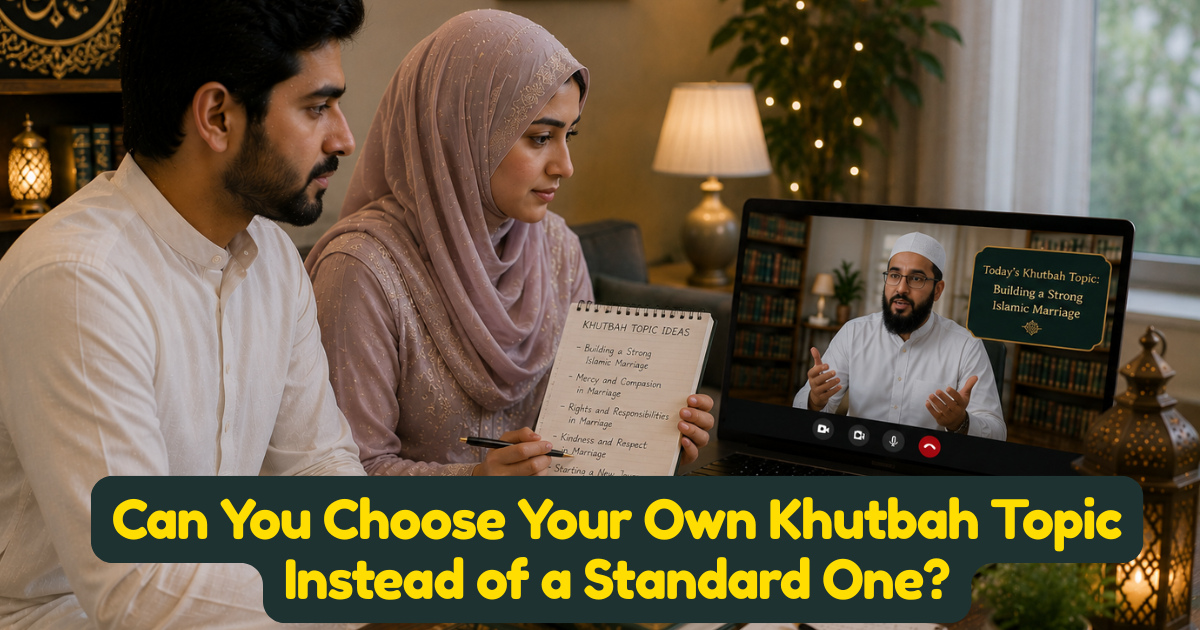
Can You Choose Your Own Khutbah Topic Instead of a Standard One?
The khutbat al-nikah has a recognizable core structure — praise of Allah, testimony of faith, and typically a few verses or teachings related to marriage and family responsibility — but couples increasingly ask whether they can shape it around something more personal: a verse that carries specific meaning for their relationship, a reflection on a shared journey, or a theme that resonates with how they came to this moment.
What's Fixed and What's Flexible
The khutbah's essential elements — praising Allah and testifying to the core articles of faith (shahada) — are consistent across virtually every ceremony and shouldn't be altered, since they reflect the sermon's basic religious function. Beyond this foundation, however, there's real flexibility in which verses are recited, which hadith or teachings are referenced, and how the officiant frames the reflection on marriage — this is where personal meaning can genuinely be incorporated.
Requesting a Specific Verse or Passage
If a particular verse has personal significance — perhaps one the couple discussed early in their relationship, or one that speaks to a specific aspect of their story, such as patience, gratitude, or trust in Allah's timing — most officiants are glad to incorporate it into the khutbah, provided it's genuinely relevant to marriage and delivered accurately. This kind of request adds real meaning without requiring any departure from sound religious content.
Reflecting a Specific Journey
Couples who've been through something notable together — a long-distance relationship, a conversion, a period of family opposition eventually resolved, or simply years of patient waiting — often ask their officiant to weave a brief, tasteful reflection on that journey into the khutbah. A thoughtful officiant can do this respectfully, without turning the sermon into a public recounting of private details the couple hasn't consented to sharing.
What to Avoid Requesting
While there's real room for personalization, a khutbah shouldn't be turned into something disconnected from its religious purpose — a purely secular speech, content unrelated to marriage or faith, or anything that veers away from sound Islamic teaching. Officiants should feel comfortable gently redirecting a request that moves too far from the khutbah's actual function, while still accommodating the spirit of what the couple is hoping for.
Language and Delivery Preferences
Beyond content, couples can typically request the khutbah be delivered in a specific language, at a particular pace, or with translation running alongside for guests who don't share the officiant's primary language — all reasonable requests that help the sermon actually land meaningfully with everyone present, rather than being delivered in a way most of the audience can't follow.
Length Preferences
As covered in our article on whether a khutbah is required at all, couples can also request a shorter or more extended khutbah depending on their timeline and preference — this is a matter couples should raise clearly with their officiant during consultation, well before the ceremony itself, rather than assuming a fixed default length applies.
Who Delivers the Personalized Khutbah
If a couple has specific content they want included, sharing this with the officiant in writing ahead of time — rather than expecting them to incorporate a verbal request on the spot — generally produces a more polished and accurate result, giving the officiant time to weave the personal element into the khutbah thoughtfully.
How InstantNikah.com Approaches Khutbah Personalization
We welcome requests to incorporate a meaningful verse, a brief reflection on the couple's journey, or specific language and delivery preferences into the khutbah, discussing these details during pre-ceremony consultation so the sermon feels genuinely connected to the couple while remaining grounded in sound religious content.
Admin User
Author