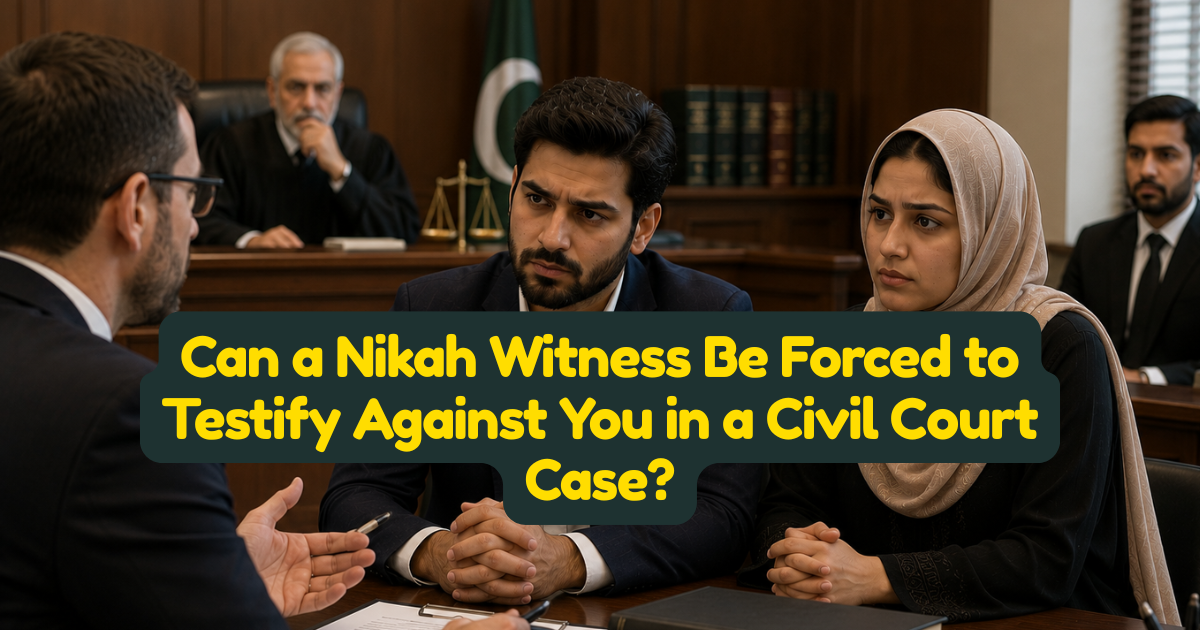
Your nikah witnesses aren't just religious formalities — they're potential courtroom witnesses too. Here's when a court can actually compel them to testify, and the one privilege that might protect your spouse from being forced onto the stand.
Can Your Nikah Witnesses Be Subpoenaed to Testify in Court?
Most couples choose their nikah witnesses for religious reasons — a trusted uncle, a respected imam, a close friend — without ever considering that those same two people could later be summoned to a civil courtroom. It happens more than you'd think, usually in custody disputes, immigration cases, or inheritance challenges where the existence and date of the marriage itself becomes contested.
Yes, Witnesses Can Generally Be Subpoenaed
Outside of a small set of recognized privileges, almost anyone with relevant knowledge can be compelled to testify. According to FindLaw's overview of subpoena power, a court-issued subpoena legally obligates a person to appear and testify, and refusal without a valid excuse can result in contempt of court, fines, or in rare cases detention. A nikah witness has no special exemption simply because the event they witnessed was religious in nature.
Where Witnesses Can Get the Order
In the US, the process runs through the court clerk's office, as detailed in the California Courts' self-help guidance on subpoenaing a witness, where any party to a case can request a Civil Subpoena requiring a named witness to appear and testify, with noncompliance risking a contempt finding and fines.
The One Real Exception: Spousal Privilege
There is a genuine, recognized exception — but it protects the spouse, not the witnesses. Spousal privilege, explained in Wikipedia's documented overview of spousal testimonial and communications privilege, allows a married person to refuse to testify against their own spouse, and separately to prevent disclosure of confidential marital communications, in most US jurisdictions. Crucially, this privilege requires a valid, existing marriage at the time it's invoked — which is exactly why proving your nikah is legally recognized, not just religiously valid, matters if this situation ever arises.
The Privilege Has Real Limits
According to a detailed legal explainer from CriminalDefenseLawyer.com's analysis of spousal and marital privileges, the privilege doesn't apply if the spouses are suing each other, if one spouse is the victim of the other's alleged crime, or — significantly — to events that occurred before the marriage took place. This last point matters directly for nikah witnesses: even a valid spousal privilege only shields communications and testimony from the date the marriage is legally recognized onward, not before.
Why Your Witnesses Should Still Be Prepared
None of this means a nikah witness will routinely end up in court — most never will. But because witnesses can legally be compelled, it's worth choosing people who are reachable, willing to confirm what they observed honestly, and ideally documented clearly on your nikah certificate with full names and contact details, so that if their testimony is ever needed years later, it can actually be obtained.