Can a Nikah Be Paused Partway Through If Someone Raises an Objection?
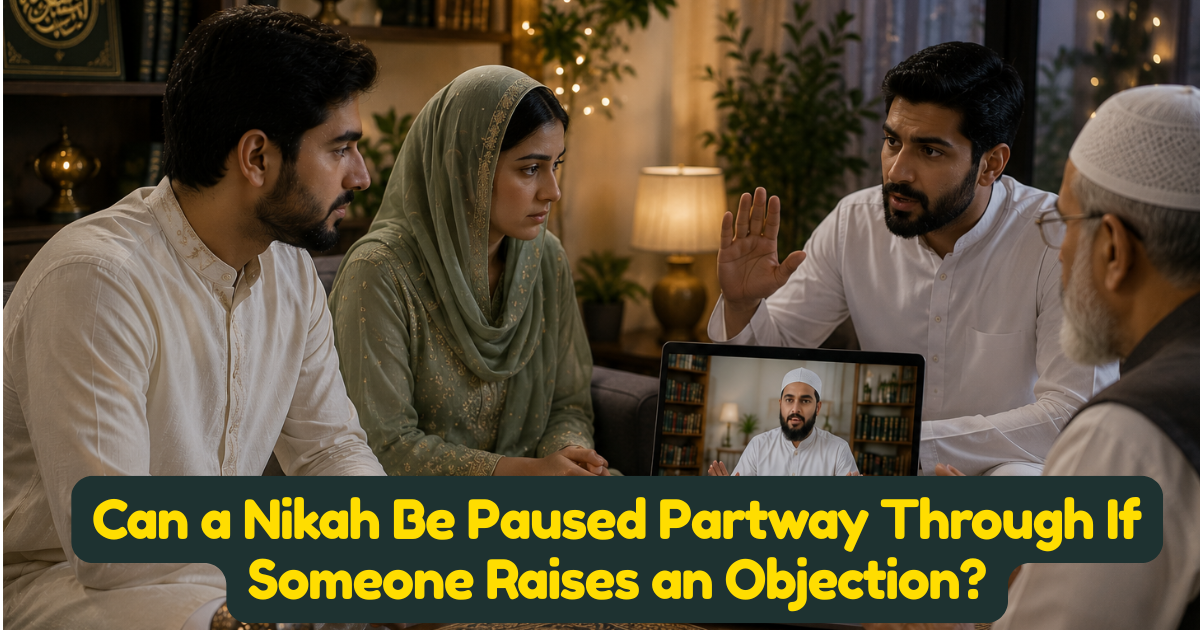
It's an uncomfortable scenario to think about, but a real one officiants occasionally encounter: partway through a ceremony, a family member, witness, or even one of the spouses raises a concern out loud — sometimes a genuine legal or religious objection, sometimes an emotional outburst rooted in unresolved family conflict. Understanding how a responsible officiant should handle this protects everyone on the call and keeps the process fair.
Yes, a Ceremony Can and Should Be Paused
A qualified officiant should always pause the ceremony if a genuine objection is raised, rather than pressing forward to avoid awkwardness. A nikah performed over an unaddressed, substantive objection risks producing a contract of doubtful validity, and rushing past a real concern serves no one — least of all the couple, who deserve a marriage built on solid footing rather than one clouded by an unresolved dispute from the outset.
Distinguishing Objections That Matter Religiously
Not every objection carries the same weight. A genuine legal impediment — one spouse already being validly married to someone else, a wali's legitimate objection where the wali's consent is actually required and hasn't been properly obtained, or a credible claim that one party is being coerced — is the kind of objection that must be resolved before the ceremony can validly proceed. A general expression of family disapproval — someone simply unhappy about the match without alleging any actual impediment — is a different matter entirely and does not, on its own, require pausing the contract itself, though an officiant may still choose to give the family member a moment to be heard out of basic respect.
What a Responsible Officiant Does When an Objection Is Raised
- Pauses the ceremony immediately rather than talking over the objection or rushing to complete the vows.
- Asks the objecting party to state clearly what the concern is, rather than allowing a vague or emotional outburst to derail the process without understanding its actual basis.
- Assesses whether the objection points to a genuine impediment or reflects disapproval that doesn't affect the contract's validity.
- Speaks privately with the couple, away from the objecting party if needed, to confirm both spouses' genuine wishes and comfort with proceeding.
If the Objection Reveals a Genuine Impediment
If the objection reveals something substantive — for example, a wali's legitimate, previously unaddressed objection, or evidence suggesting one party isn't being fully honest about their marital history — the ceremony should not proceed until the issue is properly resolved, potentially requiring a follow-up consultation, documentation review, or a completely separate conversation before any rescheduled ceremony.
If the Objection Doesn't Hold Up but Emotions Are Running High
Where an objection turns out not to point to any actual impediment, but the moment has become emotionally charged, a wise officiant may still choose to pause briefly — giving everyone a moment to settle rather than immediately resuming vows in a tense atmosphere — even though the ceremony can, once things have calmed, proceed on solid religious footing.
Managing This in an Online Setting Specifically
In a video call format, an officiant has the practical ability to mute participants, move to a private breakout conversation with the couple, or pause the recording if one is being made — tools that can help manage an objection more smoothly than might be possible in a crowded in-person setting, giving the officiant more control over de-escalating the moment.
The Couple's Right to Proceed or Postpone
Ultimately, once any genuine impediment has been addressed or ruled out, the decision to proceed or postpone the ceremony rests with the couple themselves — an officiant's role is to ensure the conditions for a valid, freely consented marriage are met, not to make the couple's decision for them once those conditions are satisfied.
How InstantNikah.com Handles Objections During a Ceremony
Our officiants are trained to pause immediately if any objection is raised, assess whether it points to a genuine impediment, and speak privately with the couple to confirm their wishes before any decision is made about proceeding, rescheduling, or requiring further review — prioritizing a religiously sound outcome over simply completing the ceremony on schedule.
Admin User
Author