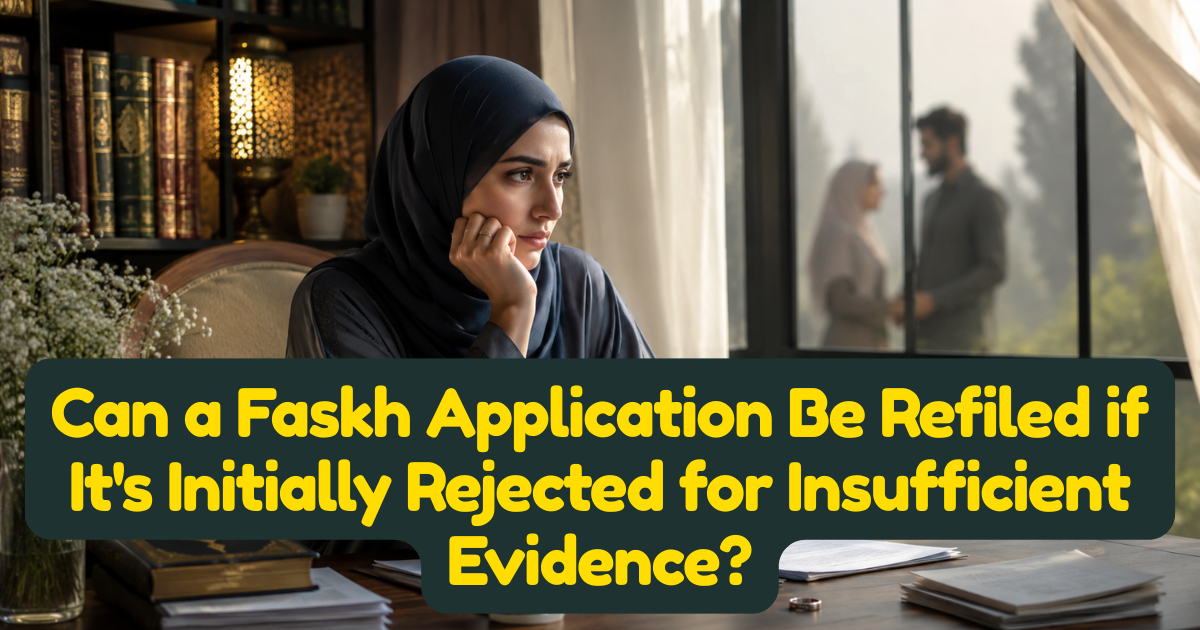
A faskh application that comes back without success — often because the panel felt the evidence presented wasn't yet strong enough to prove the specific grounds claimed — can feel like a dead end. In practice, it usually isn't. Most councils build flexibility into their process specifically for this scenario, and a well-prepared resubmission with stronger evidence has a genuine path forward.
"Postpone" Is Often a Built-In Outcome, Not a Rejection
Real operating councils don't always frame an inconclusive case as a flat rejection. The published guidance from the Manchester Sharia Council describes its panel's possible outcomes explicitly: after considering a case, the panel can decide to grant talaq, khula, or faskh — or to postpone the decision, or abstain altogether. A postponement specifically anticipates situations where the panel needs more information, more time for the husband to respond, or stronger evidence before reaching a final decision — it's a structurally different outcome from a definitive rejection, and one that explicitly keeps the door open rather than closing the case.
Where the Case Genuinely Does Conclude Without Success
Even where a panel does reach a more definitive negative outcome rather than a postponement, this isn't generally treated as a permanent bar against ever raising the matter again. Faskh requires proving specific, recognised grounds — cruelty, non-maintenance, desertion, and so on — and a case that fails because the evidence available at the time didn't yet establish one of those grounds clearly is fundamentally different from a case where the underlying facts themselves don't support faskh at all. If the underlying situation continues or worsens — non-maintenance persisting past the relevant threshold, further documented incidents of cruelty, continued unexplained absence — a stronger, better-evidenced application addressing the same ground becomes genuinely viable later.
What Actually Improves a Resubmitted Case
- Identify specifically why the first application fell short — was the documentary evidence too thin, were witnesses unable to speak firsthand to the circumstances, or did the timeframe for a ground like non-maintenance or desertion not yet meet the required threshold?
- Gather additional firsthand witness testimony if the original application relied too heavily on the applicant's own account — panels weigh independent witness statements about cruelty, absence, or neglect particularly heavily.
- Wait for time-based thresholds to be genuinely met where relevant — a non-maintenance claim filed before the typical two-year threshold, for instance, is simply premature rather than weak, and resubmitting once that period has clearly passed addresses the actual gap.
- Bring any new developments since the original application — further incidents, continued non-response from the husband, or additional documentation that has since become available all strengthen a resubmission meaningfully.
Why Persistence Genuinely Matters Here
Faskh exists precisely because a wife in a genuinely difficult marriage, with an uncooperative husband, otherwise has no path forward. An initial setback — particularly where it stems from evidence that simply needed more time or more documentation to develop — shouldn't be read as a final verdict on the marriage itself. Councils that build in a postponement option are explicitly acknowledging that faskh cases often need exactly this kind of iteration, especially in situations involving an absent or unresponsive husband where evidence naturally accumulates over time rather than existing all at once.
Key Takeaway
A faskh application that doesn't succeed on the first attempt is often genuinely revisable, particularly where a council's process includes a postponement option specifically designed for cases needing more time or evidence. Where a more definitive negative outcome is reached instead, a stronger resubmission remains realistic once the underlying gap — whether it's a time threshold not yet met, evidence that was too thin, or witness testimony that wasn't yet available — has genuinely been addressed. The right response to an unsuccessful first attempt is rarely to give up on faskh entirely; it's to understand precisely what was missing and build a stronger case around it.
```Admin User
Author