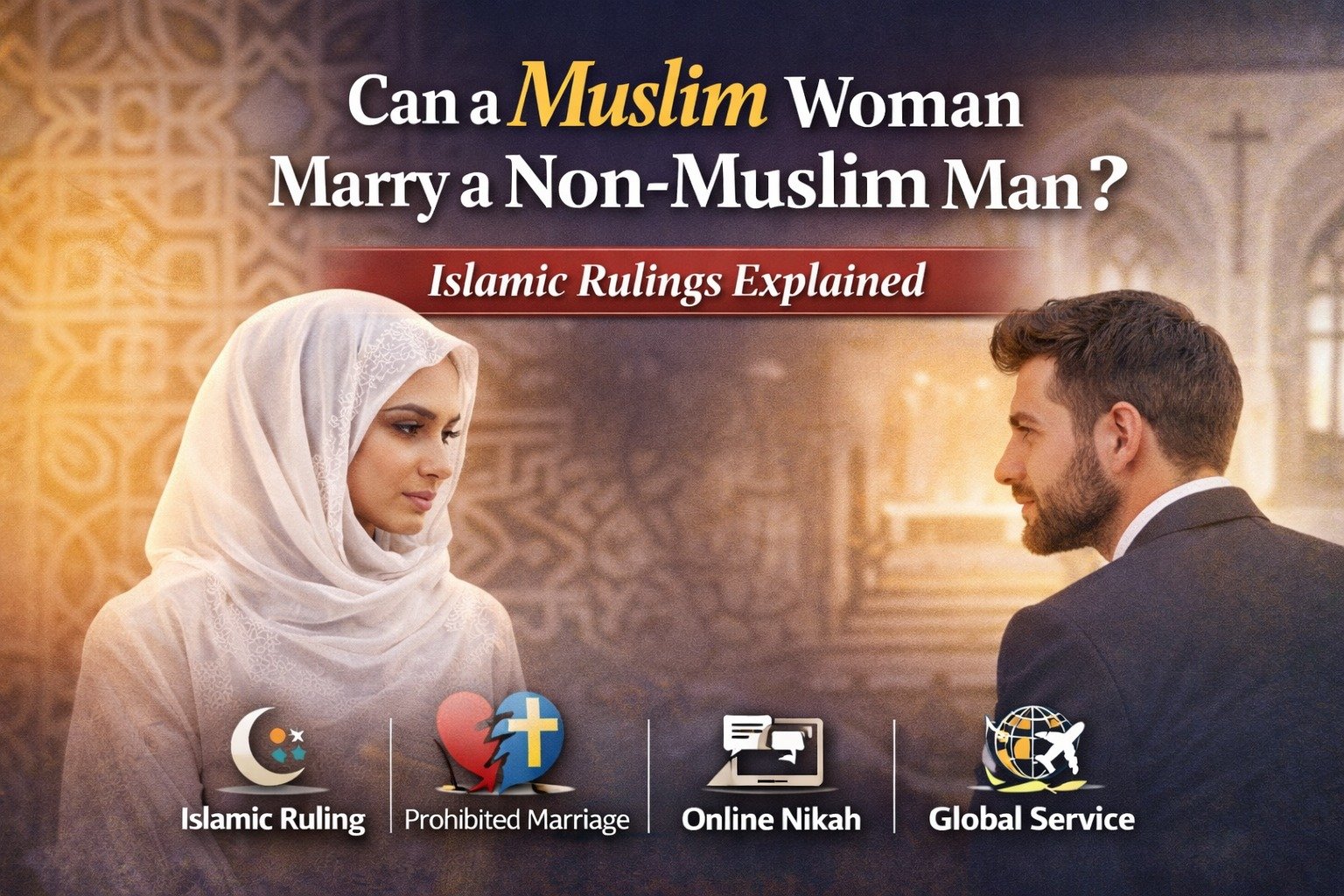
Muslim women living in diverse societies often ask whether Islam permits marriage to a non-Muslim man. Islamic law addresses this matter clearly, guided by Qur’anic commands and scholarly consensus.
Qur’anic Ruling
Allah سبحانه وتعالى says:
“Do not marry your women to disbelieving men until they believe…”
(Surah Al-Baqarah 2:221)
Qur’an 2:221
This verse establishes that a Muslim woman may not marry a non-Muslim man unless he sincerely accepts Islam.
Consensus of Islamic Scholars
There is unanimous agreement (ijma’) among classical and contemporary scholars that a Muslim woman cannot marry a non-Muslim man — including Christians or Jews — unless he becomes Muslim first.
Unlike Muslim men, Muslim women are not permitted interfaith marriage under Islamic law due to religious responsibility, family leadership, and faith protection.
Wisdom Behind This Ruling
- Preserving the woman’s faith
- Protecting future children’s Islamic identity
- Ensuring spiritual leadership within the home
- Avoiding religious pressure or compromise
Islam places strong emphasis on harmony of belief inside marriage. The husband traditionally holds family authority, and Islamic law safeguards the woman from being placed under non-Islamic leadership.
If a Non-Muslim Man Wishes to Marry a Muslim Woman
The path is clear: he must accept Islam sincerely before Nikah. After shahada, marriage proceeds normally with wali, witnesses, and mahr.
“There is no Nikah without a wali and two witnesses.” — Reported in Sunan collections
Practical Islamic Nikah Requirements
- Groom must be Muslim
- Bride’s wali participation
- Two Muslim witnesses
- Ijab and Qabul in one session
- Mahr agreement
- Verified identities
Conclusion: A Muslim woman may not marry a non-Muslim man under Islamic law. If the man sincerely embraces Islam, Nikah becomes permissible. This ruling protects faith, family structure, and spiritual wellbeing.
For authentic prophetic narrations:
Sunnah.com — Hadith Collections