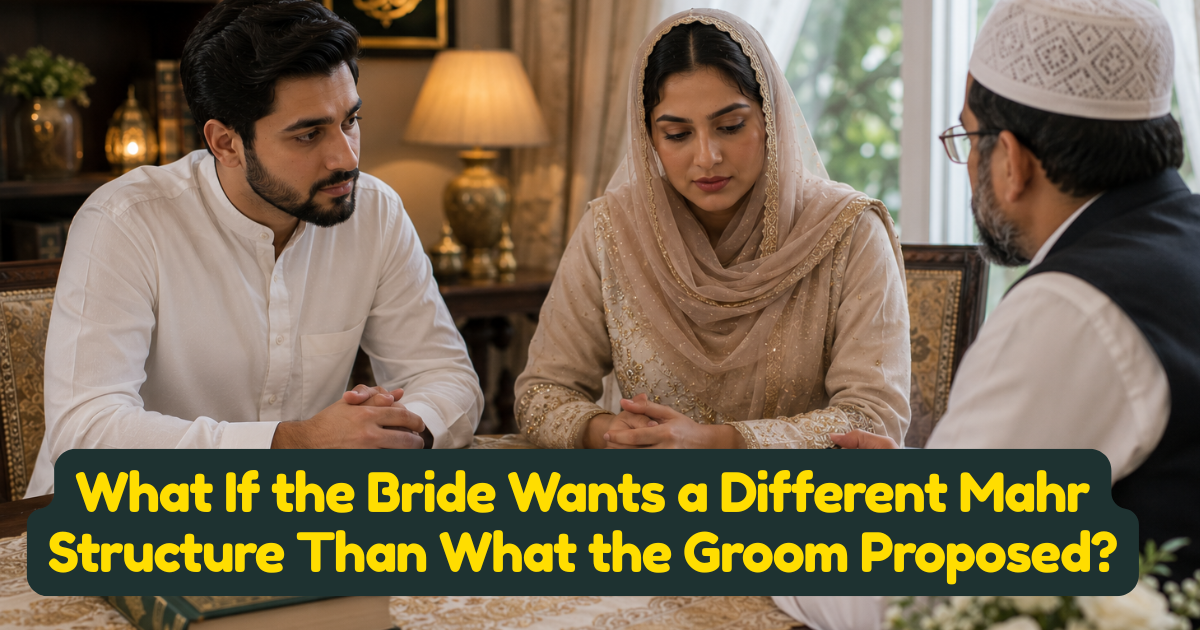
What If the Bride Wants a Different Mahr Structure Than What the Groom Proposed?
In some families and cultural contexts, mahr negotiation unfolds as though the groom simply announces an amount and the bride's role is to accept it gracefully. This isn't how Islamic law actually treats mahr, and it's worth being direct about this: mahr is a negotiated agreement between two parties with equal standing in the discussion, not a unilateral offer the bride is expected to receive passively.
Mahr Is a Mutual Agreement, Not a One-Sided Proposal
The nikah contract, including its mahr terms, requires the genuine agreement of both parties — a proposed mahr amount or structure the groom suggests is exactly that: a proposal, open to discussion, negotiation, and revision until both spouses genuinely agree. There is no religious basis for treating the groom's initial suggestion as final or for expecting the bride to simply defer to whatever figure or structure he first puts forward.
Why Some Brides Feel Uncomfortable Pushing Back
Cultural dynamics, family pressure, or simply not wanting to seem difficult during what should be a joyful process sometimes lead brides to accept a proposed mahr they're not actually fully comfortable with, whether the amount feels too low, the structure doesn't suit her actual needs, or she simply hasn't had a genuine opportunity to express a preference. This dynamic, however common, doesn't reflect what Islamic law actually expects or requires — a bride advocating clearly for what she wants in this negotiation isn't behaving improperly or greedily; she's exercising a right the contract itself is built around.
Common Reasons a Bride Might Want a Different Structure
- A different amount entirely — whether higher, based on her own sense of what's appropriate given regional norms or her own qualifications and circumstances, or in some cases lower, if she prefers a more modest mahr for her own reasons.
- A different prompt-versus-deferred split — perhaps preferring more paid upfront rather than deferred, or the reverse, depending on her financial planning and what feels most secure to her.
- Non-monetary mahr — some brides prefer mahr structured as property, educational support, or another form of value rather than a straightforward cash amount.
- Specific conditions attached — wanting the mahr agreement paired with other contractual conditions she considers important, such as delegated divorce rights or specific residency arrangements.
How This Conversation Should Actually Happen
A healthy mahr negotiation involves direct conversation between the couple themselves — not solely between families, and not a process where the bride's actual preference is filtered or softened by intermediaries before reaching the groom. Couples benefit from having this conversation candidly, ideally well before the ceremony itself, giving both parties genuine room to express what they want and to reach an agreement that reflects mutual understanding rather than one party simply yielding to avoid friction.
What If Family Members Try to Speak for the Bride
In some family dynamics, a father or other relative may attempt to negotiate mahr terms on the bride's behalf, sometimes without fully consulting her actual preference. While family involvement in supporting the negotiation is common and often helpful, the mahr is ultimately the bride's right, and her own genuine agreement — not merely her family's satisfaction with the terms — is what the contract actually requires. A bride who feels her own preference is being overridden by family negotiation should feel empowered to speak directly and clearly about what she actually wants.
How an Officiant Can Help Facilitate This Conversation
A good officiant, during pre-ceremony consultation, will typically ask the bride directly and separately whether she's genuinely comfortable with the proposed mahr terms, rather than simply accepting a figure relayed secondhand through family or the groom alone. This isn't about creating conflict; it's about ensuring the officiant can confirm the mahr terms reflect both parties' genuine agreement before proceeding with a ceremony built on that understanding.
What Happens If the Couple Can't Reach Agreement
If genuine, respectful negotiation doesn't produce agreement, this is worth taking seriously rather than proceeding with unresolved terms — a mahr agreed to under lingering discomfort or unaddressed disagreement isn't the strong foundation either spouse deserves going into marriage. Couples in this situation might benefit from a pause to discuss more fully, potentially with input from a trusted elder or counselor both parties respect, before finalizing the ceremony date.
Revisiting Mahr Terms Isn't a Sign of Greed or Distrust
It's worth explicitly countering a misconception that sometimes surfaces: a bride wanting to discuss, question, or revise a proposed mahr amount isn't behaving greedily or expressing distrust of her future husband. Mahr negotiation is a completely normal, expected part of the marriage contract process, exactly as any other significant term of an important agreement would be discussed and refined by both parties involved.
Documenting the Final, Mutually Agreed Terms
Once the couple reaches genuine agreement, whatever the final structure looks like, this should be clearly documented on the nikah certificate, reflecting the terms both parties actually and freely agreed to — not the groom's original, unmodified proposal, if the negotiation resulted in changes from that starting point.
How InstantNikah.com Supports Mahr Negotiation
Our officiants speak with the bride directly and separately during consultation to confirm her genuine comfort with the proposed mahr terms, creating space for her to raise a different preference if she has one, and helping facilitate a respectful conversation between the couple until the final terms reflect both parties' authentic agreement before the ceremony proceeds.
Admin User
Author