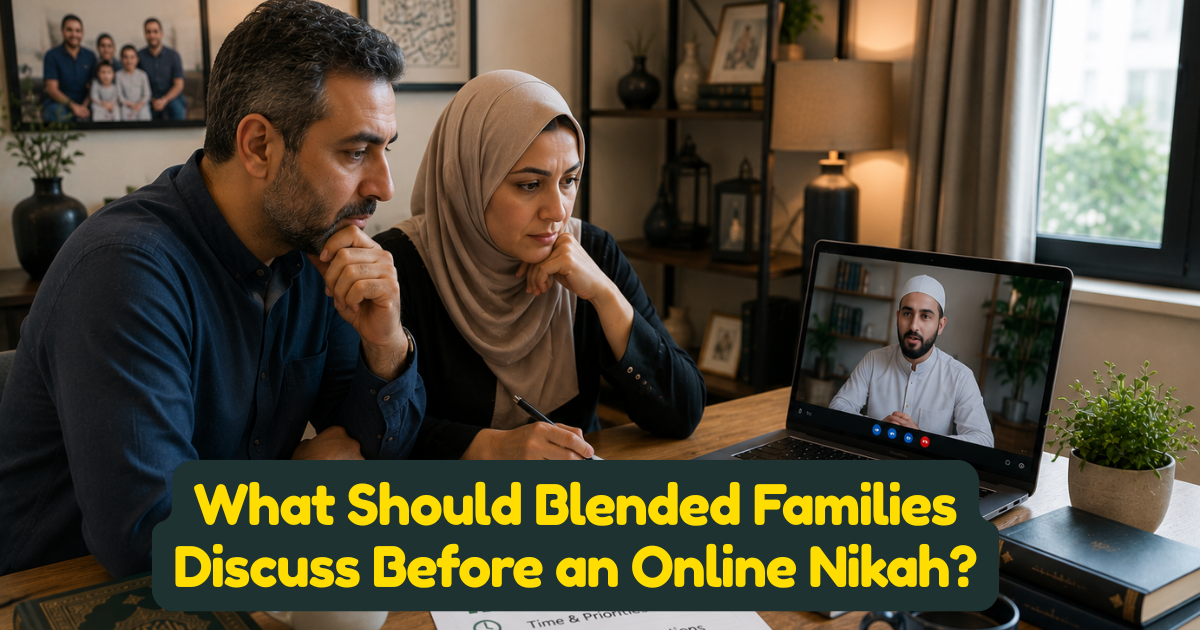
A second marriage involving children from a previous relationship brings a genuinely different set of considerations than a first nikah between two people starting with a blank slate. None of these considerations make the marriage itself any less valid or blessed — but they deserve honest conversation before the ceremony, not discovery after it.
Children's Rights Don't Change With a Parent's Remarriage
This is the foundational principle worth establishing clearly from the start. A detailed guide addressing Muslim marriage across different identities and life circumstances states it plainly: Islamic law is clear that children from a previous marriage retain their rights of maintenance, custody, and inheritance regardless of a parent's remarriage, and a new spouse must understand and accept these obligations from the outset. A new marriage doesn't dilute or transfer these existing rights — they remain exactly as they were, attached to the children's relationship with their biological parents.
What a New Spouse Is, and Isn't, Financially Responsible For
This is a genuinely common source of confusion in blended families. A new husband generally isn't automatically, financially obligated to support stepchildren who aren't his biological offspring — any support he provides for them is voluntary rather than a Sharia-mandated duty, distinct from the maintenance obligation he owes his own wife and any children he fathers. This doesn't mean a step-parent shouldn't contribute — many do, generously and willingly — but it means this is a matter for explicit discussion and agreement between spouses, not an assumed obligation either side should take for granted.
Custody Arrangements Need Their Own Clarity
Custody questions following a parent's remarriage are genuinely nuanced, and a detailed fatwa addressing child custody when a mother remarries illustrates how case-specific this can get — weighing the children's welfare, the specific arrangement with the previous spouse, and the actual conduct and intentions of everyone involved, rather than applying one fixed rule automatically. Couples should clarify their specific custody and visitation arrangement with the previous spouse clearly before the new nikah, rather than assuming it will simply continue unchanged or resolve itself naturally afterward.
The Practical, Day-to-Day Side
Beyond the legal and financial questions, real blended family experience points to genuinely practical adjustments worth planning for. Detailed reflections from Muslim parents navigating blended families highlight several recurring themes: discussing each spouse's role with the other's children honestly before living together, agreeing in advance on how discipline will be handled (generally falling primarily to the biological parent, with clear conversations about when and how a step-parent's involvement is appropriate), and deliberately building shared family rituals — prayer together, regular meals, consistent family time — that help a newly combined household feel genuinely unified rather than like two families simply coexisting.
What to Actually Discuss Before the Online Nikah
- Financial expectations regarding stepchildren — what, if anything, the new spouse will voluntarily contribute, stated clearly rather than assumed.
- Existing custody and visitation arrangements with the previous spouse, and how the new marriage fits around them practically.
- Living arrangements and discipline roles, agreed in principle before the children are actually navigating a newly blended household.
- How and when to introduce the new spouse to the children, and at what pace, given how much adjustment is being asked of them too.
- Whether any of these arrangements should be reflected as specific stipulations in the nikah contract itself, giving them real documented clarity alongside the marriage's other terms.
Key Takeaway
A blended family entering an online nikah benefits enormously from addressing a few specific Islamic principles clearly before the ceremony: children's existing rights to maintenance, custody, and inheritance remain unchanged by remarriage; a step-parent's financial support for stepchildren is voluntary, not automatic; and custody arrangements deserve their own explicit clarity rather than assumption. Combined with honest, practical conversation about discipline, roles, and pacing, these conversations — had openly before the nikah rather than navigated reactively after — give a blended family its best foundation for genuinely coming together.
```Admin User
Author